
Dar Expresses Alarm Over Middle East Crisis at ECO Summit
Addressing the ECO Council of Ministers in New York, Deputy Prime Minister Ishaq Dar emphasized regional peace amid escalating Middle East tensions, highlighting profound economic and trade implications for Pakistan.
The Core Development
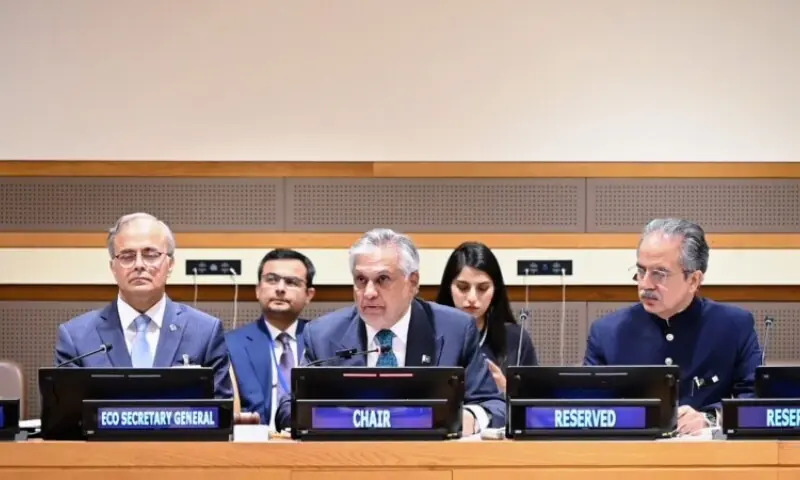
Deputy Prime Minister and Foreign Minister Ishaq Dar on Saturday voiced profound concern over the deteriorating security situation across the region and the wider Middle East during an informal meeting of the Economic Cooperation Organization (ECO) Council of Ministers held in New York. Speaking before regional counterparts, Dar stressed that Pakistan remains firmly committed to a peaceful, negotiated resolution of all geopolitical disputes in strict accordance with international law and the UN Charter.
Highlighting Islamabad's active diplomatic engagements, Dar noted that the dedication and sincerity of Pakistan's leadership have driven close consultations with brotherly nations and international partners to facilitate stable outcomes. He asserted that these diplomatic endeavors have yielded tangible progress that member states must now collectively consolidate and preserve to avert broader regional destabilization.
Commercial & Economic Implications
For an import-reliant economy like Pakistan, escalating volatility in the Middle East carries severe economic repercussions. The ongoing security crises directly threaten vital supply chains, maritime trade routes, and petroleum imports that sustain domestic industrial production and transport networks. Any disruption in energy corridors immediately translates into volatile fuel surcharges, aggravating inflationary pressures on wholesale distribution channels and retail markets.
Furthermore, the Middle East remains a critical economic lifeline for Pakistan through worker remittances and export markets. Instability in the region jeopardizes remittance inflows, which serve as a vital cushion for Pakistan's current account balance and foreign exchange reserves. Wholesale traders and commercial enterprises across major urban hubs in Pakistan are closely monitoring these geopolitical flashpoints, fearing that protracted conflict could drive up production costs and compress consumer purchasing power.
Related Intelligence: Bangkok Declares Disaster Emergency as Monsoon Floods Paralysis Thai Supply Chains
Stakeholder Perspectives & Market Reactions
Business councils, trader associations, and financial analysts have expressed growing apprehension regarding the spillover effects of regional conflicts on domestic commerce. Representatives from major chambers of commerce in Pakistan have called upon federal policymakers to diversify import sources and establish strategic commodity reserves to insulate local markets from external supply shocks.
At the same time, foreign policy experts have praised Islamabad's emphasis on multilateral diplomacy through the ECO framework. Industry bodies argue that regional economic integration and enhanced intra-ECO trade are essential buffers against macroeconomic vulnerabilities stemming from geopolitical turmoil in Western Asia and the Gulf.
Forward Outlook & Key Watchpoints
As diplomatic maneuvering continues at the United Nations and regional forums, market observers are closely tracking several key indicators. Primary watchpoints include oil price fluctuations, freight rate adjustments for Middle Eastern shipping lanes, and monthly remittance data released by the State Bank of Pakistan.
Policymakers must balance urgent national security imperatives with robust economic contingency planning. Ensuring uninterrupted energy supplies and safeguarding external account stability will remain paramount for Pakistan as the regional security landscape evolves in the coming months.
Join Our Official WhatsApp Channel
Receive live commodity alerts, policy changes, and commercial intelligence directly on WhatsApp.