
Naqvi Condemns Khyber Pakhtunkhwa Proposed Police Legislation Over MPA Immunity
Federal Interior Minister Mohsin Naqvi has strongly criticized Khyber Pakhtunkhwa's proposed police law requiring assembly speaker approval for MPA arrests, warning it compromises governance and the rule of law.
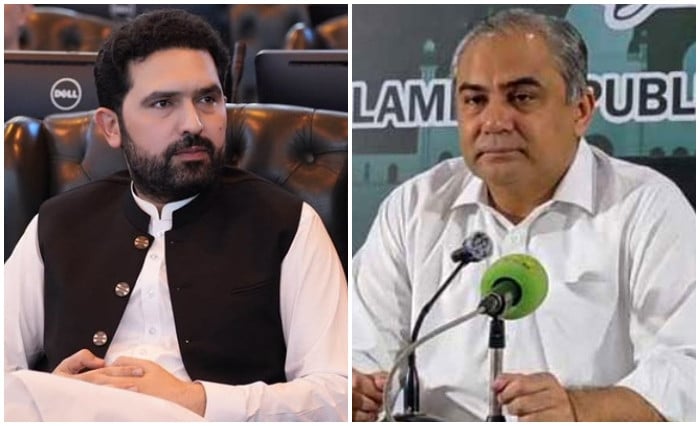
The Core Development
Federal Interior Minister Mohsin Naqvi has issued a scathing critique of the legislative trajectory adopted by the Khyber Pakhtunkhwa (KP) provincial government regarding a newly proposed police law. The controversial bill, which introduces a statutory requirement for the provincial assembly speaker to greenlight the arrest of any Member of Provincial Assembly (MPA), has ignited a fierce political and institutional debate across Pakistan. The legislation effectively grants sweeping procedural immunities to elected representatives, altering the jurisdictional boundaries between law enforcement agencies and provincial lawmakers. According to policy details emerging from Peshawar, the draft bill seeks to institutionalize a bureaucratic layer that opponents argue will obstruct routine criminal investigations and executive accountability. The timing of this legislative push has further compounded tensions between the federal administration in Islamabad and the PTI-led provincial government in KP, raising critical questions about cooperative federalism and the supremacy of standard criminal procedure codes over localized political privileges.
Commercial & Economic Implications
While ostensibly framed as a matter of legislative privilege and institutional autonomy, legal and economic analysts at Kalyar Traders note that prolonged political instability and governance friction directly impact business confidence and commercial sentiment across Pakistan. Investor perception remains highly sensitive to regulatory predictability and the consistent application of the rule of law. When core state institutions engage in protracted legislative battles over law enforcement powers, the resulting uncertainty trickles down into wholesale markets, retail trade channels, and broader economic planning. Supply chain resilience, investment flows, and inflationary expectations are intrinsically linked to political stability. Any structural weakening of uniform law enforcement mechanisms fosters an environment of perceived impunity, which ultimately undermines the transparent market conditions required for sustainable industrial growth and domestic commerce in Khyber Pakhtunkhwa and beyond.
Related Intelligence: Syrian Kurdish Returns to Afrin Spark Geopolitical and Commercial Shifts
Stakeholder Perspectives & Market Reactions
Reaction from legal experts, civil society organizations, and commercial bodies has been overwhelmingly cautious, with many drawing sharp parallels to historical efforts aimed at insulating political elites from judicial scrutiny. Business and trader associations in Peshawar and surrounding commercial hubs have expressed deep concern over the prioritization of political self-preservation measures during a period of acute economic hardship. Legal minds have pointed out that conditioning the arrest of legislators on the discretion of the assembly speaker creates a dangerous legal precedent, effectively placing elected officials above the ordinary statutes that govern everyday citizens. Conversely, provincial government defenders argue that such measures are necessary to protect lawmakers from politically motivated harassment and arbitrary detentions. However, federal stakeholders maintain that national security and uniform criminal justice must supersede localized political safeguards, setting the stage for potential constitutional challenges in higher courts.
Forward Outlook & Key Watchpoints
As the legislative process unfolds within the Khyber Pakhtunkhwa Assembly, several critical milestones and key watchpoints will dictate the trajectory of this controversy. First, legal challenges from opposition parties and civil society organizations in the Peshawar High Court are highly anticipated the moment the bill is formally enacted. Second, federal authorities are expected to weigh potential administrative and legal countermeasures to preserve federal writ and uniform policing standards. For businesses and financial analysts monitoring Pakistan's political landscape, the primary indicator of stability will be whether this institutional clash remains confined to legislative chambers or escalates into broader street-level agitation. Stakeholders across all sectors must remain vigilant, as protracted jurisdictional disputes between Islamabad and provincial capitals invariably generate downstream risks for commercial trade and investment continuity.
Join Our Official WhatsApp Channel
Receive live commodity alerts, policy changes, and commercial intelligence directly on WhatsApp.