
China and North Korea Open Strategic Yalu River Border Bridge
China and North Korea have formally opened the New Yalu River Bridge following a twelve-year operational delay. The major infrastructure corridor enhances bilateral trade integration while testing the enforcement perimeter of United Nations sanctions.
Geopolitical & Core Developments
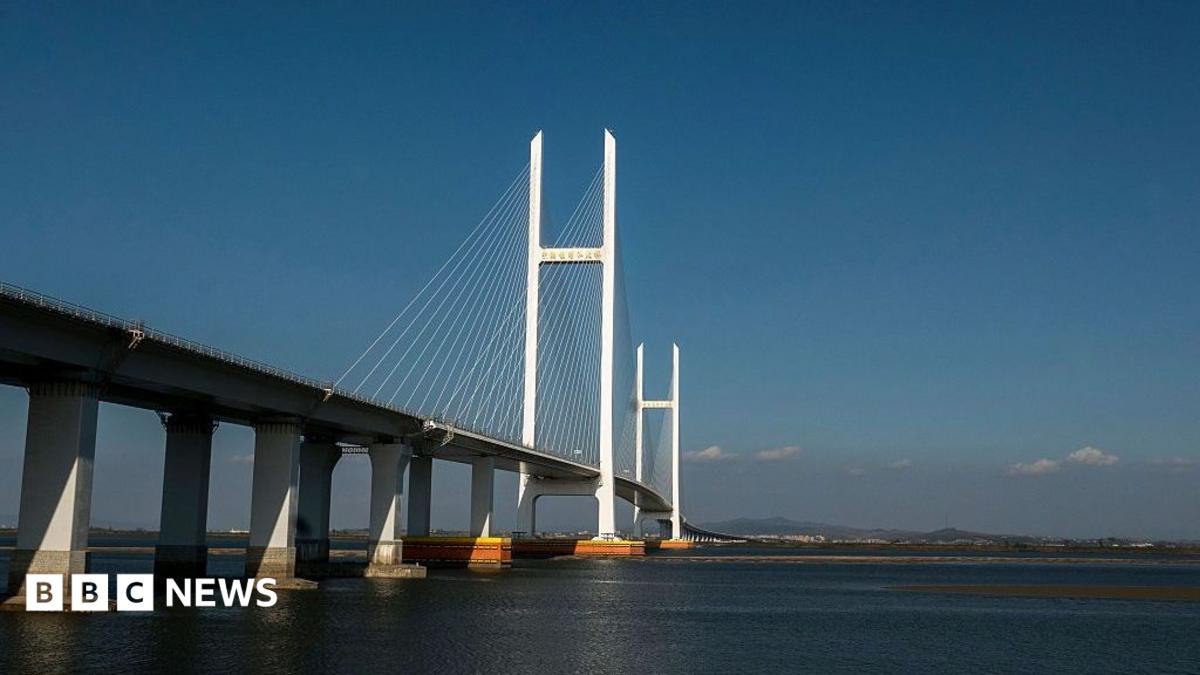
After more than a decade of diplomatic hesitation, construction delays, and geopolitical standoffs, China and the Democratic People's Republic of Korea (DPRK) have officially opened the New Yalu River Bridge. Connecting the northeastern Chinese commercial hub of Dandong with Sinuiju in North Korea, the multibillion-dollar, four-lane suspension span was structurally completed in 2015 but remained uncommissioned due to prolonged sanctions enforcement, political friction, and Pyongyang's stringent pandemic border closures.
The strategic opening represents a decisive realignment in Northeast Asian diplomacy. China remains North Korea's primary economic patron, ideological guarantor, and commercial lifeline, accounting for the overwhelming majority of Pyongyang's recorded foreign trade. By operationalizing this transit artery, Beijing and Pyongyang have signaled a formal return to synchronized cross-border development. The bridge replaces the aging Sino-Korean Friendship Bridge, built in 1943, which had long operated at severe logistical bottlenecks with single-track rail and single-lane vehicular capacity. The commissioning of this modernized corridor reflects Pyongyang's confidence in its external trade security and Beijing's strategic intent to maintain baseline economic stability across its periphery.
Global Trade & Economic Ripples
While North Korea remains under stringent United Nations Security Council resolutions that restrict its access to conventional international trade, the new border infrastructure introduces immediate structural shifts to Northeast Asian trade mechanics. The crossing provides a high-throughput channel for authorized humanitarian aid, bulk consumer goods, agricultural equipment, and construction inputs, fundamentally transforming regional trade velocity.
From a global commodity perspective, the expanded corridor provides logistical redundancy for critical supply chains. Illicit and gray-market trade flows—spanning refined petroleum products, metallurgical coking coal, textiles, and rare mineral ores—can now theoretically be handled through high-capacity bonded logistics zones established in Dandong. The increased volume potential reduces North Korea's reliance on maritime ship-to-ship transfers, which face heightened interdiction by Western maritime surveillance. Furthermore, the commercial normalization facilitates cross-border labor deployment, generating foreign exchange liquidity for Pyongyang that circulates through regional shadow banking networks denominated predominantly in Chinese renminbi rather than US dollars.
Related Intelligence: Pakistan School Infrastructure Crisis Sparks Regulatory Scrutiny and Construction Audits
International Reactions & Diplomatic Stances
The activation of the border bridge has elicited sharp scrutiny from Western capitals and international monitoring bodies. United States Department of State officials reiterated that all member states are obligated under international law to fully enforce existing UN Security Council resolutions, warning that expanded infrastructure must not facilitate the proliferation of prohibited goods, military-industrial components, or dual-use technologies.
In Seoul, the South Korean Ministry of Unification expressed deep concern over the timing of the opening, noting that expanding bilateral infrastructure while North Korea accelerates its ballistic missile and nuclear modernization programs diminishes the efficacy of international deterrence. Conversely, Beijing's Ministry of Foreign Affairs framed the development as routine commercial and transport cooperation between sovereign neighbors, emphasizing stability, civilian livelihood, and the sovereign right to develop bilateral infrastructure. Moscow welcomed the corridor's activation, viewing it as complementary to Russia's expanding logistical and strategic partnership with Pyongyang across the Far East.
Strategic Outlook & Future Scenarios
The trajectory of the New Yalu River Bridge will serve as a bellwether for the durability of the sanctions architecture against North Korea. As geopolitical rivalries harden into distinct regional blocs, enforcement mechanisms will face accelerating attrition. The coming quarters are likely to see expanded customs processing facilities, bonded warehousing expansions in Dandong, and potential trial runs for heavy industrial freight.
Moving forward, Western regulators will focus on identifying maritime, logistics, and financial intermediaries that utilize the expanded Dandong-Sinuiju corridor to circumvent dual-use restrictions. If cross-border throughput increases without transparent customs reporting, the United States and its allies will likely introduce secondary sanctions against Chinese regional commercial banks and logistics operators. However, with Sino-Russian relations firmly aligned against unilateral Western sanctions, the bridge stands as a durable monument to an evolving geopolitical architecture where regional economic integration operates independently of Western institutional pressure.
Join Our Official WhatsApp Channel
Receive live commodity alerts, policy changes, and commercial intelligence directly on WhatsApp.