
Brussels Anti-Austerity Protests Spark Wider European Economic Anxiety
Mass anti-austerity demonstrations in Brussels turned violent as police deployed tear gas and water cannons, reflecting mounting fiscal pressures across European markets.
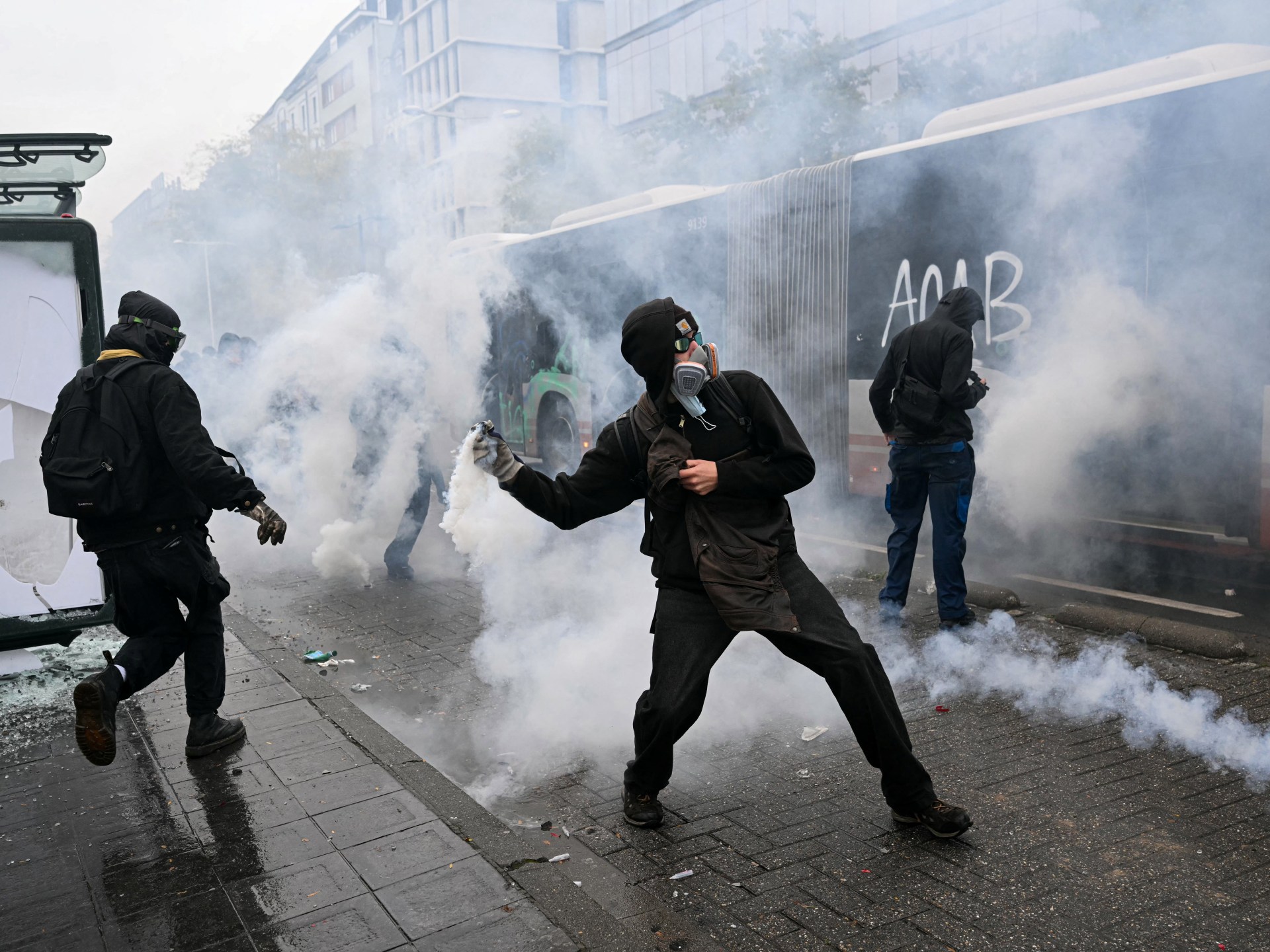
Geopolitical & Core Developments
Thousands of demonstrators converged on the Belgian capital this week to voice fierce opposition to impending fiscal consolidation measures, resulting in severe clashes with law enforcement on the fringes of an otherwise organized labor mobilization. Belgian security forces deployed tear gas, water cannons, and baton charges to disperse isolated groups of provocateurs who hijacked the demonstration, targeting public infrastructure and commercial storefronts. The protests, organized by a coalition of European labor unions and civic organizations, reflect deep-seated public frustration over stringent governmental budget cuts, soaring inflation, and the erosion of social welfare safety nets.
The demonstrations in Brussels carry profound symbolic and political weight, occurring at the heart of the European Union institutional apparatus. As member states grapple with post-pandemic debt burdens and stringent EU fiscal rules that mandate deficit reduction, national governments find themselves caught between binding macroeconomic obligations and explosive domestic discontent. The inability of policymakers to successfully negotiate a social compact that balances fiscal sustainability with citizen welfare risks deepening political polarization across the continent, directly challenging the stability of ruling coalitions in several key eurozone economies.
Global Trade & Economic Ripples
While the unrest in Brussels remains primarily focused on domestic fiscal policy and public spending, the underlying economic anxieties carry substantial implications for global trade, commodity markets, and European supply chain integrity. Labor discontent driven by persistent inflation and stagnant real wages threatens to trigger widespread industrial action across critical logistics hubs, ports, and transport corridors throughout Western Europe. Any prolonged disruption to Belgian transport infrastructure—a vital gateway for continental freight—inevitably impacts cross-border supply chains, delaying the movement of manufactured goods, raw materials, and agricultural commodities.
Furthermore, the macro-fiscal pressures forcing European governments into austerity measures are dampening domestic consumer demand, directly influencing import volumes and commodity pricing. Energy markets remain acutely sensitive to European industrial output and consumer sentiment; as household budgets shrink under the dual pressure of high energy costs and reduced fiscal support, industrial demand for natural gas and refined petroleum products faces downward pressure. International investors are closely monitoring these developments, as prolonged social instability in core European economies undermines currency valuations, notably the euro, and introduces heightened volatility into sovereign debt yields.
Related Intelligence: Trump Fed Probe Threatens Central Bank Independence and Global Markets
International Reactions & Diplomatic Stances
International financial institutions and multilateral bodies have responded to the Brussels demonstrations with cautious deliberation, emphasizing the delicate balance between necessary fiscal reform and social cohesion. Representatives from the International Monetary Fund and the European Commission have reiterated the long-term necessity of debt reduction to ensure macroeconomic stability, yet they increasingly acknowledge the political perils of rapid fiscal tightening. Market analysts and rating agencies have issued advisories warning that escalating social unrest could impede the structural reforms required by Brussels, potentially lowering sovereign credit outlooks for vulnerable member states.
Diplomatic circles across the continent are observing the Belgian protests as a bellwether for wider European sentiment ahead of upcoming national election cycles. Neighboring capitals are re-evaluating their own public expenditure frameworks, fearful that heavy-handed fiscal consolidation will provoke similar nationwide strikes. Trade unions from neighboring France, Germany, and the Netherlands have expressed solidarity with the Brussels protesters, raising the specter of a coordinated, transnational labor movement capable of paralyzing key segments of the European single market if governments refuse to soften their budgetary stances.
Strategic Outlook & Future Scenarios
As European policymakers prepare for upcoming EU summit negotiations regarding regional budgetary frameworks, the trajectory of domestic unrest will heavily influence legislative resolve. If governments bow to public pressure and relax deficit targets, sovereign bond markets may react negatively, driving up borrowing costs and inviting intervention from monetary authorities. Conversely, maintaining rigid austerity in the face of violent public resistance risks entrenching political instability, empowering populist factions, and fostering chronic industrial friction.
For international businesses and global commodity traders operating within Europe, the coming quarters demand heightened operational agility and robust contingency planning. Supply chain managers are actively diversifying transport routes to mitigate the risk of localized blockades, while financial institutions re-price sovereign risk to account for heightened domestic friction. Ultimately, the events in Brussels serve as a stark reminder that macroeconomic policy cannot be decoupled from social stability, setting the stage for a contentious period of economic governance across the continent.
Join Our Official WhatsApp Channel
Receive live commodity alerts, policy changes, and commercial intelligence directly on WhatsApp.