
Sudan Escalation: RSF Drone Strike Kills 30 in Blue Nile Region
A suspected Rapid Support Forces drone strike in Sudan's Blue Nile region killed 30 people near a displacement camp, escalating the nation's catastrophic civil war and threatening wider regional stability.
Geopolitical & Core Developments
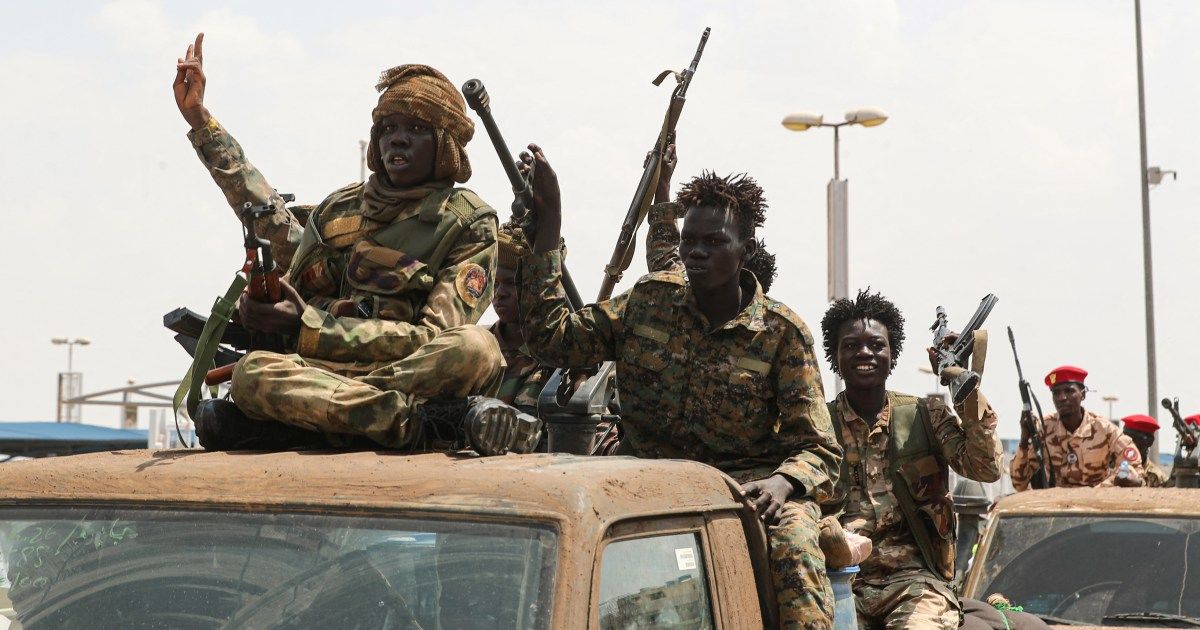
The protracted civil conflict in Sudan reached a grim new milestone following a devastating drone strike in the Blue Nile region that left at least 30 people dead. The aerial assault, reportedly launched by the Rapid Support Forces (RSF), struck locations immediately adjacent to a vulnerable displacement camp in Wad al-Mahi. Local emergency responders and medical sources confirmed that the casualties include a significant number of women and children, highlighting the indiscriminate nature of the kinetic action.
This latest escalation underscores the deteriorating security matrix in Sudan, where the protracted power struggle between the Sudanese Armed Forces (SAF) and the RSF has fractured state authority. The Blue Nile region, historically a volatile geopolitical fault line bordering Ethiopia and South Sudan, has become a critical theater of operations. As the RSF seeks to expand its territorial control southward and eastward, civilian population centers hosting internally displaced persons are increasingly caught in the crosshairs, violating fundamental tenets of international humanitarian law and compounding the displacement crisis across the Horn of Africa.
Global Trade & Economic Ripples
While the immediate human cost remains the primary tragedy, the intensification of hostilities in Sudan carries profound implications for global commodity markets and international trade routes. Sudan occupies a strategically vital geographic corridor linking East Africa, the Sahel, and the Red Sea littoral—a maritime superhighway handling a substantial percentage of global container shipping and energy transit via the Bab el-Mandeb strait.
Prolonged instability within Sudan directly threatens critical agricultural supply chains, particularly the production and export of gum arabic, sesame, and livestock. Furthermore, the conflict's spillover potential jeopardizes regional energy infrastructure and transport corridors. As insurance premiums and security risks escalate for commercial shipping operating near the Red Sea approaches, global logistics providers face increased operational expenditures, ultimately feeding inflationary pressures across international markets dependent on seamless Afro-Asian trade connectivity.
Related Intelligence: US Immigration Enforcement Actions Spur Domestic Markets and Diplomatic Scrutiny
International Reactions & Diplomatic Stances
The international community has reacted with profound alarm to the Wad al-Mahi strike, though tangible diplomatic interventions have struggled to yield a sustainable cessation of hostilities. United Nations officials have reiterated urgent calls for an immediate humanitarian truce, emphasizing that attacks directed against civilians and displacement sites constitute severe violations of international norms.
Regional bodies, including the Intergovernmental Authority on Development (IGAD) and the African Union, have faced persistent hurdles in mediating between the warring factions. Western capitals and multilateral financial institutions continue to deliberate on expanding targeted sanctions against military leadership and financial networks sustaining the war effort. However, divergent geopolitical interests among regional power brokers have historically blunted the efficacy of punitive measures, allowing both the SAF and RSF to procure materiel and sustain protracted combat operations.
Strategic Outlook & Future Scenarios
Looking ahead, the trajectory of the Sudanese conflict points toward deeper fragmentation and humanitarian catastrophe unless external diplomatic pressure coalesces around a unified enforcement mechanism. Analysts warn that without a breakthrough in multilateral peace talks—potentially anchored by upcoming diplomatic summits—the conflict risks devolving into a protracted regional proxy war.
Key escalation markers to monitor include potential retaliatory airstrikes by the SAF, further displacement waves destabilizing neighboring states, and any direct threats to vital Red Sea trade infrastructure. For international commercial entities and commodity traders operating in East Africa, risk mitigation strategies must account for prolonged instability, heightened logistics costs, and the persistent threat of localized supply chain disruptions across the Sudanese theater.
Join Our Official WhatsApp Channel
Receive live commodity alerts, policy changes, and commercial intelligence directly on WhatsApp.