
Bilawal Links KP Governor Rule Revocation to Bipartisan Counterterrorism Consensus
PPP Chairman Bilawal Bhutto-Zardari stated that governor's rule in Khyber Pakhtunkhwa could end if the opposition cooperates with the federal government on a comprehensive counterterrorism framework.
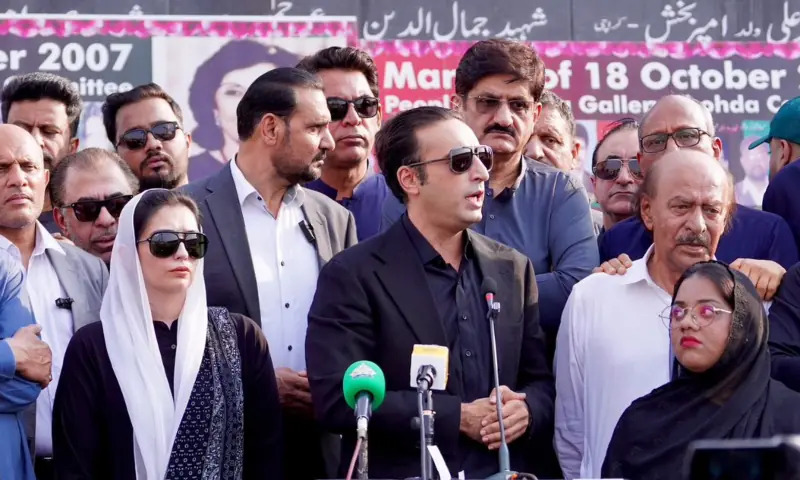
The Core Development Pakistan Peoples Party (PPP) Chairman Bilawal Bhutto-Zardari announced on Sunday that the federal government remains open to revoking governor's rule and emergency powers in Khyber Pakhtunkhwa (KP), provided the provincial opposition demonstrates tangible commitment to countering regional militancy. Speaking to reporters in Karachi during a commemorative visit to the Karsaz Monument on the 19th anniversary of the 2007 Karsaz attack, the PPP chief emphasized that national security must supersede partisan rivalries.
The conditional offer comes one week after Islamabad enacted Article 234, imposing direct federal authority over KP. The Centre justified the extraordinary constitutional intervention by citing the Pakistan Tehreek-e-Insaf (PTI)-led provincial administration's alleged operational reluctance to combat militant resurgences along the northwestern border corridor. Tensions had escalated sharply following coordinated anti-government protest marches led by the provincial leadership toward the federal capital, which federal officials argued diverted essential administrative bandwidth and state law-enforcement resources away from deteriorating security zones.
Commercial & Economic Implications The persistent governance crisis in Khyber Pakhtunkhwa carries acute financial and structural ramifications for the regional real economy. KP functions as Pakistan's primary landward commercial artery to Afghanistan and Central Asian Republics via the Torkham, Ghulam Khan, and Kharlachi border terminals. Operational unpredictability, heightened surveillance, and localized civil unrest increase freight turnaround times and drive up logistics risk premiums.
For wholesale merchants, fast-moving consumer goods (FMCG) distributors, and grain traders, prolonged political and constitutional deadlocks disrupt supply chains connecting Punjab's industrial belts to retail markets across northern Pakistan. Supply blockages inevitably compound food price volatility and escalate wholesale inflation across Peshawar, Mardan, and Swat. Furthermore, private capital expenditure and commercial infrastructure investments in the province face prolonged delays as institutional uncertainty disincentivizes both domestic corporate capital and foreign development lending.
Related Intelligence: West Bank Escalation Threatens Levant Stability and Regional Trade Corridors
Stakeholder Perspectives & Market Reactions Reaction across legal and business circles remains polarized. The Pakistan Tehreek-e-Insaf has vehemently condemned the central intervention, describing the deployment of emergency powers as an unconstitutional power grab designed to suppress political dissent rather than rectify administrative deficiencies. Legal experts caution that prolonged suspension of elected provincial assemblies challenges constitutional federalism under the 18th Amendment and will inevitably undergo rigorous scrutiny before the superior courts.
Conversely, regional trade bodies, including elements of the Sarhad Chamber of Commerce and Industry (SCCI), have articulated profound concern regarding the deteriorating security climate that preceded the central takeover. Business federations underscore that extortion threats, target attacks on transport fleets, and recurrent security-related shutdowns have eroded commercial margins. While local industry leaders express skepticism toward direct administrative rule from Islamabad, there is broad consensus among merchant associations that transparent law enforcement and stable governance are imperative prerequisites to preserve basic market liquidity.
Forward Outlook & Key Watchpoints The trajectory of KP's governance structure hinges on whether the federal administration and the opposition can establish a structured platform for security dialogue. The benchmark to watch in the coming weeks will be parliamentary proceedings, where legislative confirmation of the emergency proclamation will test government coalition unity and provoke sharp opposition challenges.
Key operational indicators will include the pace of counterterrorism sweeps across the southern and tribal districts, the stability of commercial freight movements across the primary national highways (N-5 and N-55), and court rulings on constitutional petitions filed against the emergency decree. Should direct negotiations between the Centre and provincial leadership fail to materialize, protracted direct rule could entrench institutional frictions, deepening economic vulnerabilities along Pakistan's western commercial corridor.
Join Our Official WhatsApp Channel
Receive live commodity alerts, policy changes, and commercial intelligence directly on WhatsApp.