
Asif Warns PTI of Zero Relief Amid Political Escalation
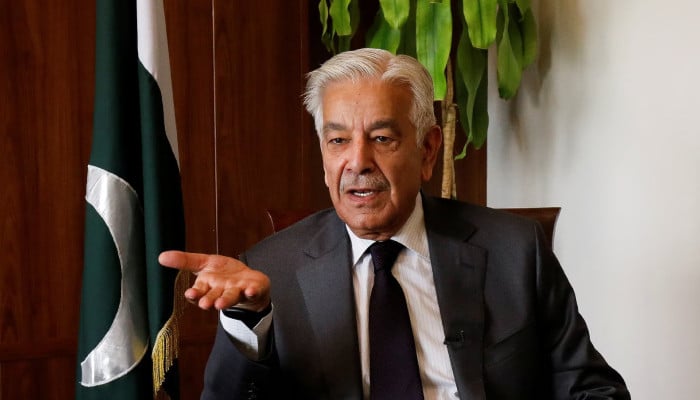
Defense Minister Khawaja Asif has firmly stated that the government will offer no political concessions to the Pakistan Tehreek-e-Insaf party, escalating tensions that continue to unsettle Pakistan's fragile economic recovery.
The Core Development
In a stern and uncompromising policy pronouncement, Federal Minister for Defense Khawaja Asif has categorically ruled out any possibility of political relief or negotiation leverage for the Pakistan Tehreek-e-Insaf (PTI) leadership. Speaking on the current political stalemate, Asif emphasized that the federal administration, led by the Pakistan Muslim League-Nawaz (PML-N) coalition, will not bow to pressure tactics or what the government characterizes as attempts to blackmail state institutions.
The political confrontation has intensified following a series of protests and counter-measures across major urban centers, notably Islamabad and Lahore. Government officials maintain that legal proceedings against detained PTI leaders must follow due judicial process without political interference. The administration's hardline stance signals a deepening of the partisan divide, leaving little room for bipartisan consensus on critical national legislation or economic reforms.
Commercial & Economic Implications
For the domestic business community and international investors operating within Pakistan, the relentless cycle of political turbulence introduces profound uncertainty. Commercial markets in key metropolitan hubs have repeatedly experienced disruptions due to localized lockdowns, containerized road blockades, and transport suspensions. These interruptions directly impair wholesale distribution networks, daily retail trade volumes, and localized supply chains.
Furthermore, persistent political instability undermines investor confidence at a time when Pakistan is striving to consolidate macroeconomic stabilization under International Monetary Fund (IMF) program parameters. Foreign direct investment (FDI) inflows remain sluggish as institutional predictability is overshadowed by governance friction. Currency volatility and inflationary pressures are exacerbated when commercial activity is stalled by political gridlock, ultimately burdening consumers with elevated staple prices and constrained purchasing power.
Related Intelligence: Middle East Escalation Threatens Global Supply Chains and Domestic Trade
Stakeholder Perspectives & Market Reactions
Major trade bodies, chambers of commerce, and industrial associations have voiced mounting frustration over the uninterrupted political discord. Representatives from the Federation of Pakistan Chambers of Commerce and Industry (FPCCI) have repeatedly urged political leadership to insulate the economy from partisan confrontations. Business leaders argue that continuous agitation deters foreign trade delegations and stalls crucial industrial expansion projects.
Legal experts remain divided on the constitutional trajectory of the ongoing disputes. While government advocates argue that maintaining the rule of law necessitates strict adherence to judicial mandates without political deals, opposition jurists contend that political reconciliation is an indispensable prerequisite for national stability. Meanwhile, public sentiment reflects exhaustion, as ordinary citizens grapple with the socio-economic fallout of protracted political polarization.
Forward Outlook & Key Watchpoints
As the political landscape remains tense, market analysts and policy observers are closely monitoring several critical indicators. Key watchpoints include upcoming parliamentary sessions, judicial rulings on high-profile political petitions, and the government's capacity to execute structural fiscal reforms without triggering widespread civil unrest.
Failure to establish a functional political truce could jeopardize upcoming economic reviews and delay critical foreign financial assistance. Unless political stakeholders prioritize institutional dialogue over confrontation, Pakistan's recovery trajectory will remain vulnerable to recurrent shocks, casting a long shadow over both commercial growth and national cohesion.
Join Our Official WhatsApp Channel
Receive live commodity alerts, policy changes, and commercial intelligence directly on WhatsApp.