
French Student Protests Unmask Deep-Seated Economic Vulnerabilities and Policy Gridlock
Escalating student protests across France expose deep structural discontent and test the government's reform agenda, introducing potential economic ripples across the Eurozone.
Geopolitical & Core Developments
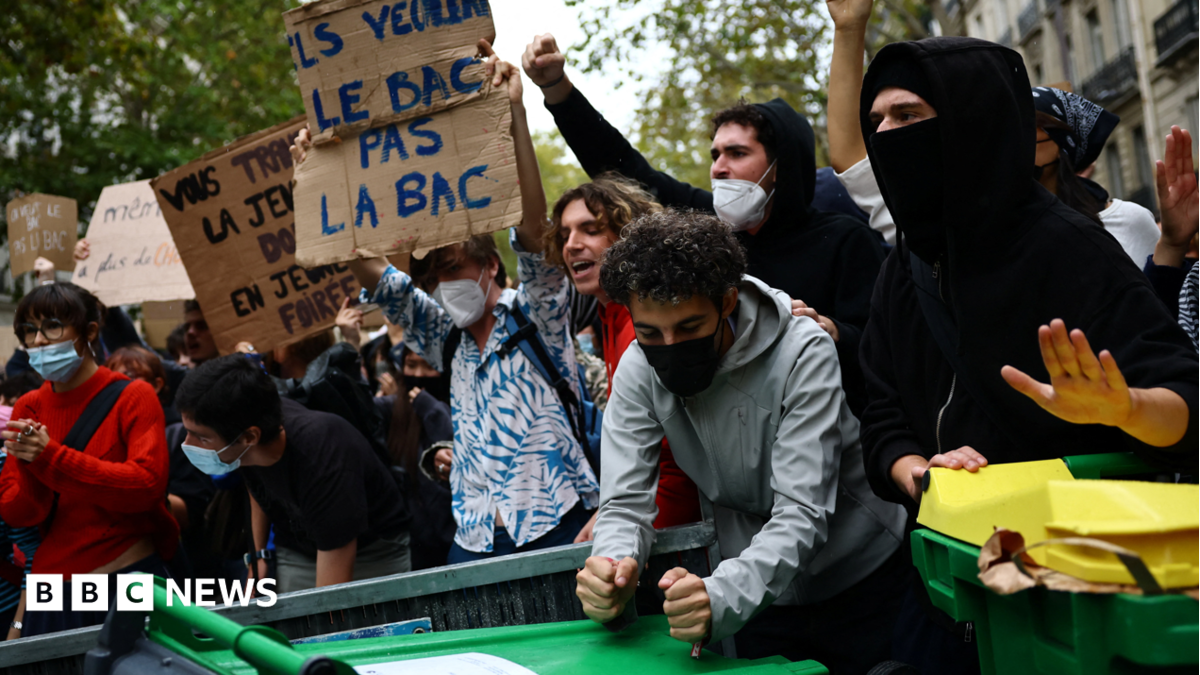
France has once again found itself gripped by waves of student-led blockades, street marches, and confrontations with law enforcement, underscoring a perennial friction point between the central government and the French populace. At the heart of the current unrest are genuine grievances surrounding educational funding, curriculum reforms, and broader anxieties regarding youth unemployment and future economic security. However, these protests are not merely isolated reactions to immediate policy adjustments; they represent a continuation of a deeply entrenched French political tradition. In France, the street has historically served as a vital arena for democratic expression and dispute resolution, often operating parallel to institutional legislative channels when citizens feel disconnected from executive decision-making.
The administration of President Emmanuel Macron faces a delicate balancing act. On one side stands the imperative to modernize France's labor market, educational apparatus, and pension structures to maintain fiscal competitiveness within the European Union. On the other side is a formidable domestic opposition, characterized by organized labor unions and student federations capable of paralyzing transportation networks, academic institutions, and commercial arteries. The current standoff highlights the limits of top-down governance in a nation where social compacts are fiercely guarded. As blockades disrupt high schools and universities nationwide, the government is forced to weigh the political cost of concessions against the immediate necessity of maintaining public order and demonstrating state authority.
Global Trade & Economic Ripples
While ostensibly rooted in domestic educational grievances, the unrest in France carries tangible implications for global markets and European economic stability. France remains the second-largest economy in the Eurozone, and prolonged internal disruptions directly impact consumer confidence, retail sales, and domestic productivity. When transit networks are blocked and major cities experience sustained demonstrations, foreign investment sentiment inevitably cools. International institutional investors monitor these developments closely as indicators of domestic political risk, which can influence sovereign debt yields and the valuation of the Euro.
Furthermore, the tactical disruption of logistics and supply chains during peak mobilization periods introduces friction into regional trade. Although these protests rarely match the scale of nationwide transport strikes in terms of absolute cargo immobilization, the psychological impact on business sentiment is significant. Multinational corporations operating within France must factor in operational delays and potential security risks when planning regional distribution. In the broader context of global commodity and energy markets, prolonged political instability in core European nations dampens demand forecasts and complicates the European Central Bank's monetary policy trajectory, as inflationary pressures intersect with domestic economic slowdowns.
Related Intelligence: UNIFIL Position Fired Upon as Lebanon Border Tensions Test Global Markets
International Reactions & Diplomatic Stances
International observers, including market analysts and diplomatic missions in Paris, are viewing the escalating tensions with cautious vigilance. Foreign trade partners and multilateral institutions such as the International Monetary Fund and the European Commission frequently assess France's capacity to enact structural reforms without triggering severe social friction. While international bodies generally respect domestic political autonomy, persistent civil unrest complicates Paris's standing as a stable anchor for Eurozone fiscal governance.
Global financial institutions have issued advisory notes highlighting the potential for short-term market volatility should the protests widen into a broader general strike involving critical transportation and energy sectors. Neighboring European governments are observing the situation with a mixture of empathy and apprehension, recognizing that social discontent fueled by inflation and cost-of-living pressures is a trans-European phenomenon. Diplomatic analysts note that a weakened French executive struggling to manage domestic dissent may find its influence diminished in broader European Union negotiations and international diplomatic forums.
Strategic Outlook & Future Scenarios
Looking ahead, the trajectory of the French student movement will depend heavily on the government's willingness to negotiate modifications to its reform agenda versus its determination to enforce policy continuity. Several distinct scenarios emerge for the coming months. A de-escalation could occur if the administration offers targeted financial concessions and opens formal channels for dialogue with student representatives, diffusing immediate tensions before the academic term concludes.
Conversely, if the government maintains an uncompromising stance, there is a substantial risk that the student protests will catalyze wider alliances with transport workers, public sector employees, and anti-reform political movements, potentially triggering a paralyzing national strike. Such a scenario would severely test the resilience of the French economy, strain public finances, and undermine President Macron's remaining term. For international businesses and global commodity traders, navigating this landscape requires heightened risk management and continuous monitoring of French domestic political indicators as a barometer for broader European stability.
Join Our Official WhatsApp Channel
Receive live commodity alerts, policy changes, and commercial intelligence directly on WhatsApp.