
Achakzai Warns of Governor Rule in Sindh Amid Resource Disputes
Opposition Leader Mehmood Khan Achakzai warned that federal authorities may enforce governor's rule in Sindh over resource control, escalating constitutional and commercial anxieties across Pakistan.
The Core Development
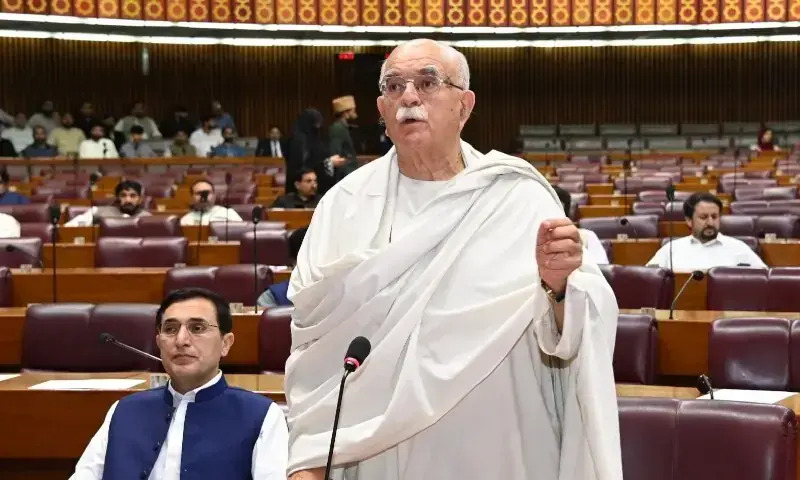
During a tense legislative session in Islamabad, Opposition Leader in the National Assembly Mehmood Khan Achakzai issued a grave warning regarding the stability of Pakistan’s constitutional federation. Speaking on the floor of the lower house, Achakzai asserted that the federal government is positioning itself to impose governor’s rule in Sindh, driven by competing claims over the province’s water resources, mineral rights, and natural streams. His remarks came immediately following the passage of a parliamentary resolution endorsing the Centre’s imposition of governor’s rule in Khyber Pakhtunkhwa.
The federal coalition had justified the intervention in Khyber Pakhtunkhwa by citing the provincial administration’s alleged non-cooperation and deliberate disengagement from counter-terrorism efforts. However, Achakzai contextualised the move as part of a wider campaign of centralisation that threatens to undermine provincial autonomy under the 18th Constitutional Amendment. By directly linking the prospects of federal takeover in Sindh to natural asset extraction and riparian rights, the opposition highlighted an intensifying struggle between Islamabad and the provinces over fiscal, industrial, and resource governance.
Commercial & Economic Implications
For Pakistan’s commercial architecture, heightened political uncertainty in Sindh carries disproportionate economic risks. Sindh—and particularly Karachi—functions as the logistical and financial engine of the national economy, hosting the country’s two primary maritime gateways, the Port of Karachi and Port Qasim. Any constitutional rupture leading to administrative volatility or widespread civil unrest risks disrupting containerised freight, bulk raw material handling, and port evacuation logistics, sending shockwaves through domestic supply chains.
Furthermore, unresolved disputes regarding water distribution and control of natural streams directly intersect with agricultural productivity. The Indus Basin irrigation network feeds major cash crops, including cotton, sugarcane, and wheat. Prolonged inter-provincial discord undermines water governance, jeopardising planting cycles and exacerbating domestic food inflation. In the extractive sector, tensions surrounding mining concessions and royalties create legal uncertainty, stalling foreign and domestic investments in critical energy and mineral projects at a time when capital formation remains critically subdued.
Related Intelligence: National Assembly Speaker Issues Production Orders for Detained PTI Lawmakers
Stakeholder Perspectives & Market Reactions
Financial markets and domestic trade networks have reacted to the escalating political rhetoric with distinct caution. Wholesale merchant bodies, commodity distributors, and logistics associations have voiced unease over potential disruption to key transport arteries connecting Sindh to upcountry markets in Punjab and Khyber Pakhtunkhwa. Industry leaders note that uninterrupted transport corridors are essential to prevent inventory shortages and wholesale price spikes across manufacturing hubs.
Legal and constitutional experts warn that the invocation of Article 232 or Article 234 without undeniable, objective constitutional breakdowns sets a perilous precedent that damages sovereign investor confidence. Meanwhile, provincial stakeholders in Sindh, including civil society organisations and parliamentary factions, have consistently maintained that mineral and riparian rights belong strictly to the federating units under established constitutional frameworks, rejecting any federal overreach disguised as administrative stabilization.
Forward Outlook & Key Watchpoints
Over the near-to-medium term, the commercial sector will closely track legislative proceedings in the National Assembly and the Senate, alongside legal challenges lodged before the superior courts against recent emergency actions. Key indicators will include official statements from the Ministry of Interior regarding provincial governance, judicial interpretations of federal emergency powers, and policy debates surrounding the National Finance Commission award and water sharing protocols.
Should political tensions translate into work stoppages, strikes, or administrative paralysis across Sindh, the domestic business environment will face compounding pressures from delayed shipments, elevated risk premiums, and suppressed consumer demand. Maintaining constitutional predictability remains the primary prerequisite for macro-fiscal stability and sustainable economic recovery in Pakistan.
Join Our Official WhatsApp Channel
Receive live commodity alerts, policy changes, and commercial intelligence directly on WhatsApp.