
Sanaullah Claims Murad Saeed Operating Khyber Pakhtunkhwa Governance From Afghanistan
PML-N senior leader Rana Sanaullah has alleged that absconding PTI figure Murad Saeed is sheltered in Afghanistan, directing the Khyber Pakhtunkhwa government remotely, heightening political instability.
The Core Development
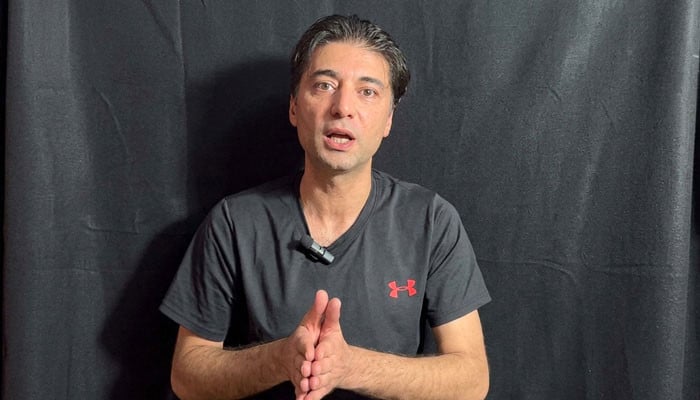
In a development that deepens institutional and political tensions across Pakistan, Rana Sanaullah, Advisor to Prime Minister Shehbaz Sharif on Political and Public Affairs, claimed on Monday that fugitive Pakistan Tehreek-e-Insaf (PTI) leader Murad Saeed is currently operating from Afghanistan. Sanaullah alleged during a broadcast interview that Saeed, who went underground following the violent civil unrest on May 9, 2023, is maintaining an influential channel of communication and effectively controlling the affairs of the Khyber Pakhtunkhwa (KP) provincial administration from foreign soil.
Saeed, a former federal communications minister and a prominent PTI lieutenant, faces dozens of legal indictments and counterterrorism charges tied to the attacks on military installations and state property last year. State intelligence agencies and law enforcement bodies had previously signaled that several high-profile dissidents avoided domestic arrest by slipping into cross-border jurisdictions. Sanaullah asserted that intelligence networks have verified Saeed’s presence across the western border, claiming his input directly influences administrative rotations, cabinet agendas, and provincial political maneuvers overseen by KP Chief Minister Ali Amin Gandapur.
The allegations add a delicate geopolitical dimension to a long-running domestic dispute. While the federal government has intensified diplomatic pressure on Kabul's interim administration regarding Pakistani fugitives and militant sanctuaries, the open assertion that an elected provincial setup answers to a political exile based in Afghanistan significantly alters the parameters of inter-provincial and civil-military diplomacy.
Commercial & Economic Implications
The escalation of friction between Islamabad and the KP administration carries direct repercussions for the country's macroeconomic climate, provincial revenue collection, and trade corridors. Khyber Pakhtunkhwa functions as the primary transit artery for formal and informal trade between Pakistan and Central Asian republics via the Torkham and Ghulam Khan border terminals. Intensified political hostility, accompanied by potential federal security crackdowns, risks slowing customs clearances, increasing security checkpoints, and disrupting supply chains that distribute critical agricultural commodities, cement, pharmaceuticals, and minerals.
Furthermore, prolonged administrative polarization impairs fiscal coordination between the center and KP regarding National Finance Commission (NFC) resource sharing and infrastructure project approvals. Wholesale traders and commercial logistics firms operating along the Grand Trunk Road and regional industrial nodes are expressing concern over potential strikes, protest mobilizations, and localized lockdowns. Such disruptions invariably translate into elevated transport costs, supply-side price volatility in regional retail markets, and diminished investor confidence in provincial public-private partnership initiatives.
Related Intelligence: Yemen War at Crossroads as Escalation Threatens Global Trade Corridors
Stakeholder Perspectives & Market Reactions
The leadership of the PTI has rejected the allegations, describing Sanaullah’s remarks as unsubstantiated state propaganda aimed at delegitimizing the KP provincial mandate. Representatives from the KP Chief Minister's secretariat reiterated that governance in Peshawar is exercised through constitutional channels and elected cabinet bodies, dismissing claims of external Afghan-based control as political maneuvering.
Conversely, legal analysts and market observers point out that the situation sets a precarious constitutional precedent. Commercial bodies, including regional Chambers of Commerce and the All Pakistan Transporters Association, have urged political leaders to de-escalate tensions, warning that persistent political combat compromises border trade normalization and dampens economic recovery during an ongoing International Monetary Fund structural reform cycle.
Forward Outlook & Key Watchpoints
The coming weeks will serve as a critical test of how the federal government seeks to substantiate these claims. Observers will monitor whether the Ministry of Foreign Affairs formalizes diplomatic demarches to the Afghan interim government concerning Saeed's extradition or tracking. Simultaneously, the federal interior establishment may tighten legal scrutiny on bureaucratic decisions originating from Peshawar, potentially withholding federal clearances for sensitive provincial administrative appointments.
Critical watchpoints include parliamentary debates on provincial security, possible legal interventions in the Supreme Court concerning political rights versus national security, and the stability of border trade flows amidst heightened surveillance. As macroeconomic stabilization depends on systemic stability, ongoing political acrimony between Islamabad and Peshawar remains an acute risk factor for Pakistan's market trajectory.
Join Our Official WhatsApp Channel
Receive live commodity alerts, policy changes, and commercial intelligence directly on WhatsApp.