
National Assembly Speaker Issues Production Orders for Detained PTI Lawmakers
National Assembly Speaker Sardar Ayaz Sadiq has issued production orders for two detained Pakistan Tehreek-e-Insaf lawmakers, facilitating their parliamentary attendance amid ongoing friction between the treasury and opposition benches.
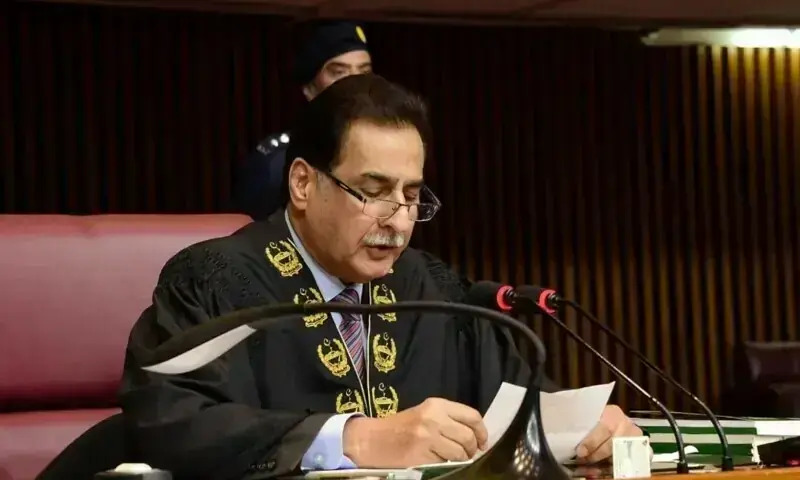
The Core Development Speaker of the [National Assembly](/news/national-assembly-ratifies-emergency-rule-khyber-pakhtunkhwa) Sardar Ayaz Sadiq on Wednesday exercised his statutory authority to issue formal production orders for two incarcerated Pakistan Tehreek-e-Insaf (PTI) Members of the National Assembly: Sanaullah Khan Masti Khel and Dawar Khan Kundi. The intervention materialized following an urgent written plea submitted by PTI Chief Whip Malik Amir Dogar on Tuesday. The formal communication asserted that nine opposition parliamentarians remained in judicial custody or police detention and required production to exercise their constitutional representation during the ongoing legislative sessions of the National Assembly and Senate.
Invoking powers under Rule 108 of the Rules of Procedure and Conduct of Business in the National Assembly, 2007, Speaker Sadiq deemed the presence of the two elected officials indispensable for parliamentary deliberations. Rule 108 empowers the custodian of the house to summon any detained lawmaker if their presence is deemed vital for legislative oversight, constitutional proceedings, or committee work. While PTI’s request encompassed seven additional detained lawmakers, the initial issuance for Masti Khel and Kundi reflects an incremental de-escalation mechanism within the federal legislature. Directives have been transmitted to the relevant law enforcement apparatus, provincial home departments, and prison superintendents to secure the physical transfer of the parliamentarians to the Parliament House in Islamabad.
Commercial & Economic Implications While fundamentally a legislative and legal maneuver, the operational friction within parliament carries tangible repercussions for Pakistan's wider economic architecture. Sustainable macro-fiscal management, structural reforms under the International Monetary Fund Extended Fund Facility, and key commercial privatizations demand a functional legislative environment. Chronic institutional discord creates uncertainty, inflating Pakistan's sovereign risk premium and dampening both domestic private-sector capital expenditure and foreign direct investment.
For enterprise operators, wholesale distributors, and retail merchants, political standoffs in the federal capital routinely introduce logistical friction. Protracted standoffs between law enforcement and opposition factions frequently trigger unexpected urban closures, transport corridor disruptions, and security checkpoints in key commercial centers such as Islamabad, Rawalpindi, and central Punjab. These disruptions strain interstate supply chains, leading to transient price volatility in perishable goods and consumer non-durables. Prolonged legislative paralysis also delays crucial trade-related policy updates, tariff rationalizations, and business-enabling statutory amendments required by the commercial distribution sector.
Related Intelligence: Pakistan and Oman Deepen Bilateral Trade and Regional Peace Efforts
Stakeholder Perspectives & Market Reactions Legal experts and constitutional analysts have largely endorsed the Speaker's application of Rule 108, framing it as a vital check to preserve legislative sovereignty against executive overreach. The legal fraternity emphasized that parliamentary democracy requires unfettered representation for constituent districts, irrespective of criminal or administrative charges pending against individual legislators. Conversely, treasury figures maintain that standard judicial processes must continue, insisting that production orders do not confer systemic immunity or override ongoing legal proceedings.
Commercial stakeholders, including the Federation of Pakistan Chambers of Commerce and Industry and regional trade bodies, continue to express weariness over persistent federal rancor. Financial market participants on the Pakistan Stock Exchange observed muted volatility, reflecting deep-seated investor hesitation in expanding risk exposure amid recurrent domestic friction. Institutional investors have consistently voiced concern that constant political sparring distracts executive bodies from implementing essential fiscal discipline, stabilizing structural energy tariffs, and curbing persistent administrative inefficiencies.
Forward Outlook & Key Watchpoints In the near term, political and market observers will monitor the administrative execution of Speaker Sadiq's directives, specifically whether provincial authorities comply promptly or mount jurisdictional procedural challenges. Crucially, attention turns to whether the remaining seven PTI lawmakers cited in Dogar's correspondence will secure subsequent production orders before the ongoing session concludes.
Over the medium horizon, the primary watchpoint remains the degree to which parliamentary détente can be established to pass vital business legislation. Key structural benchmarks—including fiscal discipline frameworks, the digitalization of revenue collection, and regulatory overhauls for commercial distribution—hinge on parliamentary functionalism. Continued friction risks stalling these institutional prerequisites, while an orderly legislative process could restore business confidence and ease political overhang on the national economy.
Join Our Official WhatsApp Channel
Receive live commodity alerts, policy changes, and commercial intelligence directly on WhatsApp.