
White House Press Secretary Faces Credential Scrutiny Following Bar Failure
Newly appointed White House Press Secretary Katie Zacharia acknowledged failing the legal bar exam following growing scrutiny over her professional qualifications and executive appointment vetting.
The Core Development
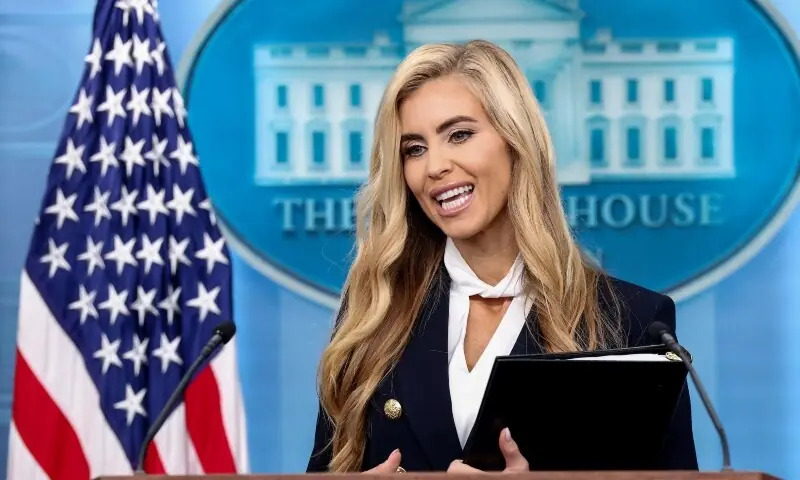
Newly appointed White House Press Secretary Katie Zacharia publicly acknowledged on Thursday that she had failed the bar exam, a non-negotiable prerequisite for practicing law across jurisdictions in the United States. The admission followed days of mounting inquiry into her professional record, during which she had routinely presented herself across television broadcasts and digital media as a qualified attorney, while holding the corporate title of general counsel for a California-based conservative non-profit organization.
The 41-year-old official, appointed by President Donald Trump last week, secured a Juris Doctor degree from Pepperdine University’s School of Law in 2011. While legal academic degrees represent rigorous institutional training, American jurisprudence explicitly reserves the title of practicing attorney and executive legal counsel roles for individuals admitted to a state bar association. The controversy intensified when Zacharia provided evasive answers regarding her state of licensure during initial press queries, culminating in a direct inquiry during a prime-time interview on Fox News where the deficit in her credentials was explicitly confirmed. The controversy has ignited a wider debate surrounding vetting mechanisms for top-tier appointments inside the executive branch.
Commercial & Economic Implications
While the primary friction centers on domestic political administration inside Washington, the integrity and procedural competence of high-level diplomatic and executive teams carry notable ramifications for foreign commercial stakeholders, including Pakistan’s external trade complex. As Pakistan navigates crucial multilateral negotiations, trade tariff dialogues, and investment treaties with American counterparts, administrative stability in Washington directly dictates the velocity and predictability of economic engagement.
For Pakistani exporters in value-added textiles, leather goods, and agrarian commodities, high turnover, vetting failures, and political distractions within White House offices often translate into fragmented policy continuity. When communication arms and executive offices face intense domestic ethical inquiries, bilateral trade dialogues and tariff exemptions frequently stall. Importers and wholesalers in Karachi and Lahore rely heavily on clear signals regarding foreign trade postures, exchange rate stability against the US dollar, and shipping lane governance. Personnel controversies that undermine executive authority tend to amplify global market volatility, raising hedging costs for commodity imports and complicating wholesale inventory planning.
Related Intelligence: Forensic Breakthrough in Hina Javed Case Sparks Calls for Domestic Staff Oversight
Stakeholder Perspectives & Market Reactions
Legal scholars and bar associations in the United States have voiced severe reservations regarding the mischaracterization of professional licensure, emphasizing that serving as general counsel without an active bar license violates statutory consumer protection and regulatory frameworks. Several institutional observers pointed out that the role of press secretary requires an unimpeachable record of factual accuracy, warning that early credibility breaches could undermine the administration's broader policy declarations.
In international capital markets and diplomatic circles, policy analysts noted that recurring institutional discrepancies heighten global policy uncertainty. Trader organizations and diplomatic observers in developing economies view persistent staffing controversies as a signal of internal friction that could hinder timely negotiations on bilateral investment treaties, Generalized Scheme of Preferences (GSP) dialogues, and strategic trade partnerships.
Forward Outlook & Key Watchpoints
The immediate watchpoint centers on whether the White House will sustain Zacharia’s appointment amid expanding calls for oversight committee reviews and potential formal ethics inquiries. Observers are also monitoring whether state bar regulators in California or other jurisdictions pursue legal inquiries regarding unauthorized legal practice associated with her past nonprofit general counsel position.
Over the coming weeks, market actors will observe whether this staffing turbulence affects the communication cadence of key economic policies, including trade tariffs and foreign exchange regulations. For Pakistan’s commercial apparatus, maintaining rigorous observation of executive branch stability remains essential to preempt policy shifts that impact supply chains, remittance flows, and bilateral trade agreements.
Join Our Official WhatsApp Channel
Receive live commodity alerts, policy changes, and commercial intelligence directly on WhatsApp.