
China-North Korea Border Bridge Unlikely to Revive Bilateral Trade Flows
The long-delayed New Yalu River Bridge linking China and North Korea is unlikely to stimulate substantial bilateral trade due to multilateral sanctions and Pyongyang's security priorities.
Geopolitical & Core Developments
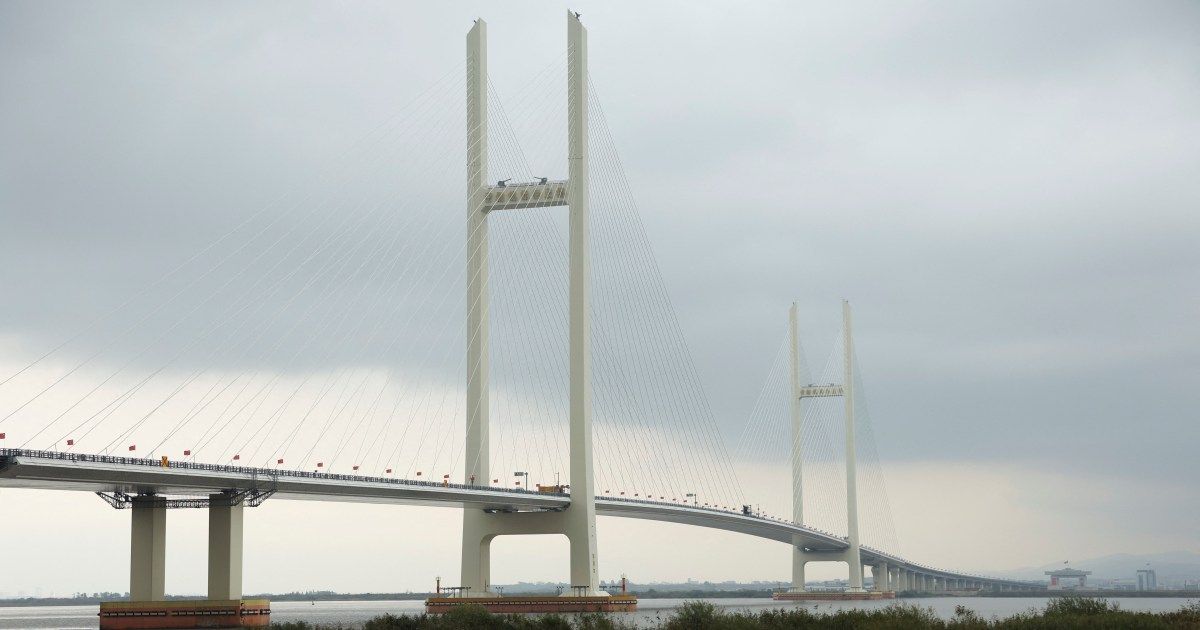
The physical completion and potential operationalization of the New Yalu River Bridge, connecting the Chinese border city of Dandong with North Korea's Sinuiju, marks an ambiguous milestone in Sino-DPRK relations. Initially conceived over a decade ago as a multi-million-dollar conduit to modernize bilateral commerce, the four-lane suspension bridge has languished largely idle. While Chinese customs facilities and logistical staging areas have long stood prepared, North Korean approaches and customs checkpoints have suffered prolonged construction delays and political hesitation.
Diplomatic analysts observe that Pyongyang's domestic posture continues to prioritize regime security and rigid border controls above external economic integration. Even as post-pandemic commercial interactions have tentatively resumed via rail freight and limited maritime routes, the opening of major vehicular transport arteries exposes North Korea to external ideological and economic vectors that the ruling Workers' Party seeks to curtail. Consequently, while Beijing views cross-border infrastructure as a strategic instrument to anchor North Korea within its regional security orbit, the actual facilitation of open transit remains subject to Pyongyang's calculated isolationism.
[Global Trade](/news/us-midterm-voter-discontent-signals-global-trade-shifts) & Economic Ripples
From a global trade perspective, the operational capacity of the border crossing faces structural caps imposed by United Nations Security Council resolutions. Comprehensive international sanctions strictly prohibit North Korean exports of coal, iron ore, textiles, and seafood—commodities that historically formed the foundation of DPRK foreign currency earnings. In return, multilateral bans on industrial machinery, electronic equipment, and bulk transportation metals prevent legitimate Chinese commercial entities from exporting modern industrial inputs into North Korea.
As a result, current and near-term freight movement across the Yalu River corridor will remain limited to agricultural goods, fertilizers, consumer essentials, and medical shipments exempt from sanctions regimes. On the commodity front, North Korea's critical dependency on Chinese refined petroleum products continues to be serviced primarily through the aging pipeline linking Dandong to the Ponghwa chemical facility, alongside illicit ship-to-ship maritime transfers that operate outside official customs checkpoints. The new bridge is therefore unlikely to introduce meaningful volume shifts in regional commodity markets or bulk dry cargo supply chains.
Related Intelligence: Fatal Shooting at Oregon Elementary School Prompts Fresh Security and Supply Concerns
International Reactions & Diplomatic Stances
Regional stakeholders have responded to border developments with focused scrutiny. The United States and its East Asian allies, Japan and South Korea, maintain that any normalization of border logistics must strictly comply with existing United Nations sanctions monitoring mechanisms. Officials in Seoul emphasize that cross-border infrastructure projects must not serve as conduits for dual-use technologies or illicit financial networks that sustain North Korea's ballistic missile and nuclear weapons development.
In contrast, Beijing maintains that normal trade involving humanitarian supplies and permitted consumer goods supports regional stability on the Korean Peninsula. Chinese foreign ministry spokespersons have repeatedly advocated for the calibrated easing of United Nations sanctions, arguing that economic containment impedes diplomatic engagement. Independent market analysts, however, note that major Chinese state-owned enterprises and commercial banks remain deeply cautious of conducting visible business with North Korean counterparts due to the persistent risk of secondary sanctions imposed by the United States Treasury.
Strategic Outlook & Future Scenarios
Looking ahead, the New Yalu River Bridge is poised to function as an instrument of controlled state-to-state logistics rather than a catalyst for market-driven economic reform. Bilateral trade volumes may experience incremental gains in authorized categories, but structural expansion will remain impossible without comprehensive diplomatic breakthroughs regarding denuclearization and sanctions relief.
In the medium term, Beijing will continue utilizing border infrastructure to prevent an economic implosion within North Korea, while calibrating throughput to avoid severe diplomatic friction with Western powers. Conversely, Pyongyang's deepening security alignment with the Russian Federation may incentivize North Korea to diversify trade toward Far Eastern Russian ports, reducing its exclusive reliance on Chinese border crossings. Unless substantial geopolitical realignments emerge, the bridge will stand predominantly as a geopolitical monument rather than a transformative hub for Northeast Asian international trade.
Join Our Official WhatsApp Channel
Receive live commodity alerts, policy changes, and commercial intelligence directly on WhatsApp.