
White House Press Access Restored Amid Continuing Legal Battles
US television networks resumed live White House coverage during President Xi Jinping's visit while legal battles persist over press restrictions.
The Core Development
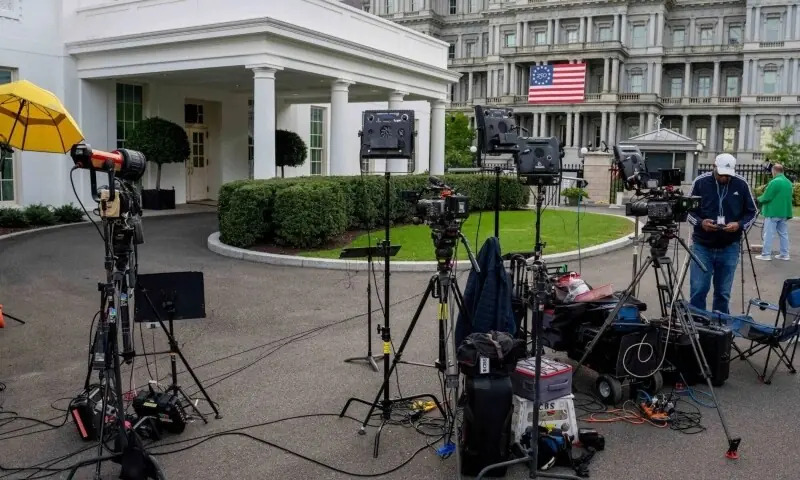
US television networks officially resumed coverage of President Donald Trump’s White House events on Friday, providing the critical first live pool access for Chinese President Xi Jinping’s high-profile state visit. This resumption of broadcasting occurs concurrently with an intense, ongoing legal battle over administrative restrictions previously imposed on prominent media outlets, including CNN, MS NOW, and Politico. Last week, the administration enacted a controversial ban barring these three outlets from the White House complex, sparking immediate condemnation from journalistic societies and constitutional scholars alike. In response to the executive restriction, a federal judge ordered the administration to temporarily restore their press credentials while legal arguments proceed.
The friction manifested visibly during the final day of President Xi Jinping's visit. The White House television press pool successfully aired video footage of the Chinese leader’s arrival at the executive mansion for bilateral discussions and formal tea. Furthermore, the pool documented the two world leaders during their joint tour of the National Archives, the historic institution which safely houses the original US Constitution and the Bill of Rights. Despite the restoration of pool feeds for this specific diplomatic milestone, the underlying legal struggle concerning permanent White House access protocols and First Amendment protections remains unresolved.
Commercial & Economic Implications
While the White House press dispute is rooted in American domestic politics and constitutional law, the broader ramifications extend deeply into international trade, global commerce, and emerging market sentiment—factors of significant interest to trade hubs such as Pakistan. Financial markets closely monitor high-level diplomatic engagements, such as the Trump-Xi summit, for any signals regarding trade tariffs, currency stability, and bilateral supply chain agreements. Information transparency is a fundamental pillar for global wholesale distribution networks, commodity pricing, and retail market stability. When access to primary source reporting from the executive branch is restricted or weaponized through political disputes, market uncertainty multiplies.
For Pakistani enterprises operating within international trade corridors, policy shifts resulting from US-China diplomatic interactions directly influence global inflation trends, commodity pricing, and shipping logistics. Foreign exchange markets react instantaneously to trade diplomacy outcomes; therefore, unimpeded journalistic coverage ensures that commercial stakeholders receive accurate, unvarnished data rather than filtered official narratives. Financial analysts note that corporate forecasting depends heavily on transparent geopolitical reporting to anticipate international trade tariffs and supply chain adjustments that ultimately affect import costs and domestic retail prices.
Related Intelligence: White House Air Force One Ban on CNN Escalates Media Tensions
Stakeholder Perspectives & Market Reactions
Reactions to the White House press ban and subsequent judicial intervention have exposed sharp divisions among media organizations, legal associations, and international observers. Major journalistic bodies have fiercely denounced the administration's actions as a dangerous precedent that undermines democratic principles and press freedom. Conversely, administration defenders argue that the executive branch retains inherent authority to manage press credentials and regulate workspace access within federal properties based on professional conduct standards.
Legal experts suggest that the federal court's preliminary injunction favoring the banned outlets establishes a critical benchmark for executive power limitations. Constitutional litigators emphasize that viewpoint-based discrimination in granting press access violates the First Amendment. Meanwhile, international business councils have expressed relief that diplomatic coverage remains operational, noting that clear communication channels between major economic superpowers are vital for maintaining global investor confidence and preventing unnecessary market volatility.
Forward Outlook & Key Watchpoints
As the legal proceedings advance, media analysts and economic observers are closely monitoring several critical milestones. The primary watchpoint is the forthcoming definitive judicial ruling on whether the administration's restrictions constitute an unconstitutional infringement on press freedom. Furthermore, market participants will evaluate whether future high-level diplomatic summits, trade negotiations, and bilateral briefings experience similar administrative friction.
For international observers, including business leaders in Pakistan, the resolution of this conflict will serve as an important indicator of the strength of institutional checks and balances in major Western democracies. Policymakers and trade associations will continue to assess how domestic political disputes in Washington influence foreign policy execution, ensuring that commercial strategies remain resilient against potential regulatory and diplomatic shifts in the global arena.
Join Our Official WhatsApp Channel
Receive live commodity alerts, policy changes, and commercial intelligence directly on WhatsApp.