
Violent Clashes in Tirana Challenge Albanian Stability and EU Integration Path
Violent anti-government demonstrations in Albania's capital Tirana have triggered heightened political instability, threatening the Balkan nation's European Union accession trajectory and shaking regional investor sentiment across Southeast Europe.
Geopolitical & Core Developments
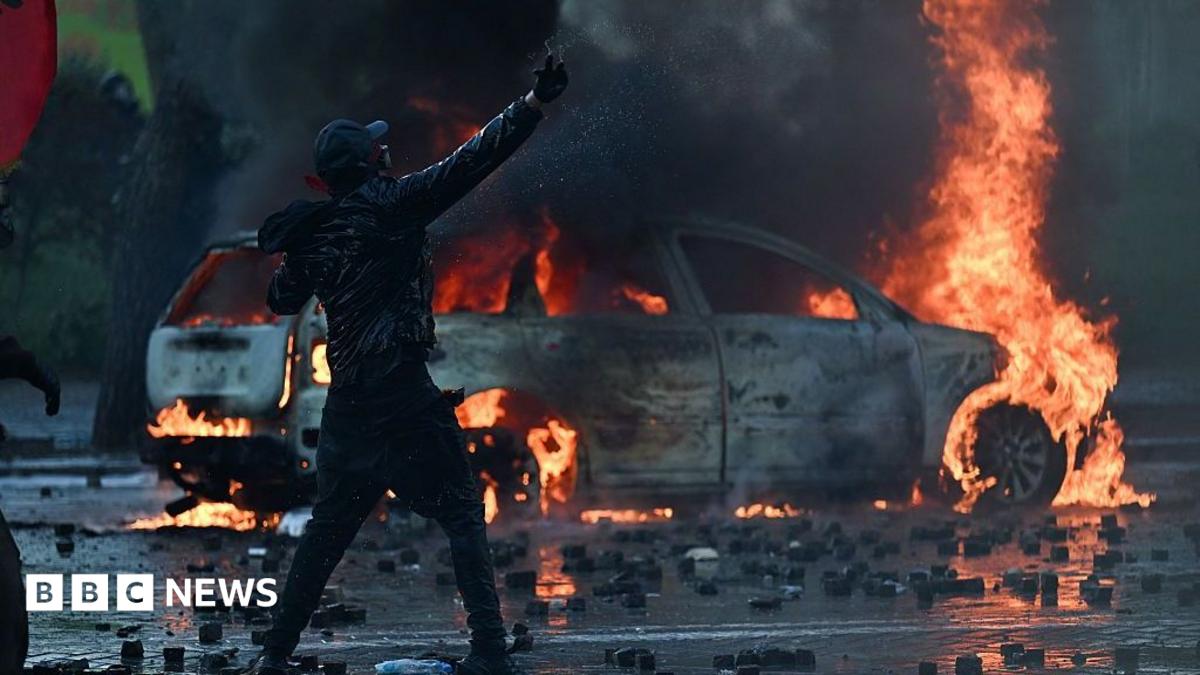
Tirana descended into widespread turmoil on Saturday as thousands of anti-government demonstrators clashed violently with heavily armed riot police outside key government installations. Protestors, organized largely by opposition coalitions demanding the resignation of Prime Minister Edi Rama, hurled petrol bombs, fireworks, and stones at the Council of Ministers building and parliament. Security forces responded with sustained tear gas volleys and high-pressure water cannons, clearing central boulevards and detaining dozens of demonstrators.
The unrest reflects deeply entrenched political polarization in the Adriatic nation. The opposition accuses the incumbent administration of systemic corruption, electoral malfeasance, and the monopolization of state institutions. Prime Minister Rama's government maintains that the protests represent an unlawful attempt by entrenched political elites to derail anti-corruption judiciary reforms overseen by Western partners. As demonstrations paralyze the capital's central administrative corridor, the escalation highlights fragility in a strategic NATO member nation currently engaged in formal accession negotiations with the European Union.
Global Trade & Economic Ripples
While Albania's macro economy does not dictate global commodity benchmarks, systemic unrest in Tirana introduces operational complications across Western Balkan supply networks. Albania operates as an increasingly strategic node within the Southern Gas Corridor via the Trans Adriatic Pipeline, which channels natural gas from the Caspian Basin directly into southern Italy and Central Europe. Persistent civil disorder near administrative and regulatory headquarters risks impeding routine infrastructure oversight and administrative clearances for cross-border energy logistics.
Furthermore, the violence dampens institutional capital inflows. Foreign direct investment into the Balkans, particularly in sovereign energy transition assets, Adriatic maritime logistics, and commercial mining, hinges on regulatory certainty and the rule of law. Instability threatens sovereign credit sentiment, putting upward pressure on Albania's debt-servicing yields on international bond markets. Commercial freight moving across the Corridor VIII transit network—linking the Port of Durrës with North Macedonia and Bulgaria—faces potential border dispatch delays and heightened regional freight insurance premiums as security conditions deteriorate.
Related Intelligence: US Congressional Search Dispute Raises Legal and Institutional Scrutiny
International Reactions & Diplomatic Stances
The flare-up has drawn swift concern from international bodies and major Western capitals. The European Union Delegation in Tirana issued a sharp rebuking statement, emphasizing that while peaceful assembly is fundamental in a functioning democracy, violence against public law enforcement and institutional infrastructure is entirely unacceptable. European diplomats underscored that continued institutional deadlock directly undermines the country's momentum regarding the opening of core negotiation clusters for EU accession.
The United States Embassy in Tirana echoed these concerns, calling for restraint from all political factions and urging leaders to resolve electoral and legislative disputes strictly through institutional and judicial mechanisms. Multilateral financial institutions, including the International Monetary Fund, have cautioned that sustained civil friction could distract authorities from pressing fiscal consolidations and judicial reforms, both of which are prerequisite conditions for further regional integration funding and structural liquidity grants.
Strategic Outlook & Future Scenarios
In the near term, the political situation in Tirana is expected to remain volatile. The opposition has signaled intentions to launch continuous rounds of civil disobedience, while the government has refused to yield to demands for an interim caretaker government. With municipal and general governance under mounting strain, institutional paralysis may stall parliamentary action on key anti-money laundering and public procurement legislation required by Brussels.
Should the confrontation turn into an extended confrontation, market watchers anticipate a broader reassessment of sovereign risk premiums across peripheral Western Balkan sovereign debt. The primary test for Tirana will rest on the judiciary's ability to operate autonomously amidst acute street-level pressure, alongside Brussels' forthcoming compliance assessments. A protracted confrontation will fundamentally decelerate Western Balkan economic convergence, complicating trade, logistics, and foreign direct investment in the Adriatic basin.
Join Our Official WhatsApp Channel
Receive live commodity alerts, policy changes, and commercial intelligence directly on WhatsApp.