
USS Abraham Lincoln Concludes Historic Middle East Deployment Amid Regional Tensions
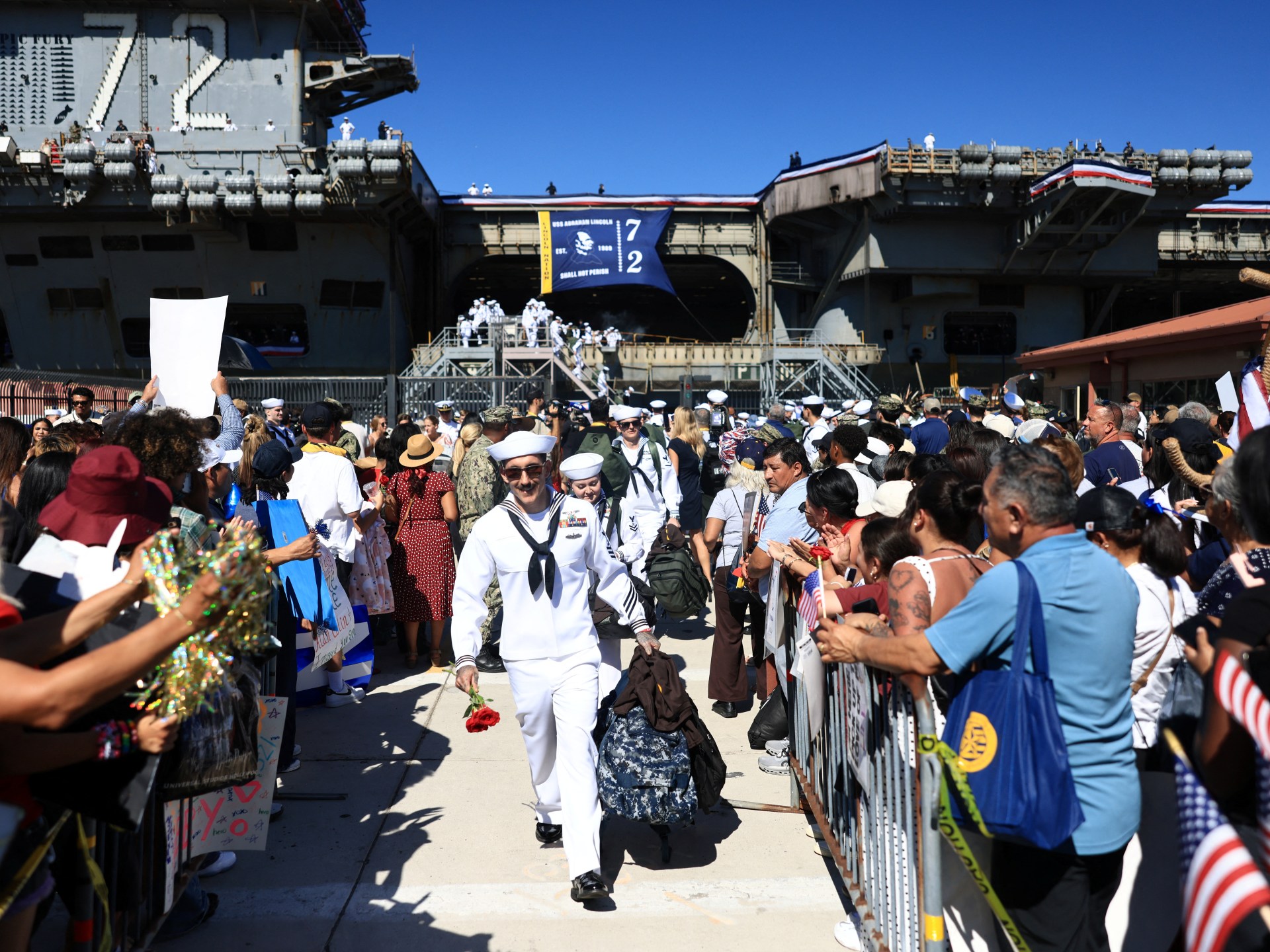
The USS Abraham Lincoln has returned to the United States following a record-breaking 265-day deployment in support of strategic operations concerning Iran, underscoring severe operational fatigue and ongoing maritime security challenges.
Geopolitical & Core Developments
The return of the Nimitz-class aircraft carrier USS Abraham Lincoln to its home port marks the conclusion of a gruelling, record-setting 265-day deployment across the United States Central Command area of responsibility. Originally dispatched to bolster American deterrence posture and project power amid escalating friction with Iran and its regional proxies, the strike group became the focal point of US naval strategy in West Asia. The extended tour far exceeded the standard six-month deployment window, placing extraordinary strain on both the ship's complement of more than 5,000 sailors and the mechanical systems of the vessel and its air wing.
Throughout its nearly nine months at sea, the strike group operated in a high-threat environment marked by asymmetric risks, aerial defense operations, and constant readiness mandates. The deployment reflects a broader strategic dilemma for Washington: balancing the necessity of maintaining forward-deployed deterrent forces against the compounding wear-and-tear on naval assets and personnel readiness. The prolonged operational tempo highlights how persistent geopolitical flashpoints continue to stretch superpower resources to their structural limits.
Global Trade & Economic Ripples
The protracted presence of a carrier strike group in the region underscores the delicate equilibrium sustaining global energy trade through vital maritime corridors. The waters surrounding the Arabian Peninsula, including the Strait of Hormuz and the Bab el-Mandeb Strait, remain critical choke points for international crude oil shipments, liquefied natural gas, and dry bulk commodities. Any escalation involving state actors like Iran immediately reverberates through global commodity markets, driving up maritime war-risk insurance premiums, elevating charter rates for supertankers, and injecting acute volatility into Brent and WTI crude benchmarks.
While the return of the USS Abraham Lincoln signals a tactical rotation rather than an immediate de-escalation, commercial shipping operators continue to price in elevated security risks across the Middle East. Global supply chains remain highly sensitive to disruptions in these lanes, where insurance underwriters frequently reassess regional risk matrices based on naval deployment schedules and real-time threat assessments from intelligence agencies.
Related Intelligence: Strait of Hormuz Explosions Send Shockwaves Through Global Energy Markets
International Reactions & Diplomatic Stances
International observers and defense analysts have interpreted the grueling deployment length as a clear indicator of the stretched capacity of the US Navy's surface fleet. Allied governments in Europe and Asia have expressed growing concern over the sustainability of continuous high-intensity naval patrols in multiple theaters simultaneously. Meanwhile, regional actors in the Middle East have monitored the deployment and subsequent rotation closely, viewing the shifting naval posture as a barometer of Washington's long-term commitment to regional security architectures.
Market analysts note that while diplomatic channels between Washington and Tehran remain strained and largely indirect, the repositioning of heavy naval assets provides a psychological stabilization for commercial shipping operators who view sustained American presence as a vital deterrent against systemic maritime disruptions.
Strategic Outlook & Future Scenarios
As the US Navy rotates subsequent carrier strike groups into the region, defense planners face mounting pressure to address fleet modernization, maintenance backlogs, and personnel retention challenges exacerbated by record-length deployments. The strategic outlook for the region depends heavily on whether diplomatic initiatives can successfully establish broader maritime security frameworks or if the current cycle of deterrence and counter-deterrence will persist.
Upcoming multilateral diplomatic summits and regional security dialogues will likely focus on securing critical navigation routes and mitigating the economic fallout of prolonged geopolitical standoff. For global commodity markets, the primary variable remains the predictability of naval patrols and the avoidance of unintended tactical escalations in vital trade arteries.
Join Our Official WhatsApp Channel
Receive live commodity alerts, policy changes, and commercial intelligence directly on WhatsApp.