
US Withdraws B-1 Bombers From UK Base Amid Heightened Iran Security Threats
The US military has abruptly relocated strategic B-1 bombers from the UK's RAF Fairford following terrorism-related arrests, highlighting rising security concerns amid Middle East tensions.
Geopolitical & Core Developments
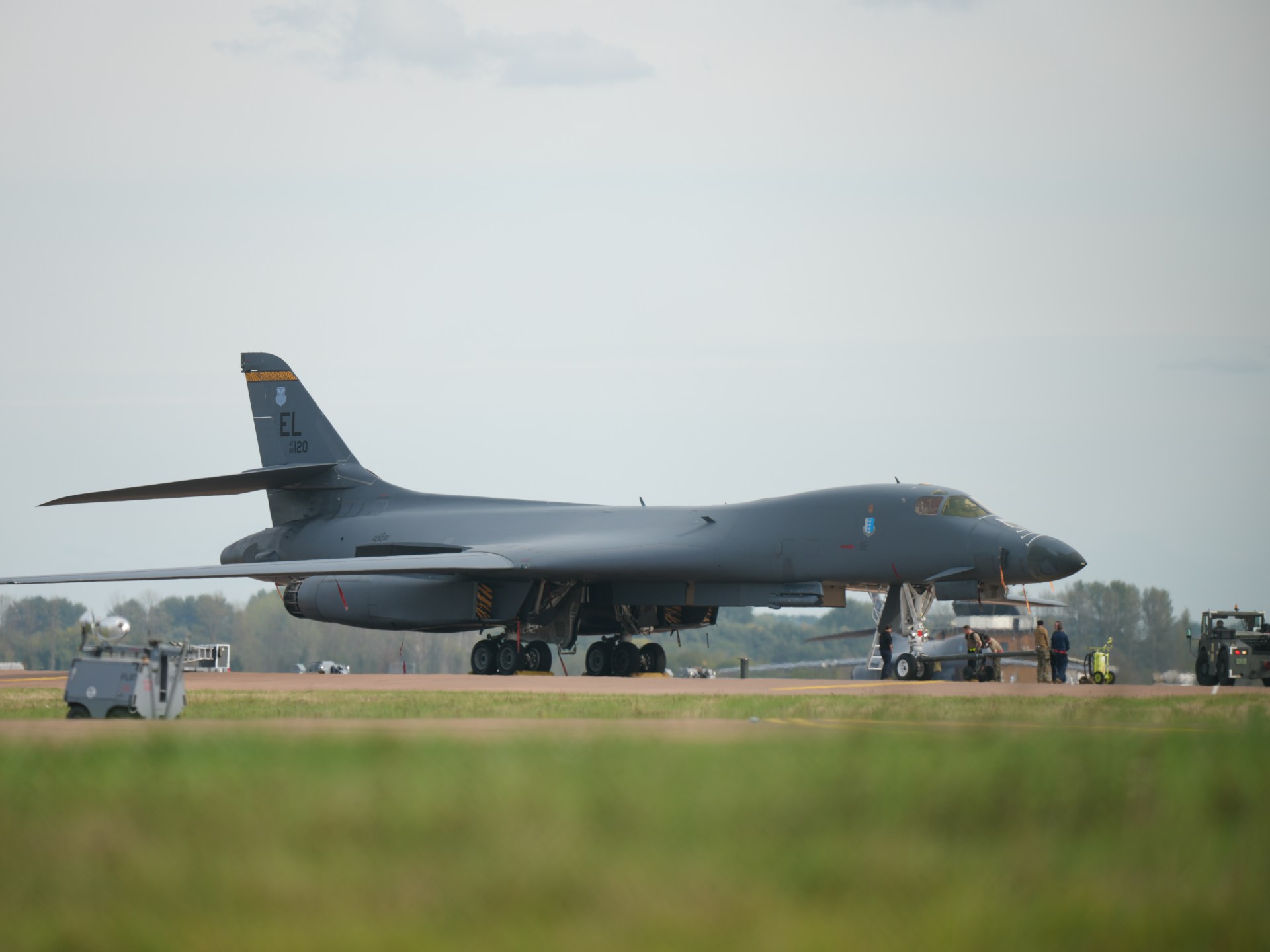
The United States Air Force has executed an abrupt and unexpected redeployment of its strategic B-1 Lancer bomber aircraft from the Royal Air Force base at Fairford in Gloucestershire, returning the long-range supersonic assets back to the continental United States. This sudden tactical shift comes in the direct wake of multiple high-stakes, terrorism-related arrests conducted by counter-terrorism authorities in the immediate vicinity of the critical British military installation. RAF Fairford, historically designated as a vital forward operating location for US strategic bomber task forces supporting European and Middle Eastern operations, became the epicenter of an intensified security lockdown following intelligence reports indicating targeted surveillance and potential hostile reconnaissance by non-state actors.
While Pentagon officials have maintained a guarded posture regarding the operational specifics of the redeployment, defense analysts note that the presence of B-1 bombers in the United Kingdom serves as a potent deterrent posture directed at adversarial regimes, most notably Iran. The convergence of heightened physical security breaches at the perimeter of a premier nuclear-capable bomber base and escalating regional friction in the Middle East has created an unprecedented operational dilemma for Western defense planners. The decision to pull back high-value strategic assets signals a profound reassessment of force protection protocols and vulnerability thresholds at European host-nation facilities.
Global Trade & Economic Ripples
The abrupt repositioning of premier US strategic military hardware from Western Europe immediately reverberates across global energy markets, international shipping lanes, and commodity trading desks. Although the movement is primarily tactical and defense-oriented, international crude oil benchmarks experienced immediate upward tick volatility, driven by heightened perceptions of imminent geopolitical escalation in the Persian Gulf. Traders and algorithmic commodity funds are factoring in a higher risk premium for maritime transit through the Strait of Hormuz, a critical energy choke point vulnerable to Iranian asymmetric retaliation or regional proxy conflict.
Furthermore, the heightened security posture at vital trans-Atlantic military nodes underscores the fragility of global supply chains linked to defense logistics and aerospace manufacturing. International shipping insurers have begun reviewing risk assessments for commercial vessels operating in European and Eastern Mediterranean waters, anticipating potential spillover effects from heightened counter-terrorism alerts. Currency markets also reflected conservative shifts, with investors seeking traditional safe-haven assets such as the US Dollar and Swiss Franc, reflecting broader macroeconomic anxieties over a protracted geopolitical confrontation involving major energy-producing states.
Related Intelligence: Karachi Factory Blaze Exposes Industrial Safety Deficits and Supply Chain Risks
International Reactions & Diplomatic Stances
Official diplomatic channels have remained measured, reflecting the sensitive nature of bilateral defense cooperation between Washington and London. British Ministry of Defence spokespersons reiterated their unwavering commitment to collective security frameworks while deferring detailed operational commentary to United States European Command. Meanwhile, European Union security officials have convened behind closed doors to evaluate the broader implications of transnational threat vectors targeting critical defense infrastructure across the continent.
Market analysts and geopolitical risk consultancies have interpreted the B-1 withdrawal as an indicator of severe intelligence warnings regarding active threat cells operating within Western Europe. International bodies, including the International Maritime Organization, have issued precautionary advisories urging enhanced vigilance for commercial shipping operating within spheres influenced by Middle Eastern state actors. The lack of vocal pushback from regional capitals suggests a broad, tacit consensus that force protection measures must take immediate precedence over visible power projection during periods of acute crisis.
Strategic Outlook & Future Scenarios
Looking ahead, the trajectory of US strategic bomber deployments in Europe will depend heavily on the evolution of counter-terrorism investigations surrounding RAF Fairford and the broader diplomatic stalemate with Tehran. Should intelligence agencies uncover sustained, state-sponsored infiltration networks targeting Western military installations, the Pentagon may permanently alter its European rotation models, favoring more dispersed, heavily fortified operating bases in North America or Eastern Europe.
Upcoming international summits and bilateral defense ministerial meetings are expected to prioritize enhanced intelligence sharing, cyber-defense fortifications, and perimeter security overhauls for all joint military facilities. Sanctions architecture against Iranian entities suspected of financing or directing regional proxy networks is widely anticipated to tighten further, potentially introducing secondary compliance measures that could disrupt secondary trade channels. Ultimately, the Fairford incident serves as a stark reminder that modern great-power competition is increasingly fought across asymmetric domains, directly impacting global markets and commercial stability.
Join Our Official WhatsApp Channel
Receive live commodity alerts, policy changes, and commercial intelligence directly on WhatsApp.