
US Strategic Bomber Realignment Redraws Global Security Architecture
The withdrawal of US B-1 bombers from the United Kingdom signals a profound shift in global force projection, carrying severe implications for Middle Eastern stability and international commodity markets.
Geopolitical & Core Developments
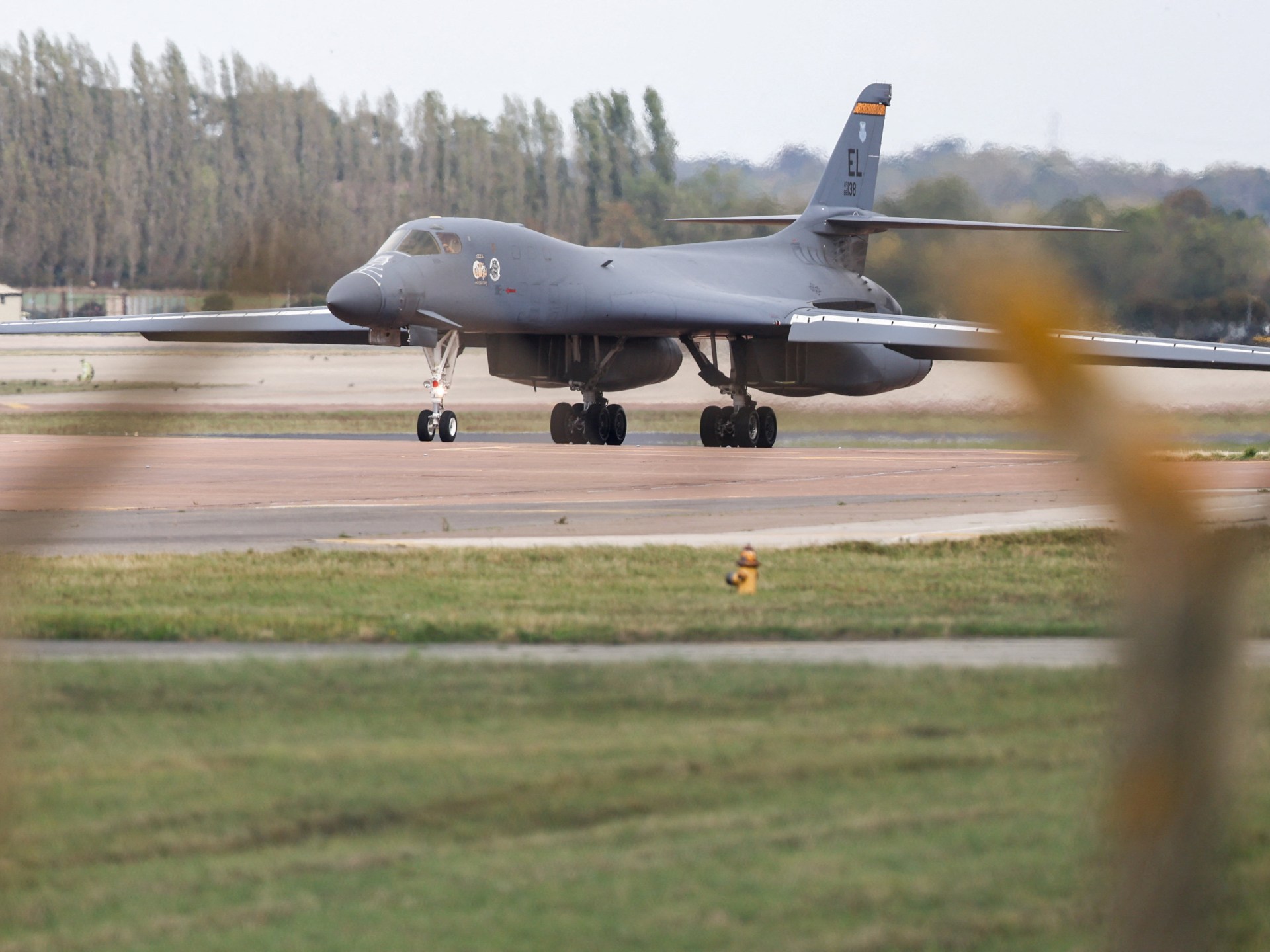
The recent decision by the United States Air Force to pull its advanced B-1 Lancer strategic bombers from RAF Fairford in the United Kingdom marks a critical juncture in contemporary military posture and global force projection. Officially framed as routine operational rotation, defense analysts widely interpret the maneuver as a calculated recalibration in the face of persistent, heightened tensions with Iran and its regional proxies. RAF Fairford has long served as a vital European staging post for American long-range strike capabilities, offering rapid access to both the European theater and the Middle East. By withdrawing these formidable assets, the Pentagon is executing a broader strategic pivot designed to protect high-value military assets from increasingly sophisticated missile and drone threats, while simultaneously redistributing air power across a more resilient, decentralized network of global bases.
Beyond the European theater, the repositioning underscores the immense logistical complexities facing United States Central Command and European Command. Strategic bombers do not operate in a vacuum; their deployment requires specialized maintenance infrastructure, secure command-and-control networks, and extensive diplomatic clearance from host nations. The current geopolitical landscape—marked by simultaneous friction in Eastern Europe, the Middle East, and the South China Sea—forces military planners to constantly weigh the deterrent value of forward-deployed aircraft against the risk of catastrophic loss should a base be targeted in an asymmetric strike. Consequently, Washington is increasingly relying on expeditionary Agile Combat Employment doctrines, dispersing aircraft across remote locations in the Indian Ocean, Australia, and domestic U.S. installations to complicate adversary targeting calculations.
Global Trade & Economic Ripples
The ripple effects of military realignments within strategic corridors extend far beyond diplomatic chanceries, immediately impacting global commodity markets, energy prices, and maritime logistics. The Middle East remains the beating heart of global crude oil supply, and any perception of diminished American kinetic deterrence or heightened regional conflict triggers instantaneous volatility in Brent and WTI futures. Energy traders closely monitor posture shifts at key nodes like RAF Fairford and regional Gulf installations, pricing in potential risks to maritime transit through the Strait of Hormuz and the Bab el-Mandeb strait. A perceived vacuum in rapid-response air power can embolden state and non-state actors alike, threatening vital energy chokepoints and driving up marine war-risk insurance premiums for commercial tankers traversing the Persian Gulf and Red Sea.
Furthermore, the broader economic ramifications encompass supply chain resilience and defense expenditure trajectories. As major economies absorb the reality of a fractured, multipolar security environment, defense budgets are expanding rapidly across Europe, North America, and parts of Asia. This militarization of fiscal policy diverts capital toward aerospace and defense manufacturing, influencing industrial supply chains for advanced semiconductors, titanium, and specialized composites. International trade routes are increasingly dictated by geopolitical alignment rather than purely economic efficiency, as multinational corporations decouple vulnerable supply lines from volatile regions. The cost of doing business globally is thus systematically rising, embedding a permanent security premium into international commerce and commodity pricing.
Related Intelligence: UN Chief Praises Pakistan Mediation in US-Iran Conflict
International Reactions & Diplomatic Stances
International reaction to the shifting US bomber architecture has been swift, multifaceted, and deeply revealing of underlying geopolitical alignments. European NATO allies have expressed cautious understanding regarding the redeployment, though defense ministries in frontline states privately voice anxiety over any perceived dilution of American nuclear and conventional deterrence on the continent's eastern flank. Conversely, regional adversaries such as Tehran have sought to frame the drawdown of American strategic assets as a tactical victory and a sign of waning Western resolve in the face of sustained regional resistance. State-controlled media outlets across the Middle East have amplified these narratives to project strength domestically and rally regional allies against Western military presence.
Multilateral bodies, including the United Nations, have issued renewed appeals for de-escalation, warning that military posturing and repositioning risk triggering unintended kinetic escalations. Market analysts at major financial institutions point out that international diplomacy is currently running on parallel tracks with hard-power signaling. While diplomatic channels remain open to revive stalled nuclear negotiations with Iran, the movement of strategic bombers demonstrates that Washington is simultaneously fortifying its military posture. This dual-track approach creates significant uncertainty for foreign investors, who must continuously evaluate sovereign risk, currency stability, and regulatory shifts in emerging market economies exposed to geopolitical flashpoints.
Strategic Outlook & Future Scenarios
Looking toward the medium and long-term horizon, the trajectory of global security and commercial stability will depend heavily on how major powers manage the transition toward a multipolar international order. The dispersion of strategic bomber assets away from conventional European hubs like RAF Fairford is likely to accelerate, with the Pentagon deepening investments in forward operating locations across the Indo-Pacific and enhanced logistical corridors in northern Australia and the central Pacific. This shift reflects the Pentagon's primary long-term strategic focus on near-peer competition, even as legacy commitments in the Middle East and Europe continue to demand urgent operational attention.
Upcoming international summits and bilateral defense dialogues will likely focus on burden-sharing, joint force interoperability, and the protection of critical global infrastructure against cyber and kinetic threats. Sanctions regimes targeting Iranian energy exports and proxy networks are expected to remain robust, serving as the primary economic weapon of choice to curb regional aggression without resorting to full-scale military intervention. However, the margin for error is narrowing. As global commodity markets remain hypersensitive to geopolitical shocks, any miscalculation in the deployment or signaling of strategic military assets could rapidly transform localized tensions into a broad systemic crisis, fundamentally altering the architecture of international trade and security for the coming decade.
Join Our Official WhatsApp Channel
Receive live commodity alerts, policy changes, and commercial intelligence directly on WhatsApp.