
US Grants Visas to Iranian Leadership for UN Meetings Amid Regional War
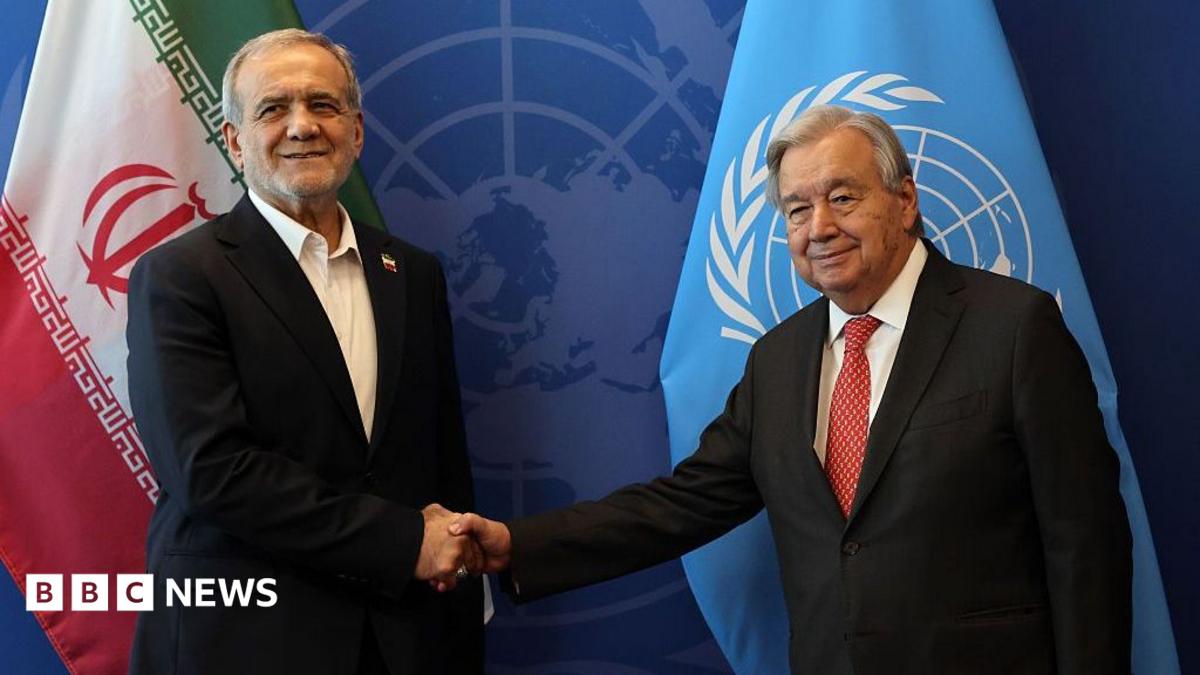
The United States has granted entry visas to Iranian President Masoud Pezeshkian and Foreign Minister Abbas Araghchi for United Nations meetings in New York as regional conflict passes the six-month mark.
Geopolitical & Core Developments
In a significant diplomatic development amid protracted regional hostilities, the United States government has authorized entry visas for a high-level Iranian delegation, including President Masoud Pezeshkian and Foreign Minister Abbas Araghchi, to attend official United Nations proceedings in New York. The decision arrives as the multifaceted Middle Eastern conflict crosses its six-month threshold, characterized by repeated direct and proxy confrontations involving Israel, Iranian-aligned regional factions, and Western military deployments.
Although Washington and Tehran have maintained no formal diplomatic ties for more than four decades, the United States is legally bound by the 1947 United Nations Headquarters Agreement to facilitate access for official delegations accredited to the multilateral institution. Nevertheless, granting entry to Pezeshkian—who assumed the Iranian presidency campaigning on moderate domestic governance and renewed international engagement—presents a critical diplomatic crossroads. Alongside Foreign Minister Araghchi, an experienced diplomat central to previous international nuclear accords, the Iranian delegation enters the international forum at a juncture where ballistic exchanges and localized escalation have repeatedly threatened wider regional stability.
Global Trade & Economic Ripples
The geopolitical dynamics surrounding Iranian foreign relations remain intrinsically linked to global energy markets and international maritime commerce. Sustained conflict across the Levant and the Arabian Peninsula has institutionalized a structural risk premium on global crude benchmarks. Both Brent crude and West Texas Intermediate futures have exhibited persistent volatility driven by market apprehension over potential supply interruptions in the Persian Gulf and transit impediments through the Strait of Hormuz.
Concurrently, persistent maritime interdictions conducted by Houthi forces in the Red Sea corridor have forced international shipping consortia to divert dry bulk, container, and tanker vessels around the Cape of Good Hope. This operational rerouting adds ten to fourteen transit days between Asian production hubs and European consumer markets, inflating bunker fuel expenditures, compounding container freight rates, and driving war-risk insurance premiums higher across the Western Indian Ocean. Commodity desks are also closely monitoring whether high-level diplomatic contacts in New York could influence the enforcement trajectory of United States secondary sanctions targeting illicit Iranian petroleum flows into Asian refining centers.
Related Intelligence: Deadly Kohat Explosion Kills Seven and Sparks Regional Security Concerns
International Reactions & Diplomatic Stances
The authorization of the Iranian delegation's travel has generated measured diplomatic positioning across multilateral bodies and allied states. United Nations Secretary-General António Guterres has reiterated that sustained engagement among sovereign member states is foundational to crisis de-escalation, urging regional adversaries to utilize multilateral frameworks to prevent wider military miscalculation.
In Washington, officials from the Department of State clarified that compliance with international treaty requirements does not imply a shift in bilateral posture or an easing of strategic scrutiny regarding Iranian regional activities. United States authorities are expected to enforce strict domestic movement restrictions on the Iranian delegation, confining their presence to the immediate perimeter of the United Nations headquarters in Manhattan. European capitals, led by the E3 grouping of the United Kingdom, France, and Germany, have expressed intentions to evaluate Tehran's openness to diplomatic dialogue concerning advanced uranium enrichment activities and conventional arms proliferation.
Strategic Outlook & Future Scenarios
The forthcoming diplomatic assembly in New York presents several potential pathways for regional and commercial stability. While direct, formal negotiations between Washington and Tehran remain politically unviable in the immediate term, established intermediary channels—frequently coordinated via Omani, Swiss, or Qatari intermediaries—could facilitate low-profile communication to establish boundaries against uncontrolled military escalation.
Should the summit pass without establishing measurable de-escalation benchmarks, the regional security climate is expected to remain precarious, reinforcing elevated insurance surcharges and sustained volatility across global commodities. Conversely, any verifiable signal toward diplomatic containment during the New York sessions could stabilize energy pricing expectations and offer international commercial supply chains a measure of predictability amid ongoing regional volatility.
Join Our Official WhatsApp Channel
Receive live commodity alerts, policy changes, and commercial intelligence directly on WhatsApp.