
Pakistan Abstains on UNSC Iran Sanctions Vote Amid Regional Balancing
Pakistan abstained from a US-drafted UN Security Council resolution extending the Iran sanctions monitoring panel, which collapsed under dual vetoes from Beijing and Moscow amid mounting cross-border commercial sensitivities.
The Core Development
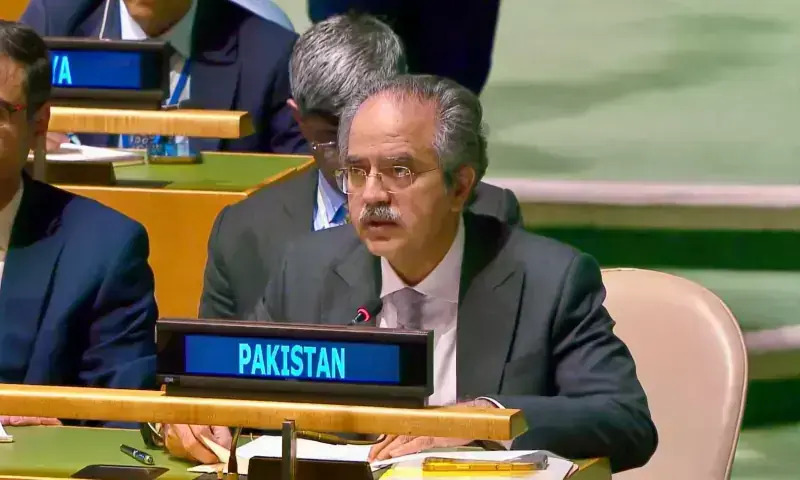
In a consequential diplomatic move at the United Nations headquarters in New York, Pakistan chose to abstain during a United Nations Security Council (UNSC) vote on a United States-sponsored draft resolution aimed at extending the mandate of the Panel of Experts assisting the 1737 Sanctions Committee on Iran. The resolution was definitively defeated following dual vetoes cast by permanent council members China and Russia, despite securing eleven affirmative votes from members including the United States, the United Kingdom, and France. Pakistan and one other member nation chose non-alignment through abstention.
The deadlock at the 15-member council underscores acute global fractures surrounding the unraveling architecture of the 2015 Joint Comprehensive Plan of Action (JCPOA), endorsed under UNSC Resolution 2231. Western capitals have increasingly pushed to tighten oversight and potentially trigger the contested 'snapback' provision to reimpose multilateral sanctions against Tehran. Conversely, Beijing and Moscow argued that weaponizing monitoring mechanisms aggravates regional instability and undermines diplomatic off-ramps. For Pakistan, serving its non-permanent term on the council, the abstention represents a calculated geopolitical stance designed to avoid alienating Western economic partners while preserving fragile neighborly relations with Iran.
Commercial & Economic Implications
For Pakistan's domestic economy, the diplomatic maneuvering carries direct ramifications across commodity supply chains, energy imports, and cross-border commerce. Pakistan shares a porous 900-kilometer border with Iran, where bilateral trade—largely conducted via barter mechanisms, local banking exemptions, and informal channels—serves as an economic lifeline for Balochistan and parts of lower Sindh.
Over the past two years, Islamabad and Tehran have pursued structured barter frameworks to exchange Pakistani agricultural outputs, notably basmati rice and kinnow, for Iranian petrochemicals, bitumen, liquefied petroleum gas (LPG), and regional electricity. Iranian LPG supplies frequently moderate winter heating costs and industrial fuel shortfalls across domestic wholesale distribution networks. Had the UNSC panel expanded its monitoring scope, scrutiny over third-party logistics firms, regional shipping conduits, and clearing houses operating at border terminals like Taftan and Gabd-Rimdan would have intensified, potentially triggering secondary penalties and choking off cost-effective petroleum products that currently offset Pakistan's strained foreign exchange reserves.
Related Intelligence: Pakistan and China Activate Joint Boundary Commission to Streamline Border Trade
Stakeholder Perspectives & Market Reactions
Market observers and trade bodies in Pakistan have viewed the government's abstention with measured relief. Border trade associations, particularly the Quetta Chamber of Commerce and Industry (QCCI), have repeatedly petitioned Islamabad to safeguard the bilateral trading corridors against international sanctions friction. Wholesale distributors emphasize that disruption to Iranian energy inflows could trigger an immediate 15 to 20 percent spike in domestic LPG and fuel transport costs within Balochistan's interior markets.
Conversely, macroeconomic analysts and legal experts caution that Pakistan cannot afford to disregard Western sensitivities. With the nation reliant on an ongoing International Monetary Fund (IMF) Extended Fund Facility and bilateral financing rollovers, aligning too overtly with Tehran carries structural financial risks. Legal analysts note that abstaining allowed Islamabad to effectively shelter behind the Sino-Russian veto without taking a direct oppositional stand against Washington and European capitals, thereby shielding its commercial banking sector from retaliatory compliance reviews.
Forward Outlook & Key Watchpoints
The dissolution of the expert panel’s mandate does not eliminate operational risks for regional traders. In the coming quarters, domestic commercial stakeholders must monitor several critical watchpoints. First, Western powers are expected to pivot toward unilateral and minilateral sanctions enforcement, elevating maritime surveillance in the Arabian Sea and Gulf of Oman, which could impact illicit fuel smuggling and third-party vessel charters.
Second, the long-delayed 1,146-kilometer Iran-Pakistan (IP) gas pipeline remains an existential legal issue, with Tehran’s potential international arbitration claims hanging over Islamabad. Should Western nations orchestrate snapback measures through alternative procedural avenues prior to the formal expiry of Resolution 2231 provisions, Pakistan’s formalization of barter mechanisms could face strict banking sector freezes. Traders and industrial importers must maintain elevated due diligence on transaction routing, cross-border payments, and customs documentation at all international trade terminals.
Join Our Official WhatsApp Channel
Receive live commodity alerts, policy changes, and commercial intelligence directly on WhatsApp.