
US Expands Arctic Military Footprint in Greenland Security Deal
The United States is establishing at least two new military bases in Greenland under a landmark agreement with Denmark and Greenland, significantly escalating strategic competition in the Arctic.
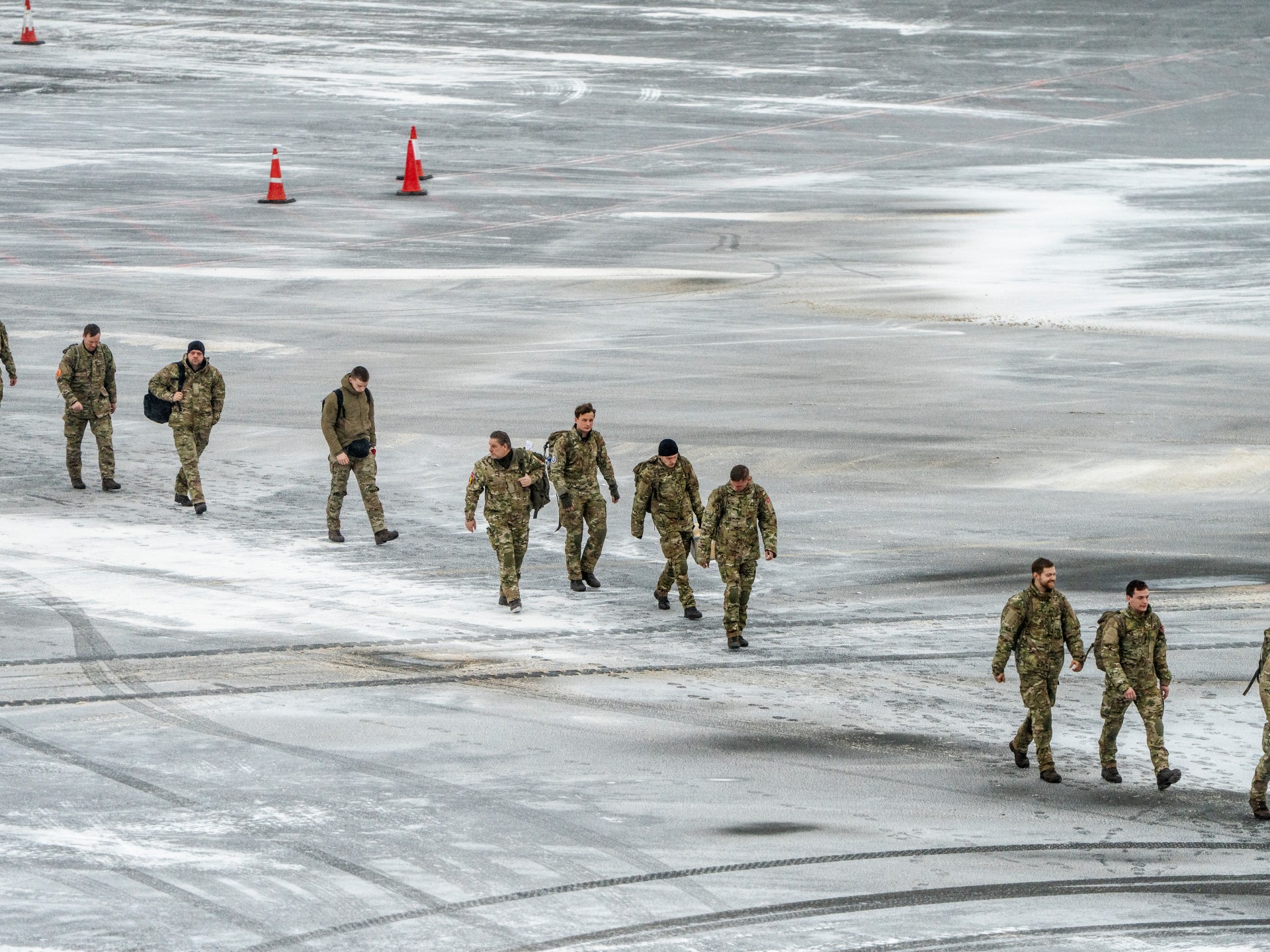
Geopolitical & Core Developments
The United States, in close coordination with the governments of Denmark and Greenland, is advancing plans to establish at least two new military installations on the strategic island territory. This diplomatic and defense breakthrough marks a significant inflection point in Arctic security architecture. For decades, the US presence was anchored primarily by the Pituffik Space Base (formerly Thule Air Base). However, evolving threat matrixes, driven by increased Russian militarization of the high north and expanding Chinese polar ambitions, have compelled Washington to reinforce its northernmost perimeter.
The negotiations, conducted over many months through tripartite channels involving Nuuk, Copenhagen, and Washington, reflect the shifting political landscape of Greenland, where local authorities exercise increasing autonomy over foreign policy intersections. The new facilities will enhance early-warning radar capabilities, intelligence, surveillance, and reconnaissance (ISR) operations, and power-projection logistics. By cementing a permanent, expanded footprint, Washington seeks to secure critical choke points along the Greenland-Iceland-United Kingdom (GIUK) gap, a vital maritime corridor for transatlantic defense and global commerce.
Global Trade & Economic Ripples
While framed in the language of defense, the strategic militarization of Greenland carries profound implications for global commodity markets, shipping routes, and supply chains. As global warming accelerates polar ice melt, the Arctic is transitioning from an inaccessible wilderness into a contested commercial frontier. The opening of new polar maritime routes—such as the Northwest Passage and the Transpolar Sea Route—promises to slash transit times between Asian manufacturing hubs and North American and European markets by up to forty percent compared to traditional Suez Canal routing.
Furthermore, Greenland holds vast, largely untapped reserves of critical minerals and rare earth elements essential for the global energy transition, including neodymium, praseodymium, dysprosium, and lithium. The stabilization of regional security through expanded US military engagement provides the political risk mitigation required by international mining conglomerates and institutional investors. Concurrently, energy markets are closely monitoring how heightened geopolitical competition in the Arctic will influence future offshore hydrocarbon exploration and the protection of subsea communications cables vital to global financial infrastructure.
Related Intelligence: Chokepoint Crisis: The Strategic and Economic Weight of Bab al-Mandab
International Reactions & Diplomatic Stances
International response to the base expansion has underscored the growing polarization of Arctic governance. Moscow has formally expressed deep concern, characterizing the deployment of additional North American military assets in the Arctic as a provocative escalation that undermines regional stability and militarizes a zone traditionally managed through cooperative scientific diplomacy via the Arctic Council. Beijing has similarly criticized the move, warning against zero-sum Cold War mentalities in polar affairs while maintaining its self-designated status as a near-Arctic state interested in the Polar Silk Road.
Conversely, Western allies, particularly NATO members, have welcomed the agreement as a vital modernization of collective defense. European capitals view the enhanced US presence as an essential deterrent against potential disruptions to maritime commerce and critical infrastructure. Market analysts note that while diplomatic friction will intensify in multilateral forums, the pragmatic reality of sovereign security agreements ensures that implementation will proceed regardless of rhetorical opposition from non-Arctic or rival powers.
Strategic Outlook & Future Scenarios
Looking ahead, the establishment of these new military installations will likely trigger a broader infrastructural boom across Greenland, encompassing deep-water port modernization, telecommunications upgrades, and expanded airfield capacities. These dual-use assets will lay the groundwork for increased commercial shipping support and resource extraction logistics over the coming decade.
Diplomatically, upcoming Arctic security summits and bilateral consultations between Washington and Nuuk will focus on equitable revenue-sharing models for resource extraction and environmental protection frameworks. As geopolitical fault lines harden, Greenland is poised to transition from a peripheral strategic outpost into one of the most critical geopolitical and commercial crucibles of the twenty-first century global economy.
Join Our Official WhatsApp Channel
Receive live commodity alerts, policy changes, and commercial intelligence directly on WhatsApp.