
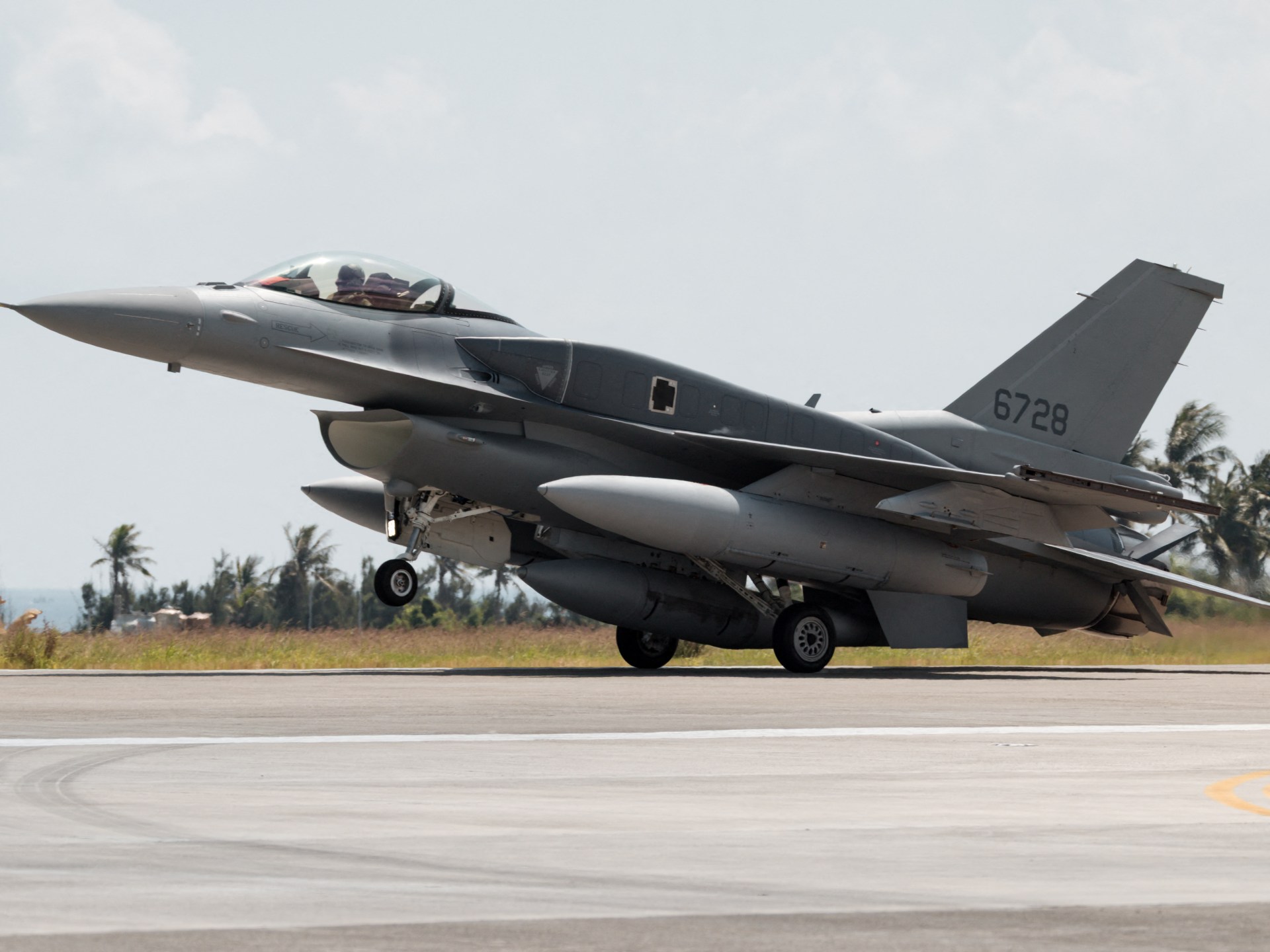
US Delivers Advanced F-16V Jets to Taiwan Amid Rising Regional Tensions
The United States delivers advanced F-16V fighter jets to Taiwan as Taipei navigates rising military threats from Beijing and growing uncertainty over future US defense commitments under the incoming administration.
Geopolitical & Core Developments
The delivery of advanced F-16V fighter jets to Taiwan marks a critical milestone in the defense relationship between Washington and Taipei, coming at a time of unprecedented cross-strait friction. As the People's Republic of China continues to ramp up provocative military drills, incursions into Taiwan's air defense identification zone, and comprehensive economic coercion, the self-governing island remains heavily reliant on external military modernization. The latest acquisitions feature state-of-the-art active electronically scanned array (AESA) radar systems and upgraded avionics, significantly enhancing Taiwan's intercept capabilities against modern stealth aircraft.
However, this strategic reinforcement occurs against a backdrop of deep strategic anxiety in Taipei. Policymakers are increasingly questioning the durability and predictability of the incoming Donald Trump administration's foreign policy commitments. With Trump's rhetoric emphasizing transactional diplomacy, demands for Taiwan to pay significantly more for its own defense, and a potential prioritization of bilateral trade deals with Beijing, Taiwan's national security establishment finds itself walking a precarious geopolitical tightrope. The dual challenge of countering relentless Chinese pressure while securing consistent bipartisan backing in Washington defines the current strategic dilemma facing Taipei.
Global Trade & Economic Ripples
The protracted geopolitical standoff across the Taiwan Strait carries monumental implications for global commerce, high-technology manufacturing, and international supply chains. Taiwan sits at the epicenter of the global semiconductor industry, producing the overwhelming majority of advanced microchips essential for everything from automotive manufacturing to artificial intelligence infrastructure and consumer electronics. Any military escalation, naval blockade, or prolonged disruption in the Taiwan Strait would instantly paralyze global technology supply chains, resulting in catastrophic economic losses across North America, Europe, and Asia.
Furthermore, the Taiwan Strait serves as a vital maritime artery for global container shipping and international trade. Commercial shipping lanes passing through these waters facilitate billions of dollars in cargo movement daily. Heightened military tensions invariably drive up marine war risk insurance premiums, complicate logistical planning, and introduce severe volatility into global commodity markets. Investors and multinational corporations are actively stress-testing their exposure to Taiwan, accelerating diversification strategies toward secondary manufacturing hubs in Southeast Asia, Japan, and Mexico to mitigate systemic operational risks.
Related Intelligence: Indonesian Volcanic Eruption Sparks Regional Supply Chain and Commodity Anxiety
International Reactions & Diplomatic Stances
Beijing has reacted to the defense transfer with characteristic fury, reiterating its longstanding stance that arms sales to Taiwan violate its sovereignty and undermine regional stability. Chinese foreign ministry spokespersons have repeatedly urged Washington to halt military interactions with Taipei immediately, warning of severe countermeasures against US defense contractors involved in the transactions. Meanwhile, regional powers such as Japan and South Korea are monitoring the situation with mounting apprehension, recognizing that any kinetic conflict in the strait would immediately draw in their own security apparatuses.
Multilateral bodies, including the United Nations, continue to urge restraint from all state actors, emphasizing the imperative of maintaining peace and stability across international waterways. Market analysts and geopolitical risk consultancies note that while deterrence remains the official policy objective of Washington's 'One China' framework, the ambiguity surrounding future executive decisions in the US creates a volatile operating environment for global capital markets. Defense analysts suggest that diplomatic signaling will remain tense as allied nations assess the reliability of security umbrellas in the Indo-Pacific region.
Strategic Outlook & Future Scenarios
Looking ahead, the trajectory of US-Taiwan relations under the incoming administration will hinge heavily on broader geopolitical bargains struck between Washington and Beijing. Should the Trump administration utilize arms sales merely as leverage in wider trade negotiations, Taiwan could find its defensive posture compromised in exchange for economic concessions elsewhere. Conversely, a hardline faction within the US Congress could push for even deeper integration of Taiwanese forces into regional security frameworks, likely prompting an aggressive economic or maritime response from Beijing.
Upcoming diplomatic summits, bilateral trade negotiations, and defense budget allocations in both Washington and Taipei will serve as critical barometers for future escalation points. As economic decoupling and technological nationalism continue to reshape the global order, the defense of Taiwan remains the single most dangerous geopolitical flashpoint capable of triggering widespread systemic shocks across global financial and commodity markets.
Join Our Official WhatsApp Channel
Receive live commodity alerts, policy changes, and commercial intelligence directly on WhatsApp.