
Opposition Alliance Invites Jamaat-i-Islami for Multiparty Summit Amid Political Turmoil
The Tehreek-i-Tahafuz Aain Pakistan has formally invited Jamaat-i-Islami to a multiparty conference aimed at addressing severe economic and political instability.
The Core Development
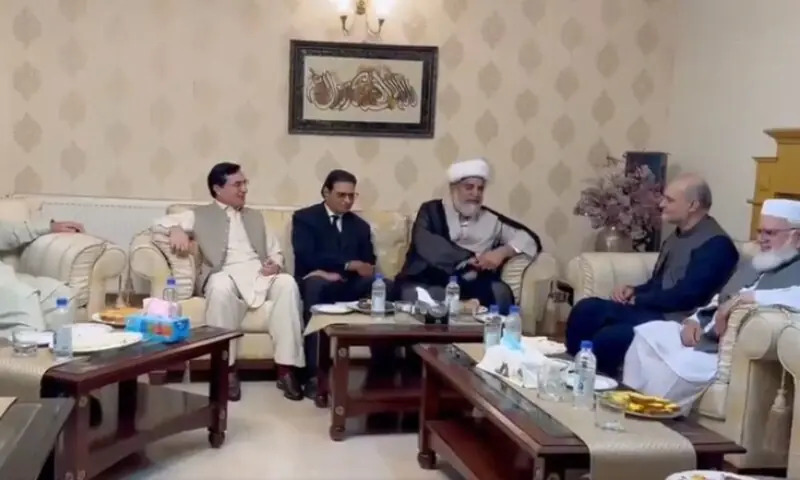
A high-level delegation from the Tehreek-i-Tahafuz Aain Pakistan (TTAP), comprising prominent political figures including Senate opposition leader Senator Allama Raja Nasir Abbas and senior Pakistan Tehreek-e-Insaf (PTI) leaders, formally engaged with Jamaat-i-Islami (JI) Emir Hafiz Naeemur Rehman on Friday. The strategic consultation centered on securing JI participation in an upcoming multiparty conference (MPC) originally announced by the opposition alliance for September 11.
Led primarily by the PTI, the initiative was conceived to construct a unified opposition platform to confront mounting national crises. PTI Chairman Barrister Gohar Ali Khan previously outlined the core agenda, emphasizing that escalating law enforcement challenges, persistent inflation, macroeconomic strain, and legislative debates regarding provincial administration necessitate immediate cross-party consensus. The Friday meeting in Islamabad underscored the opposition's urgency in consolidating fractured political factions to challenge the current legislative trajectory.
Commercial & Economic Implications
For Pakistan's commercial sectors, wholesale distributors, and retail markets, the protracted political standoff carries profound economic repercussions. Business sentiment across major commercial hubs in Karachi, Lahore, and Faisalabad remains subdued as merchants grapple with compounding inflationary pressures and volatile utility tariffs. Financial analysts note that political instability directly impedes foreign direct investment and stalls vital structural reforms required under international lender agreements.
Supply chain efficiencies and retail trade volumes are increasingly vulnerable to disruptions stemming from potential street protests and localized strikes called by opposition groups. When political coalitions fragment or clash over governance parameters, consumer confidence recedes, leading to dampened discretionary spending. Wholesale markets report tightening liquidity margins as traders adopt risk-averse inventory strategies, fearing sudden regulatory shifts or transport bottlenecks caused by political rallies.
Related Intelligence: Indonesian Volcanic Eruption Sparks Regional Supply Chain and Commodity Anxiety
Stakeholder Perspectives & Market Reactions
Trader associations and industrial bodies have expressed cautious optimism regarding any structured dialogue between major political players, while simultaneously voicing frustration over the distraction from pressing economic fundamentals. Representatives from various chambers of commerce argue that continuous political confrontation prevents policymakers from focusing on industrial recovery, tax rationalization, and export enhancement.
Legal and constitutional experts observing the TTAP outreach suggest that broadening the opposition umbrella to include the Jamaat-i-Islami could exert substantial pressure on the ruling coalition, particularly regarding judicial independence and electoral transparency. Meanwhile, government spokespersons have dismissed the proposed multiparty moot as a desperate bid by disjointed political elements seeking relevance rather than offering viable solutions to national economic woes.
Forward Outlook & Key Watchpoints
As the opposition alliance finalizes its agenda for the upcoming multiparty conference, key market stakeholders and policy analysts are closely monitoring several critical indicators. The primary watchpoint is whether Jamaat-i-Islami formally accepts the invitation and under what conditionalities it enters the coalition framework.
Furthermore, the reaction of the federal administration to the opposition's mobilization efforts will dictate the immediate security environment and commercial stability across major urban centers. Observers will also track potential policy announcements emerging from the conference, specifically regarding labor welfare, taxation policies, and proposed constitutional amendments. Sustainable economic recovery remains contingent upon how effectively political stakeholders manage their adversarial stance and whether structured legislative dialogue can replace protracted confrontation.
Join Our Official WhatsApp Channel
Receive live commodity alerts, policy changes, and commercial intelligence directly on WhatsApp.