
Taiwan Receives First F-16V Jets Amid Regional Tensions
Taiwan has taken delivery of its first two advanced F-16V fighter jets from a landmark 2019 US procurement order, boosting aerial defense capabilities against rising geopolitical pressure from Beijing.
The Core Development
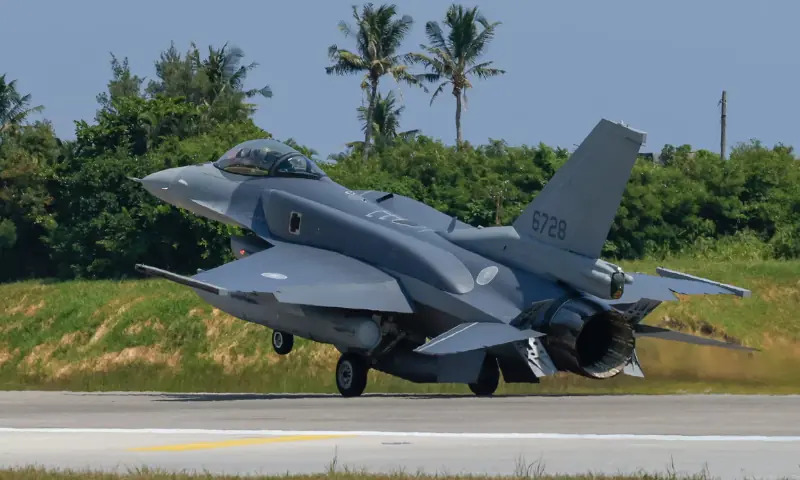
Taiwan has officially received the first two aircraft from a landmark order of 66 advanced F-16V Block 70 fighter jets, marking a critical milestone in the island's defense modernization program. The jets touched down at Taitung’s Chihhang Air Base on Taiwan’s mountainous eastern coast at noon local time, following a trans-Pacific delivery route that included stops in Hawaii and Guam. This initial delivery follows months of persistent delays that have strained military planning in Taipei. The acquisition stems from a historic $8 billion defense deal finalized in 2019 under the Trump administration. Taipei has frequently voiced frustration over delivery bottlenecks for major US weapons systems, even as Washington maintains its status as the island's primary international backer and arms supplier. Speaking to reporters at parliament shortly before the arrival, Taiwan's Defence Minister Wellington Koo confirmed that additional F-16V airframes are scheduled for delivery in subsequent batches. The arrival bolsters an overextended Taiwanese air force that is routinely forced to scramble tactical aircraft on a daily basis to intercept and shadow expanding Chinese military patrols operating near the strait.
Commercial & Economic Implications
While defense procurement is fundamentally a matter of national security, large-scale military acquisitions exert profound ripple effects on global supply chains, aerospace manufacturing economics, and macroeconomic stability across Asian trade corridors. For commercial markets in developing trade hubs like Pakistan, heightened geopolitical friction in the Taiwan Strait introduces severe volatility into maritime logistics, semiconductor production, and international shipping insurance rates. Taiwan remains the undisputed epicenter of global advanced semiconductor manufacturing through firms like TSMC. Any disruption to its industrial base directly impacts global electronics supply chains, industrial input costs, and inflationary pressures worldwide. Furthermore, escalating defense expenditures in contested regions divert critical fiscal capital away from productive commercial infrastructure, influencing sovereign credit ratings, foreign direct investment inflows, and currency stability across emerging market economies that rely on stable global trade routes.
Related Intelligence: US Delivers Advanced F-16V Jets to Taiwan Amid Rising Regional Tensions
Stakeholder Perspectives & Market Reactions
International defense analysts, regional policymakers, and trade associations are closely monitoring the delivery as a litmus test for US security commitments in the Indo-Pacific. While Taiwanese officials have expressed relief over the arrival of the combat aircraft, lingering anxieties persist regarding the long-term predictability of US foreign military financing and arms transfer approvals under shifting political administrations in Washington. Beijing has consistently condemned US arms sales to Taiwan, viewing them as a serious violation of its sovereignty and a dangerous escalation of regional tensions. Meanwhile, global financial markets continue to price in the latent risks of persistent cross-strait friction, with institutional investors maintaining a cautious stance on technology equities and manufacturing supply chains exposed to East Asian geopolitical flashpoints.
Forward Outlook & Key Watchpoints
As Taiwan integrates the newly arrived F-16V Block 70 jets into its existing tactical fleet, attention shifts toward the delivery timeline for the remaining 64 aircraft. Defence Minister Koo and military planners face the ongoing challenge of accelerating pilot training, ground crew readiness, and infrastructure upgrades to accommodate the advanced avionics and radar systems unique to the Viper variant. Key watchpoints for international observers include upcoming legislative reviews in Washington concerning foreign military sales, potential adjustments to US-China bilateral trade and defense dialogues, and the frequency of Chinese People's Liberation Army aerial incursions into Taiwan's air defense identification zone. The successful absorption of these military assets will serve as a crucial benchmark for evaluating Taipei's deterrent posture over the coming decade.
Join Our Official WhatsApp Channel
Receive live commodity alerts, policy changes, and commercial intelligence directly on WhatsApp.