
Ukraine Pioneers Battlefield Drone Evacuation Amid Escalating Tech Warfare
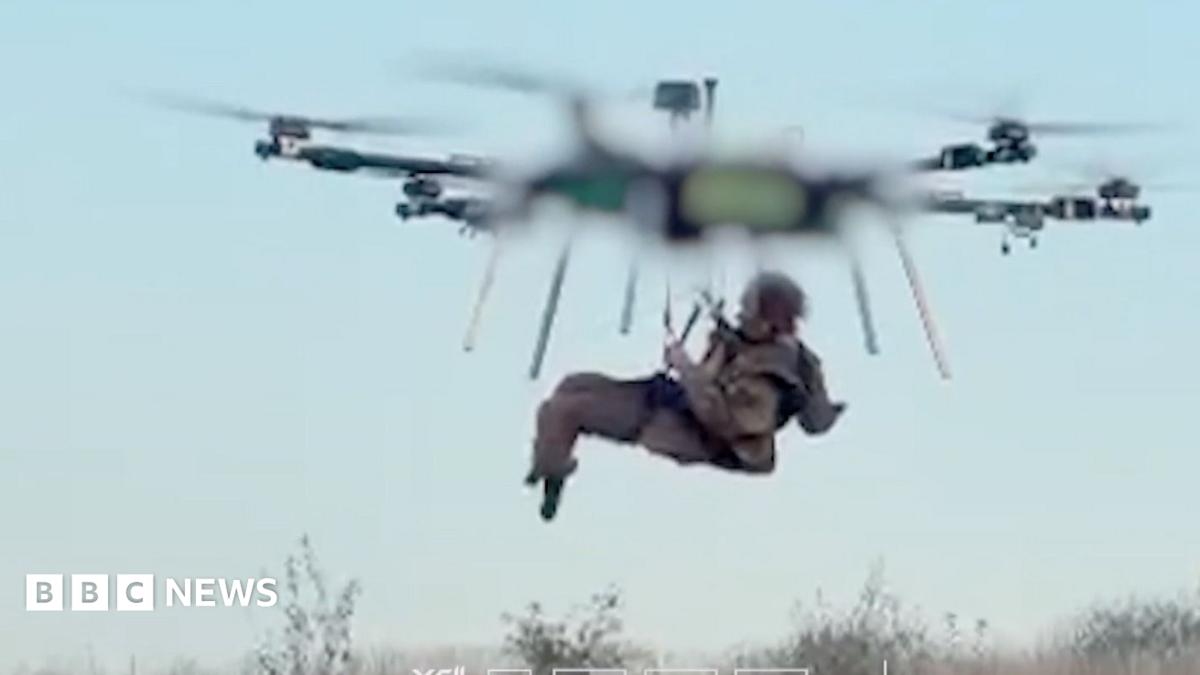
Ukrainian forces have executed their first recorded autonomous drone evacuation of a wounded soldier, marking a significant evolution in unmanned battlefield technology with wide-ranging defense procurement implications.
Geopolitical & Core Developments
In a development that underscores the accelerating operational shift toward unmanned systems in modern conflict, the Armed Forces of Ukraine confirmed the successful aerial evacuation of an injured soldier using an unmanned aerial vehicle (UAV). The serviceman, stranded in an active combat sector densely contaminated with anti-personnel landmines and subjected to continuous surveillance by hostile reconnaissance drones, could not be accessed via conventional armored medical evacuation units. Confronted with impassable terrain and high-risk interdiction corridors, military operators deployed a heavy-lift tactical drone capable of casualty extraction, successfully airlifting the soldier beyond the immediate envelope of artillery and loitering munitions.
The operation marks the first publicly verified battlefield aeromedical evacuation conducted exclusively by an unmanned platform in an active theater of war. The Ukrainian conflict has evolved into a prolonged, technology-dense confrontation characterized by real-time electronic warfare, ubiquitous drone surveillance, and deep defensive fortifications. Traditional mechanized logistics, casevac procedures, and infantry recovery missions have faced severe attritional rates due to first-person view (FPV) strike drones and expansive minefields along the 1,000-kilometer front line. By demonstrating the tactical feasibility of robotic extraction, military strategists have crossed a threshold from using UAVs primarily for intelligence, reconnaissance, and strike roles to critical survivability and sustainment missions.
Global Trade & Economic Ripples
While the direct operation was localized to the eastern front, the strategic validation of heavy-lift tactical drones carries profound ramifications for global defense manufacturing, commercial aviation components, and critical raw material supply chains. The transition from small commercial quadcopters to heavy-payload autonomous platforms requires sophisticated carbon-fiber composites, advanced lithium-sulfur or solid-state batteries, and high-torque electric propulsion systems. Demand for these critical inputs is intensifying competition in East Asian and Western industrial manufacturing hubs.
Furthermore, the dual-use applications of large-scale unmanned transport platforms are accelerating capital deployment into commercial autonomous logistics. Venture defense funds and major aerospace contractors are recalibrating procurement programs toward resilient, distributed transport architectures. These supply chains rely heavily on critical mineral markets, including rare earth neodymium for permanent magnet motors, high-grade titanium for structural airframes, and specialized microcontrollers resistant to electronic warfare jamming. As sovereign states accelerate the integration of robotic logistics into their doctrine, commercial shipping lanes and aerospace component pricing are experiencing sustained pressure, forcing Western nations to decouple and onshore sensitive drone supply chains away from dominant single-source suppliers.
Related Intelligence: French Civil Unrest Escalates Political Fragmentation and European Economic Uncertainty
International Reactions & Diplomatic Stances
The operation has captured intense scrutiny from military planners across the North Atlantic Treaty Organization (NATO) and allied defense ministries. Western defense procurement agencies, including the United States Department of Defense and European defense consortiums, have noted that lessons drawn from Ukraine's frontline adaptations are directly informing next-generation autonomous combat system requirements. Military analysts underscore that the traditional reliance on expensive, manned rotary-wing aircraft for tactical evacuation inside contested air-defense environments is becoming operationally unsustainable.
Multilateral bodies and defense analysts have highlighted the broader doctrine of autonomous logistics as a necessary evolution against integrated anti-access/area-denial (A2/AD) networks. While Ukrainian officials frame the mission as an operational imperative to preserve combat manpower amidst sustained personnel strains, international defense monitors view the event as an empirical case study that will drive immediate shifts in military assistance packages, accelerating the transition from standard armored vehicles toward specialized robotic ground and aerial logistics platforms.
Strategic Outlook & Future Scenarios
The trajectory of the conflict indicates an inevitable proliferation of heavy autonomous systems across tactical echelons. Moving forward, both Ukrainian and Russian forces are anticipated to scale up the deployment of heavy-lift multirotors for tactical resupply, munitions delivery, and casualty retrieval. This expansion will inevitably spur counter-development in directed-energy weapons, localized radio-frequency jamming envelopes, and automated short-range air defense systems designed to neutralize mid-altitude autonomous transports.
On the diplomatic and trade front, Western defense packages are expected to incorporate dedicated lines for unmanned battlefield sustainment and autonomous logistics hardware ahead of forthcoming security summits. As nations update their long-term defense acquisition strategies, commercial industrial bases will face heightened regulatory compliance under export control regimes such as the Wassenaar Arrangement. The tactical success of autonomous aeromedical evacuation confirms that the future of frontline survivability lies in unmanned integration, setting a precedent that will permanently reshape defense industrial priorities globally.
Join Our Official WhatsApp Channel
Receive live commodity alerts, policy changes, and commercial intelligence directly on WhatsApp.