
UK Clears Jackdaw North Sea Gasfield to Bolster Domestic Supply
The British government has approved Shell's development of the North Sea Jackdaw gasfield, prioritizing domestic energy security amid supply constraints despite significant political and environmental backlash.
Geopolitical & Core Developments
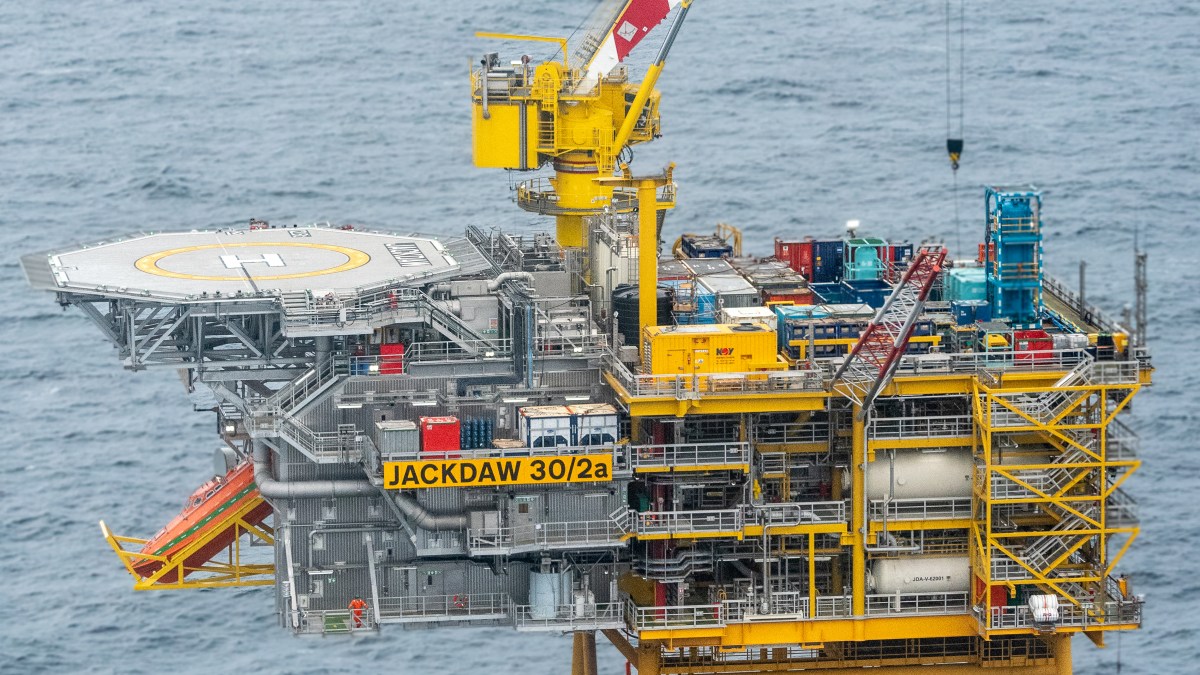
The United Kingdom has formally granted regulatory clearance for the development of the Jackdaw gasfield in the central North Sea, marking a consequential policy intervention in Europe's evolving energy landscape. The Offshore Petroleum Regulator for Environment and Decommissioning granted final consent to energy major Shell following an initial rejection on environmental grounds the previous year. Jackdaw, located approximately 250 kilometers east of Aberdeen, Scotland, holds reserves estimated to yield significant volumes of natural gas, with peak production projected to satisfy more than 6 percent of the UK's domestic gas demand.
The regulatory green light follows an intensive strategic re-evaluation within Westminster, driven by the geopolitical imperative to replace Russian hydrocarbons and stabilize domestic energy supplies. British authorities have framed the project as a critical pillar of sovereign resilience, arguing that indigenous extraction carries a lower carbon footprint than importing liquefied natural gas (LNG) via cross-ocean carriers. However, the decision has reignited intense friction between Downing Street and devolved authorities in Scotland, where policymakers have increasingly advocated for an expedited transition away from fossil-fuel infrastructure.
Global Trade & Economic Ripples
The commissioning of Jackdaw carries tangible ramifications for international commodity flows and European trade dynamics. Since the disruption of pipeline flows from the Russian Federation, European economies have competed fiercely on the spot market for seaborne LNG, driving up regional benchmark prices at the Title Transfer Facility and the UK National Balancing Point. By injecting fresh domestic supply into the British grid by the mid-2020s, the asset is engineered to buffer UK wholesale pricing against external procurement shocks.
From a macroeconomic perspective, sustained capital expenditure in the North Sea continental shelf supports peripheral engineering, marine logistics, and fabrication supply chains across Northern Europe. Conversely, institutional investors face complex risk calculations. While near-term commodity volatility yields high capital returns for upstream operators, escalating regulatory scrutiny and the introduction of windfall energy profit levies across Western jurisdictions complicate long-term balance-sheet planning and debt financing for deep-water hydrocarbon assets.
Related Intelligence: Paris Unrest Inflicts Heavy Losses on Retail and Urban Economy
International Reactions & Diplomatic Stances
The authorization has provoked sharp censure from international climate advocates, opposition lawmakers, and multilateral environmental bodies. The United Nations and the International Energy Agency have repeatedly issued clear directives warning that the authorization of new upstream oil and gas fields is incompatible with limiting global temperature rise to 1.5 degrees Celsius above pre-industrial levels. Climate policy analysts underscored that approving major extraction sites damages the UK's diplomatic credibility as an international climate broker.
Opposition members in Westminster characterized the authorization as a short-sighted concession to fossil-fuel conglomerates that fails to lower immediate retail utility tariffs. Legal advocacy networks have announced formal preparations to mount judicial reviews against the decision, alleging that the environmental assessment systematically failed to account for downstream Scope 3 combustion emissions. In defense of the project, industry associations argued that the North Sea remains essential to bridge the energy transition while regional offshore wind and hydrogen capacities scale up.
Strategic Outlook & Future Scenarios
The operational path forward for the Jackdaw gasfield remains contingent on surviving impending court challenges and political shifts. The near-term trajectory will involve Shell mobilizing subsea construction vessels, engineering tie-backs to the existing Shearwater hub, and advancing drilling schedules. Any protracted injunction issued by the High Court could delay first gas delivery, exposing the operator to rising development costs and shifting political risk in the event of a change in national government.
Globally, the UK's decision highlights a growing policy divergence across the developed world, where short-term energy security mandates frequently clash with binding net-zero targets. As multilateral negotiations approach at upcoming global climate summits, Western nations utilizing emergency clauses to permit hydrocarbon developments will face intensifying diplomatic pushback from developing economies and climate-vulnerable states. The durability of the Jackdaw venture will serve as a bellwether for the future viability of legacy offshore basins across the global energy matrix.
Join Our Official WhatsApp Channel
Receive live commodity alerts, policy changes, and commercial intelligence directly on WhatsApp.