
Trump and Xi Convene for High-Stakes Global Summit
US and Chinese leaders meet to address critical trade, technological, and geopolitical friction points in their third summit this year.
Geopolitical & Core Developments
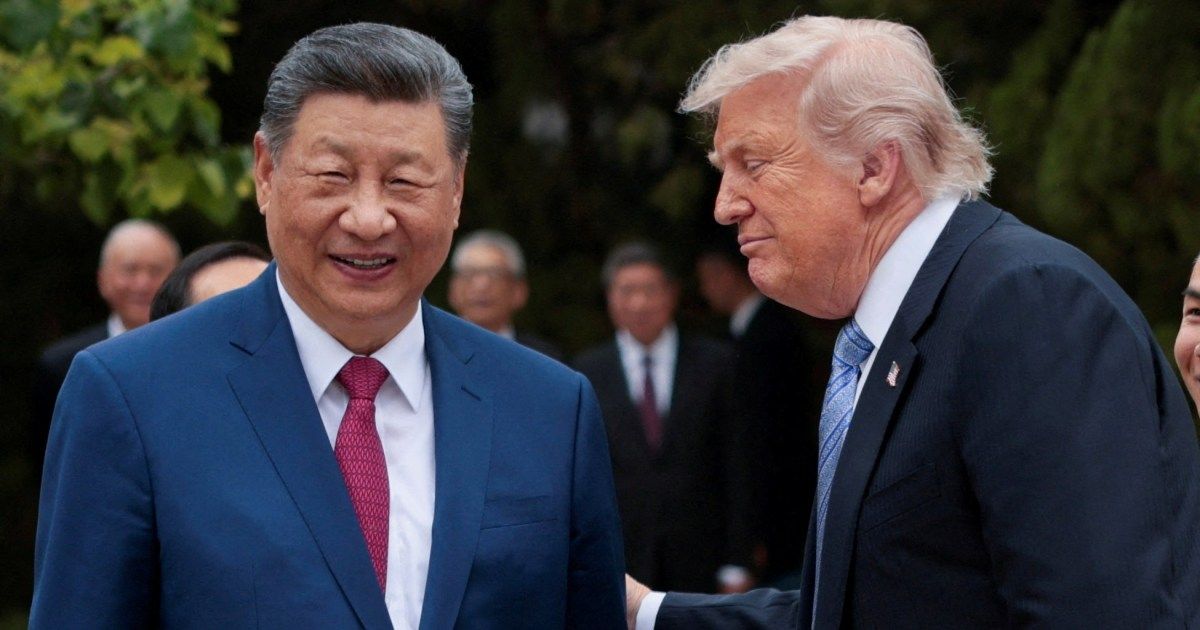
In a diplomatic engagement carrying profound implications for the global order, United States President Donald Trump and Chinese President Xi Jinping are slated to hold their third in-person summit within a single year. This high-stakes encounter brings together the world's two largest economies at a juncture marked by persistent structural friction, technological competition, and acute geopolitical realignments. The agenda for the leaders encompasses a complex matrix of contentious issues, chief among them being bilateral trade imbalances, intellectual property safeguards, artificial intelligence governance, and regional security dynamics, notably regarding Iran and the Middle East.
Diplomatic channels have been working overtime to lay the groundwork for this pivotal meeting, seeking to establish guardrails that prevent strategic competition from escalating into outright conflict. While past engagements have often been defined by rhetorical posturing and tit-for-tat tariff escalations, both administrations face domestic and international imperatives to project stability. The timeline of this summit underscores a growing recognition in Washington and Beijing that direct, leader-level communication remains indispensable for managing friction points that threaten the stability of the international system.
Global Trade & Economic Ripples
The outcomes of the Trump-Xi summit will instantaneously reverberate across global commodity markets, supply chains, and foreign exchange desks. International energy markets, in particular, remain highly sensitive to any diplomatic signals regarding Iranian sanctions enforcement and broader Middle Eastern stability. Traders across London, New York, and Singapore are closely monitoring discussions for potential shifts in tariff regimes, which could alter the landed costs of critical industrial inputs, consumer electronics, and agricultural products.
Furthermore, supply chain restructuring—accelerated by years of tariff uncertainty and geopolitical decoupling—hangs in the balance. Any movement toward trade normalization or, conversely, a hardening of protectionist barriers will directly influence shipping lane utilization, freight rates, and inventory management strategies for multinational corporations. Currency values, notably the US dollar and the Chinese yuan, are poised for heightened volatility as institutional investors parse the joint communiques and press briefings emerging from the negotiations.
Related Intelligence: US-China Summit Puts Trade and Global Markets in Focus
International Reactions & Diplomatic Stances
Multilateral institutions, including the United Nations and the World Trade Organization, have expressed cautious optimism ahead of the summit, emphasizing the indispensable role of US-China cooperation in addressing global macroeconomic challenges. Financial analysts and credit rating agencies note that while a comprehensive grand bargain remains unlikely, incremental agreements on artificial intelligence safety protocols or agricultural purchasing commitments could serve to soothe jittery equity markets.
союзники and partner nations across Europe and the Indo-Pacific are watching the proceedings with intense scrutiny. Capitals from Brussels to Tokyo are anxious to avoid being caught in the crossfire of a renewed trade war, while simultaneously navigating their own strategic dependencies on both superpowers. Official statements from regional bodies uniformly underscore the necessity of transparent, rules-based international trade frameworks to safeguard post-pandemic economic recovery.
Strategic Outlook & Future Scenarios
Looking beyond the immediate horizon of the summit, the trajectory of US-China relations will largely be dictated by how effectively both nations implement any agreed-upon mechanisms for dispute resolution. Should the talks yield a temporary détente, global markets may experience a relief rally and a stabilization of capital expenditures. However, deep-seated structural disagreements over technology transfers, semiconductor export controls, and territorial security guarantees ensure that strategic rivalry will remain the defining feature of the international landscape.
Upcoming multilateral gatherings, including regional economic forums and security dialogues, will serve as the testing ground for the understandings reached between President Trump and President Xi. As the world navigates an era of profound economic transition, the capacity of Washington and Beijing to manage their competition will ultimately determine the resilience of the global economic architecture for the foreseeable future.
Join Our Official WhatsApp Channel
Receive live commodity alerts, policy changes, and commercial intelligence directly on WhatsApp.