
Islamabad High Court Challenged Over Motorway Closures Amid Political Unrest
Legal challenges mount against the closure of the Islamabad-Peshawar Motorway as blockades implemented to curb political protests severely disrupt economic activity and emergency services.
The Core Development
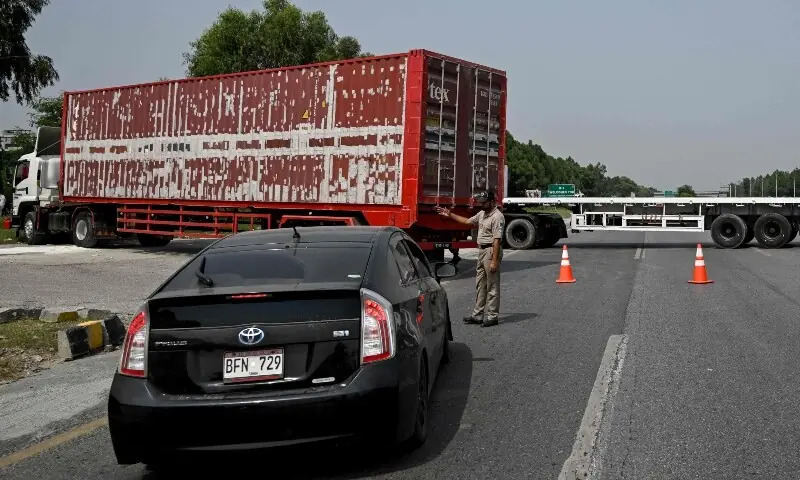
The legal and administrative friction surrounding Pakistan's critical transport arteries reached a new zenith as the Islamabad High Court (IHC) received a high-profile constitutional petition challenging the closure of the Islamabad-Peshawar Motorway (M-1). Filed by Supreme Court Advocate Mian Shafqat Jan, the legal challenge targets the sweeping administrative blockades that have paralyzed movement between Khyber Pakhtunkhwa and the federal capital.
The government enforced the closures earlier in the week, deploying heavy contingents of law enforcement agencies and placing shipping containers across major transit points. These drastic measures were initiated to preempt a planned nationwide protest and long march by the opposition Pakistan Tehreek-e-Insaf (PTI). The political movement sought to mobilize citizens for constitutional supremacy and demand the release of jailed former prime minister Imran Khan. Although PTI leadership subsequently deferred the specific September 27 demonstration, the infrastructural lockdowns remained active, severely restricting civilian transit, court access for litigants, and the unfettered movement of emergency medical services.
Commercial & Economic Implications
For Kalyar Traders and the wider business community across Pakistan, the arbitrary sealing of vital transit corridors like the M-1 inflicts immediate and severe commercial damage. The Islamabad-Peshawar Motorway serves as a primary trade channel for perishable goods, industrial raw materials, and manufactured commodities moving between the northwestern industrial hubs and central consumer markets.
Extended road closures disrupt time-sensitive supply chains, forcing commercial freight operators to divert onto congested secondary routes. This diversion drastically increases fuel consumption, inflates logistics expenditures, and inevitably translates into higher wholesale and retail prices for consumers already grappling with stubborn inflationary pressures. Small and medium enterprises, wholesale distributors, and retail traders bear the brunt of these disruptions, as delayed shipments lead to inventory shortages, broken commercial contracts, and depressed daily turnover in local markets.
Related Intelligence: PTI Postpones Islamabad Long March to October 4 Amid Political Tensions
Stakeholder Perspectives & Market Reactions
Trade bodies, commercial associations, and legal fraternities have voiced vehement opposition to the government's heavy-handed containment strategies. Representatives from major chambers of commerce argue that utilizing infrastructure blockades as a default security instrument inflicts collateral economic devastation that far outweighs short-term political containment objectives.
Legal experts point out that sealing interstate highways infringes upon fundamental constitutional rights guaranteed under Article 15 of the Constitution of Pakistan, which ensures freedom of movement for all citizens. Legal practitioners have emphasized that while the state holds a mandate to maintain public order, administrative overreach that blocks access to courts and paralyzes commercial trade violates basic tenets of administrative law and proportionality.
Forward Outlook & Key Watchpoints
As the Islamabad High Court prepares to hear the petition, the immediate focus shifts to judicial oversight regarding executive overreach during political crises. Key watchpoints for businesses and financial analysts include whether the IHC will issue a binding writ prohibiting the blanket closure of motorways for non-emergency administrative containment.
Furthermore, stakeholders will closely monitor government standard operating procedures for managing future political assemblies without resorting to total infrastructural paralysis. For Pakistan's fragile economic recovery, establishing a legal precedent that shields national transport corridors from politically motivated shutdowns remains an absolute prerequisite for restoring investor confidence and stabilizing domestic supply chains.
Join Our Official WhatsApp Channel
Receive live commodity alerts, policy changes, and commercial intelligence directly on WhatsApp.