
Trump Operatives Linked to Bosnian Serb Leader Raise Western Security Alarms
Recent disclosures reveal Trump campaign operatives were paid to advise pro-Russian Bosnian Serb leader Milorad Dodik, escalating transatlantic security concerns over foreign influence in the Western Balkans.
Geopolitical & Core Developments
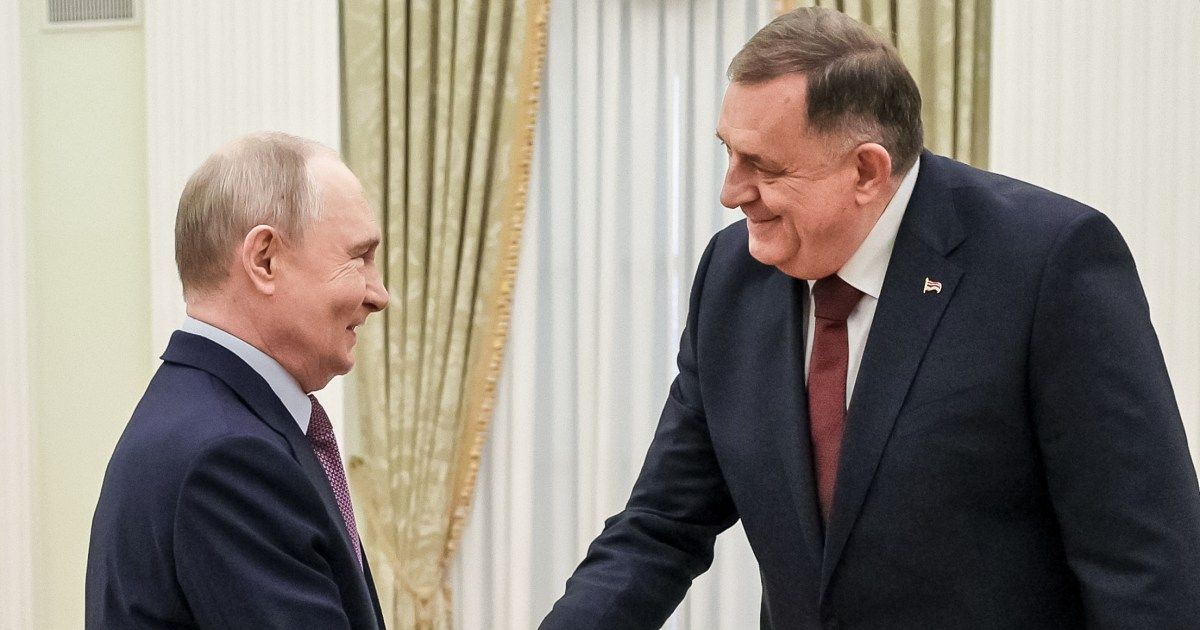
The revelation that political operatives connected to Donald Trump’s inner circle were paid to advise Milorad Dodik, the pro-Russian leader of Bosnia and Herzegovina's Republika Srpska, has ignited intense diplomatic scrutiny across Western capitals. Dodik, long sanctioned by the United States and viewed by European Union officials as a primary catalyst for ethnic friction, has systematically undermined the Dayton Peace Agreement through persistent threats of secession. Investigative reports indicating that American consultants accepted financial compensation to shape Dodik's electoral strategy ahead of parliamentary contests underscore the complex nexus where domestic American political operatives intersect with foreign destabilization campaigns. This alignment not only complicates U.S. foreign policy objectives in Eastern Europe but also emboldens Moscow's strategic footprint in the Balkans, testing the resilience of fragile state institutions in Sarajevo.
Global Trade & Economic Ripples
While the Western Balkans represent a modest fraction of global economic output, prolonged political instability in Bosnia and Herzegovina carries disproportionate risks for European supply chains, industrial manufacturing, and cross-border energy transit. Republika Srpska's leadership has frequently disrupted national energy policy, casting doubt on pipeline security and regional power grids essential for southeastern European industrial hubs. Furthermore, heightened geopolitical tensions create an unpredictable investment climate, deterring foreign direct investment and stalling infrastructure projects linked to the EU’s Economic and Investment Plan for the Western Balkans. For global commodity traders, the looming threat of targeted financial sanctions against secessionist leadership poses operational hurdles, forcing multinational firms to reassess counterparty risks across financial institutions operating within the dual-entity state.
Related Intelligence: Madrid Eviction Tragedy Sparks National Housing Crisis and Political Upheaval
International Reactions & Diplomatic Stances
International bodies and Western governments have reacted with deep apprehension to the disclosures linking American political consultants with Dodik's electoral apparatus. Officials within the European External Action Service and the U.S. Department of State have reiterated their commitment to Bosnia and Herzegovina's territorial integrity, warning that foreign interference aimed at eroding state-level governance will meet robust countermeasures. Multilateral monitors have called for greater transparency regarding foreign lobbying and political financing, emphasizing that external actors must not weaponize democratic processes to fracture fragile post-conflict states. Market analysts note that while official diplomatic channels remain unified in condemning secessionist rhetoric, private advisory networks operating across borders continue to bypass traditional diplomatic guardrails, complicating enforcement regimes and frustrating multilateral oversight.
Strategic Outlook & Future Scenarios
Looking ahead, the intersection of American political consulting and Balkan separatism establishes a troubling precedent for upcoming electoral cycles throughout Eastern Europe. As Dodik continues to challenge constitutional authorities in Sarajevo with implicit diplomatic and financial backing from external networks, the risk of institutional paralysis grows significantly. Upcoming regional summits and EU enlargement reviews will likely incorporate stricter compliance frameworks to monitor foreign advisory influence and financial flows into separatist-leaning jurisdictions. Should Western governments escalate secondary sanctions against entities facilitating Republika Srpska's financial maneuvers, regional banks and trade partners could face severe liquidity squeezes, fundamentally altering the commercial and geopolitical calculus across the wider Adriatic corridor.
Join Our Official WhatsApp Channel
Receive live commodity alerts, policy changes, and commercial intelligence directly on WhatsApp.