
Pakistan Settles for Asian Games Squash Silver After Defeat to Malaysia
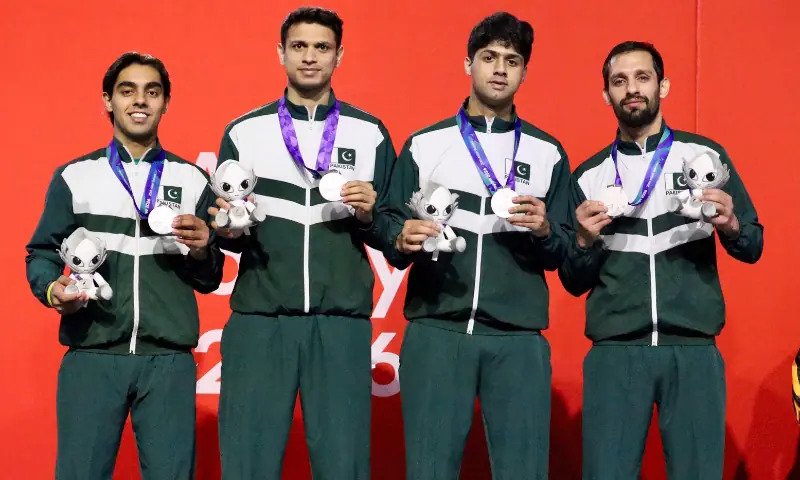
Pakistan extended its sixteen-year wait for an Asian Games men's squash team gold after a 2-0 defeat to Malaysia in the final at the Nagoya Kinjo Futo Arena, settling for consecutive silver medals.
The Core Development
Pakistan’s pursuit of a men’s team squash gold medal at the Asian Games faced another heartbreak on Friday at the Nagoya Kinjo Futo Arena. Sixteen years after defeating Malaysia 2-0 in Guangzhou to claim their last title in the prestigious continental event, the result was reversed as Pakistan fell 2-0 to the same opponents in the final. This outcome marks Pakistan's second successive runners-up finish in the discipline, following their defeat to India in the title clash at the previous edition in Hangzhou.
The final commenced with Nasir Iqbal facing Malaysia's Ameeshenraj Chandaran. Nasir started aggressively, establishing an early 6-1 lead in the opening game. However, Chandaran, ranked 95th in the world, mounted a resilient comeback, narrowing the deficit to 8-5 and subsequently 9-7. Nasir, holding a world ranking of 94th, maintained his composure to secure the opener 11-8 in nine minutes. Despite this promising start, Chandaran seized control in the second game, executing a decisive six-point run from 4-2 to surge to a 10-2 lead. Although Nasir saved one game point, the 22-year-old Malaysian capitalized on his second opportunity to level the match, shifting the momentum firmly in favor of the Malaysian contingent.
Commercial & Economic Implications
While sporting achievements in squash traditionally highlight national prestige rather than direct industrial output, elite athletic performances carry significant economic and commercial weight within Pakistan's sports economy. Government funding, corporate sponsorships from major national enterprises, and state-backed incentives for medalists represent substantial capital allocation within the public sector. Sustained success in international multi-sport events like the Asian Games drives brand visibility for corporate sponsors, influences sporting goods retail markets, and stimulates grassroots participation that supports domestic manufacturing of sports equipment—a notable export sector for Pakistan based in Sialkot.
The failure to secure gold, however, limits the immediate commercial upside for squash federations, which rely heavily on high-profile victories to attract private sector investment and secure enhanced budgetary allocations from the Pakistan Sports Board. Without championship titles, securing long-term institutional sponsorships becomes increasingly challenging, impacting the financial ecosystem that supports professional athletes, coaching staff, and training infrastructure across the country.
Related Intelligence: Lin Yu-ting Claims Second Asian Games Gold Amid Global Spotlight
Stakeholder Perspectives & Market Reactions
Reactions from sports administrators, athlete associations, and the wider public reflect a mixture of national pride in securing a silver medal and deep-seated frustration regarding the long-term stagnation of Pakistan's once-dominant squash program. Industry bodies and sports economists have repeatedly emphasized the necessity of modernizing training facilities, adopting data-driven coaching methodologies, and establishing robust financial pipelines to compete effectively against well-funded international competitors like Malaysia and India.
Public discourse across national media platforms has underscored the urgent need for structural reform within the Pakistan Squash Federation. Observers note that while individual resilience remains high among athletes, systemic institutional support has lagged behind global standards. Stakeholders are calling for a comprehensive review of grassroots development programs to bridge the gap between historical dominance and contemporary competitive realities.
Forward Outlook & Key Watchpoints
As the delegation prepares to return from Nagoya, attention immediately shifts to upcoming international tournaments and the necessary policy interventions required to revitalize Pakistan's squash infrastructure. Key watchpoints include the upcoming Pakistan Sports Board budget reviews, potential leadership restructuring within the squash federation, and the rollout of targeted training camps for junior athletes.
Long-term recovery hinges on effective public-private partnerships capable of funding modern training academies and providing athletes with regular international exposure. Policy enforcement regarding merit-based selections and transparent fund utilization will be critical benchmarks for restoring institutional credibility and ensuring future delegations are adequately prepared to convert silver finishes into gold standard victories.
Join Our Official WhatsApp Channel
Receive live commodity alerts, policy changes, and commercial intelligence directly on WhatsApp.