
Supreme Court Upholds Capital Sentence in Landmark Gender Violence Ruling
Pakistan's Supreme Court has upheld a death sentence for a man who murdered a woman following a spurned marriage proposal, issuing a sweeping indictment of gender-based violence and patriarchal norms.
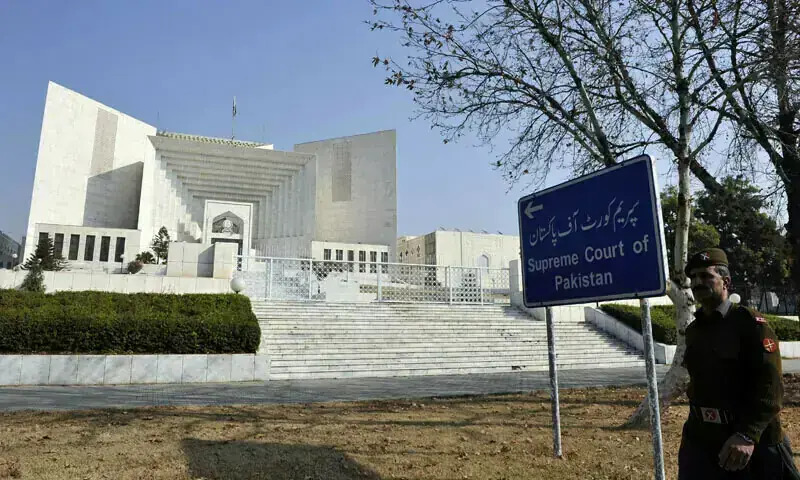
The Core Development In a definitive legal precedent addressing gender-based violence and patriarchal entitlement, the Supreme Court of Pakistan on Tuesday dismissed a criminal review petition seeking the commutation of a death sentence. The ruling was handed down by a three-member bench comprising Justice Muhammad Hashim Khan Kakar, Justice Salahuddin Panhwar, and Justice Ishtiaq Ibrahim in Islamabad. The case centered on convict Muhammad Kamran, who has spent roughly 15 years in a death cell after being convicted of murdering a woman who, alongside her family, had declined his marriage proposal.
Authoring the nine-page judgment, Justice Kakar observed that retaliatory violence stemming from romantic or marital rejection represents a profound shame on the collective conscience of any civilized society. The court noted that the perpetrator acted exclusively to appease a wounded ego after failing to secure the victim's hand in marriage. By refusing to commute the capital sentence to life imprisonment, the apex court affirmed that systemic violence against women cannot find shelter under mitigating circumstances or traditional notions of compromised honor.
Commercial & Economic Implications While fundamentally a judicial and [human rights](/news/iraq-human-rights-scrutiny-threatens-foreign-investment-rebuilding) determination, legal stability and the uncompromising enforcement of personal security frameworks exert profound indirect influences on Pakistan's formal economy. Female labor force participation in Pakistan remains suppressed at approximately 22 percent, representing an immense economic drag on productivity, household disposable incomes, and aggregate retail consumption. Persistent threats of gender-based violence severely restrict female mobility, curtailing educational attainment and access to commercial employment across retail, corporate, and entrepreneurial sectors.
For enterprise operators, wholesale merchants, and supply chain networks, social insecurity raises indirect operating costs. Businesses face higher expenditures on workplace transport, physical security, and insurance to safeguard female personnel. Strengthening judicial deterrents against violence directed at women directly underpins long-term human capital formation. By establishing rigorous protections for women's autonomy, legal outcomes of this nature help dismantle informal socio-cultural barriers that prevent half the population from fully participating in commercial markets, modern retail, and domestic commerce.
Related Intelligence: Peshawar High Court Moved Over Detention of KP Chief Minister
Stakeholder Perspectives & Market Reactions Legal scholars, [civil society](/news/israeli-military-raids-west-bank-hospital-palestinian-ngos) organizations, and human rights advocates have broadly welcomed the Supreme Court's firm stance, viewing it as a vital standard-setting benchmark. Senior jurists noted that the ruling sends an unequivocal signal down the judicial hierarchy, from trial courts to provincial [High Courts](/news/peshawar-high-court-moved-over-detention-kp-chief-minister), narrowing the discretionary leniency frequently extended in cases involving gendered motives. Human rights bodies emphasized that judicial recognition of patriarchal entitlement as an aggravating rather than mitigating factor represents critical progress.
Conversely, corporate diversity forums and trade associations observed that judicial actions must be coupled with executive enforcement to impact day-to-day public safety. Representatives from Pakistan's professional and manufacturing sectors have persistently argued that sustained economic modernism requires absolute parity before the law. Without widespread social safety, women cannot freely navigate urban spaces, commute to manufacturing hubs, or lead commercial storefronts, ultimately depressing domestic economic velocity.
Forward Outlook & Key Watchpoints Following the dismissal of this review petition, the legal avenues available to the convict are effectively exhausted, leaving an executive clemency petition to the President of Pakistan as the sole constitutional mechanism remaining. In the broader legal framework, the nine-page verdict authored by Justice Kakar is expected to serve as binding jurisprudence for lower courts adjudicating cases where rejected suitors resort to lethal violence, honor crimes, or acid attacks.
Key watchpoints over the coming quarters include whether provincial police departments and prosecutorial services align their investigation and trial strategies with the apex court's observations. Market observers and policy analysts will monitor whether this judicial posture catalyzes broader institutional reforms, such as expedited gender-based violence courts and integrated protection mechanisms, ensuring that constitutional guarantees of dignity and life translate into tangible security across Pakistan's workplaces and public spheres.
Join Our Official WhatsApp Channel
Receive live commodity alerts, policy changes, and commercial intelligence directly on WhatsApp.