
Superpower Silicon: The US-China Artificial Intelligence Hegemony Race
The United States leads in AI capital and computing power, while China advances rapidly in academic research and model efficiency.
Geopolitical & Core Developments
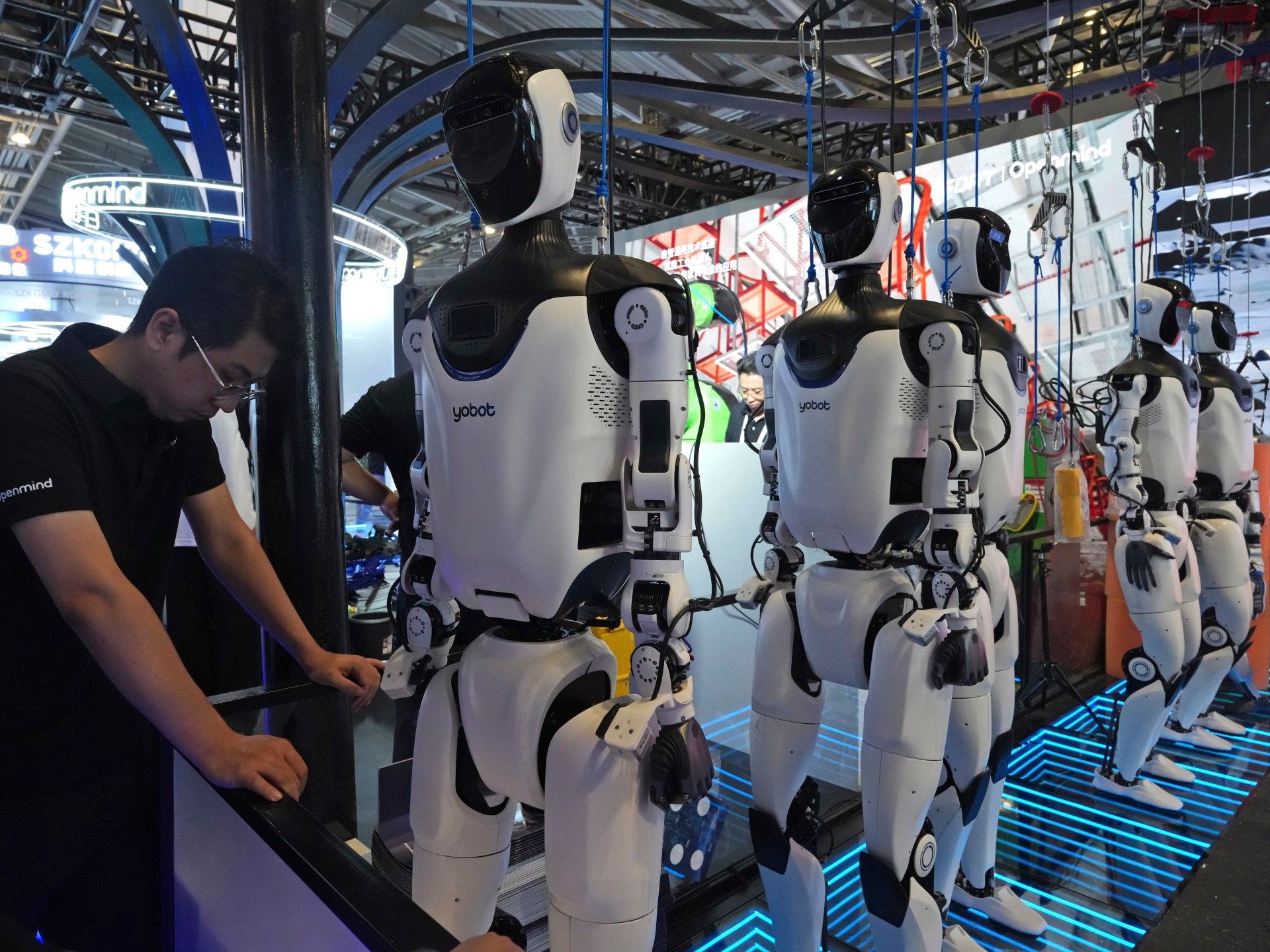
The technological bifurcation between Washington and Beijing has entered a critical phase, centered squarely on artificial intelligence hegemony. The United States currently maintains a commanding advantage in aggregate capital expenditure, venture capital funding, and raw computing infrastructure. Silicon Valley giants, backed by profound institutional capital reserves and access to cutting-edge semiconductor fabrication, continue to set the benchmark for frontier model development. However, strategic assessments reveal a rapidly shifting landscape. While the US dominates the financial and hardware pillars of the artificial intelligence ecosystem, China has steadily asserted dominance in scholarly research output, patent generation, and algorithmic efficiency. Beijing's state-directed strategy prioritizes applied artificial intelligence across industrial manufacturing, smart logistics, and municipal governance, creating a formidable parallel ecosystem designed to withstand Western technology embargoes.
Global Trade & Economic Ripples
The artificial intelligence arms race has fundamentally transformed global trade corridors, international supply chains, and commodity markets. Advanced semiconductor manufacturing relies upon hyper-specialized global supply chains spanning photolithography in the Netherlands, ultra-pure silicon production, and assembly operations across East Asia. US export controls, designed to restrict Beijing's access to extreme ultraviolet lithography and high-performance graphics processing units, have triggered profound realignments in international trade routes. Semiconductor equities have emerged as macroeconomic barometers, influencing foreign exchange valuations and driving massive capital investments into global energy grids. As artificial intelligence data centers demand unprecedented baseload electricity, international commodity markets for metallurgical coal, natural gas, and rare earth elements face sustained upward pricing pressure, directly linking digital infrastructure to traditional energy security.
Related Intelligence: Nepal Flood Crisis Tests Regional Supply Chains and Climate Resilience
International Reactions & Diplomatic Stances
Multilateral institutions and secondary global economies are increasingly navigating a fraught technological binary. The European Union has adopted a dual-track approach, implementing stringent regulatory frameworks via the Artificial Intelligence Act while striving to cultivate indigenous technological champions to avoid digital dependency on either Washington or Beijing. Middle Eastern sovereign wealth funds, particularly in the Gulf Cooperation Council, are leveraging their vast capital reserves to position themselves as neutral hubs for artificial intelligence development, partnering concurrently with American hyperscalers and Chinese technology firms. Meanwhile, developing economies in the Global South have expressed mounting apprehension regarding a widening technological divide, warning that the concentration of artificial intelligence intellectual property within two superpowers threatens to exacerbate global economic inequality and compromise digital sovereignty.
Strategic Outlook & Future Scenarios
Looking ahead, the trajectory of the artificial intelligence race will depend heavily on semiconductor manufacturing breakthroughs, energy availability, and geopolitical containment measures. Upcoming diplomatic summits and bilateral negotiations will likely focus on establishing guardrails for autonomous military applications and dual-use technologies. Should export restrictions tighten further, Beijing may accelerate its domestic semiconductor substitution initiatives, potentially fracturing the global technology standard into incompatible Western and Eastern blocs. Conversely, breakthrough innovations in neuromorphic computing, quantum integration, or algorithmic efficiency could neutralize current hardware advantages, rendering traditional compute metrics obsolete and opening new vectors for geopolitical competition.
Join Our Official WhatsApp Channel
Receive live commodity alerts, policy changes, and commercial intelligence directly on WhatsApp.