
State Crackdown Intensifies as Imran Khan Sisters Detained in Lahore
Lahore authorities have detained Dr Uzma Khan and Noreen Niazi for 30 days under public order regulations ahead of planned nationwide protests.
The Core Development
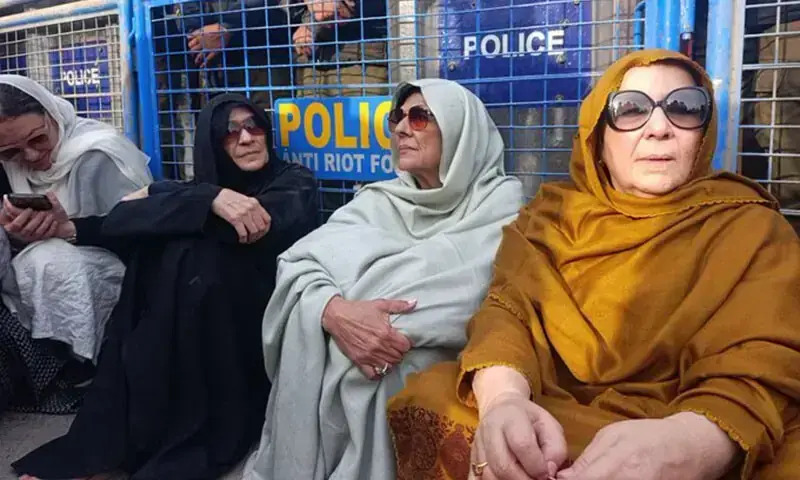
The political landscape of Pakistan's most populous province experienced a sharp escalation on Monday as authorities detained Dr Uzma Khan and Noreen Niazi, sisters of former prime minister and Pakistan Tehreek-e-Insaf (PTI) founder Imran Khan, for a period of 30 days. The move, executed under the Punjab Maintenance of Public Order (MPO) Ordinance, 1960, follows closely on the heels of a similar detention order issued for their sister, Aleema Khan, by the Lahore deputy commissioner.
According to official documents reviewed from the Lahore Deputy Commissioner Office and dated September 20, the state justified the preventative detentions by asserting that both individuals posed a direct threat to public safety and the maintenance of public order. This administrative action is part of a broader, intensified security sweep across Punjab and federal capital territories designed to preempt the PTI's announced countrywide protest and march toward Islamabad scheduled for September 27. The opposition party has framed the upcoming mobilization as a crucial push for the release of incarcerated political figures and the restoration of constitutional supremacy.
Commercial & Economic Implications
For Kalyar Traders and the wider business community operating within Pakistan, heightened political friction of this magnitude translates directly into acute market volatility and operational paralysis. Extended street protests, road closures, and localized lockdowns routinely choke urban retail and wholesale distribution networks, severely disrupting supply chains originating from major manufacturing hubs in Punjab.
Wholesale markets in Lahore, Faisalabad, and Rawalpindi face immediate revenue contraction as consumer footfall drops amid fears of civil unrest. Furthermore, prolonged political uncertainty exerts upward pressure on retail prices and stokes inflationary expectations, as logistics operators factor in higher transport risks, fuel surcharges, and delivery delays. Investors continue to adopt a risk-off posture, delaying critical capital expenditure and retail expansion plans until macroeconomic and regulatory predictability is restored.
Related Intelligence: US and China Propose AI Safety Measures During High-Stakes New York Talks
Stakeholder Perspectives & Market Reactions
Legal experts and prominent trade bodies have voiced mounting concern over the recurring deployment of the MPO ordinance to manage political dissent. Industry associations representing urban merchants point out that repeated disruptions to commerce inflict heavy daily losses on small and medium enterprises (SMEs), which form the backbone of the domestic economy.
Civil society organizations and legal fraternity representatives have criticized the preventative detentions as an overreach of executive authority, warning that aggressive containment strategies risk deepening the structural divide between the state apparatus and political stakeholders. Conversely, government representatives maintain that stringent administrative measures are vital to safeguard public property, ensure uninterrupted economic activity, and maintain law and order during high-stakes political demonstrations.
Forward Outlook & Key Watchpoints
As the September 27 protest deadline approaches, market participants and financial analysts are closely monitoring several critical operational indicators. Key watchpoints include potential disruptions to inter-city freight transport, the extent of security lockdowns in major commercial centers, and subsequent judicial interventions by higher courts regarding the legality of the MPO detentions.
Resolution or escalation of these tensions will dictate consumer confidence indices and business sentiment moving into the final quarter of the fiscal year. Policymakers face the delicate challenge of balancing state security imperatives with the urgent necessity of maintaining open, predictable commercial corridors for Pakistan's fragile retail and wholesale markets.
Join Our Official WhatsApp Channel
Receive live commodity alerts, policy changes, and commercial intelligence directly on WhatsApp.