
SpaceX Starship Reaches Orbit in Historic Milestone for Commercial Spaceflight
SpaceX's Starship rocket has achieved orbit for the first time, marking a transformative milestone for commercial spaceflight, international aerospace competition, and future lunar exploration logistics.
Geopolitical & Core Developments
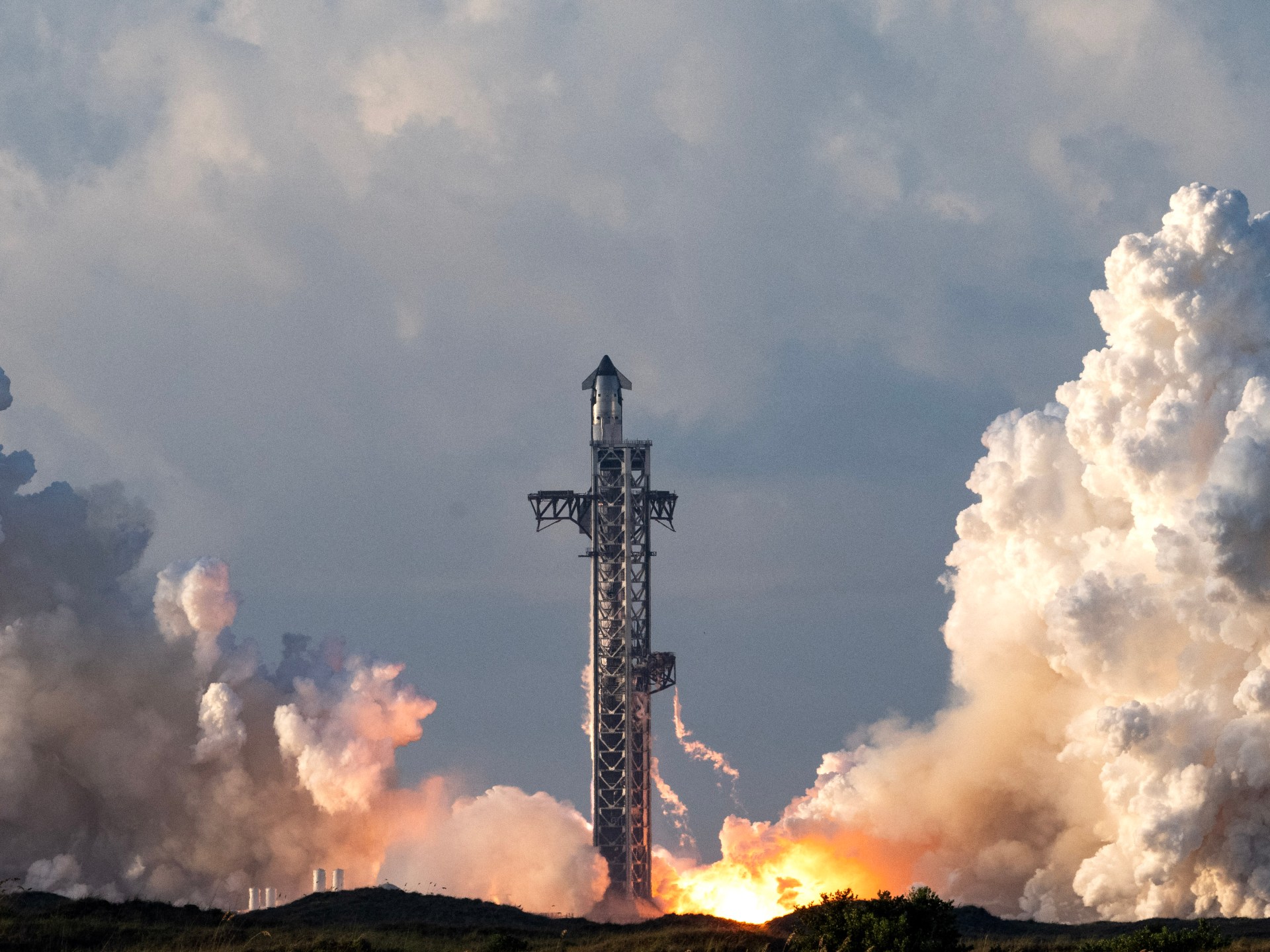
SpaceX achieved a monumental technological breakthrough as its Starship vehicle—the largest and most powerful rocket ever constructed—successfully reached space and executed its planned trajectory during a critical test flight. Founder Elon Musk’s spacecraft lifted off from the Starbase facility in Boca Chica, Texas, completing crucial propulsion milestones that had eluded previous developmental iterations. Unlike prior attempts that suffered structural failures during atmospheric re-entry or staging, this flight demonstrated unprecedented control over the Super Heavy booster and the ship's integrated thermal protection systems.
The strategic stakes of this achievement extend far beyond commercial enterprise, touching directly upon national security, sovereign space programs, and the shifting balance of power in low-Earth orbit. As traditional state-backed space agencies, including NASA and the European Space Agency, increasingly rely on commercial partnerships, the monopoly on heavy-lift capability is rapidly tilting toward private conglomerates. The success of Starship accelerates timelines for the Artemis lunar program, wherein NASA intends to utilize a modified Starship derivative to land American astronauts on the lunar surface, positioning the United States and its allies at the forefront of a renewed geopolitical space race against rival powers like China.
Global Trade & Economic Ripples
The successful orbital insertion of a fully reusable super-heavy launch system fundamentally alters the economics of the global space economy. Historically, high payload deployment costs and single-use hardware have constrained commercial investments in extraterrestrial infrastructure, satellite manufacturing, and orbital logistics. By radically lowering the cost per kilogram to orbit, Starship promises to unlock unprecedented capital inflows into global satellite internet constellations, space-based manufacturing, and remote sensing industries.
Commodity markets tied to aerospace manufacturing—including aerospace-grade titanium, carbon fiber composites, high-temperature alloys, and specialized propellants—face structural demand shifts. Furthermore, commercial maritime logistics and telecommunications sectors are poised for disruption as next-generation constellations replace legacy terrestrial infrastructure. International insurance markets, which underwrite multi-billion-dollar commercial payloads, are also recalibrating risk models to account for the rapid maturation of reusable heavy-lift architectures.
Related Intelligence: UK National Security Arrests at RAF Fairford Send Global Shockwaves
International Reactions & Diplomatic Stances
International reaction to the successful flight has been a mixture of technological admiration and strategic apprehension. NASA leadership issued immediate commendations, emphasizing the critical role Starship plays in fulfilling international treaty-based commitments for lunar exploration and future crewed missions to Mars. Concurrently, space policy analysts in Brussels, Tokyo, and Canberra noted that the widening technological gap between American commercial launch capabilities and domestic alternatives necessitates a strategic reassessment of allied space cooperation.
In rival capitals, the development has intensified internal debates over sovereign aerospace autonomy. Defense ministries and state space corporations in Asia and Europe view the rapid iteration cycle of American private space firms as a distinct challenge to traditional state-run procurement models. Consequently, governments worldwide are increasing state subsidies and fast-tracking regulatory frameworks to support domestic commercial alternatives, aiming to prevent long-term strategic dependency on foreign private infrastructure.
Strategic Outlook & Future Scenarios
As SpaceX transitions from developmental test flights to operational readiness, the trajectory of global space governance and commercial competition will enter a new phase. Upcoming milestones include orbital refueling demonstrations, which are an absolute prerequisite for deep-space missions to the Moon and Mars. These technical trials will test the limits of international regulatory frameworks governing orbital debris, spectrum allocation, and celestial resource utilization.
Geopolitical escalation points may emerge around orbital security, militarization concerns, and the dominance of commercial entities over critical global communications infrastructure. Multilateral bodies, including the United Nations Committee on the Peaceful Uses of Outer Space, face mounting pressure to establish updated norms of behavior in an era where private corporations wield capabilities previously reserved for superpowers.
Join Our Official WhatsApp Channel
Receive live commodity alerts, policy changes, and commercial intelligence directly on WhatsApp.