
Sinn Fein Faces Police Probe Amid Escalating Northern Ireland Tensions
Northern Ireland's political stability faces renewed friction as the Democratic Unionist Party demands police action against Sinn Fein lawmakers over participation in a contentious protest.
Geopolitical & Core Developments
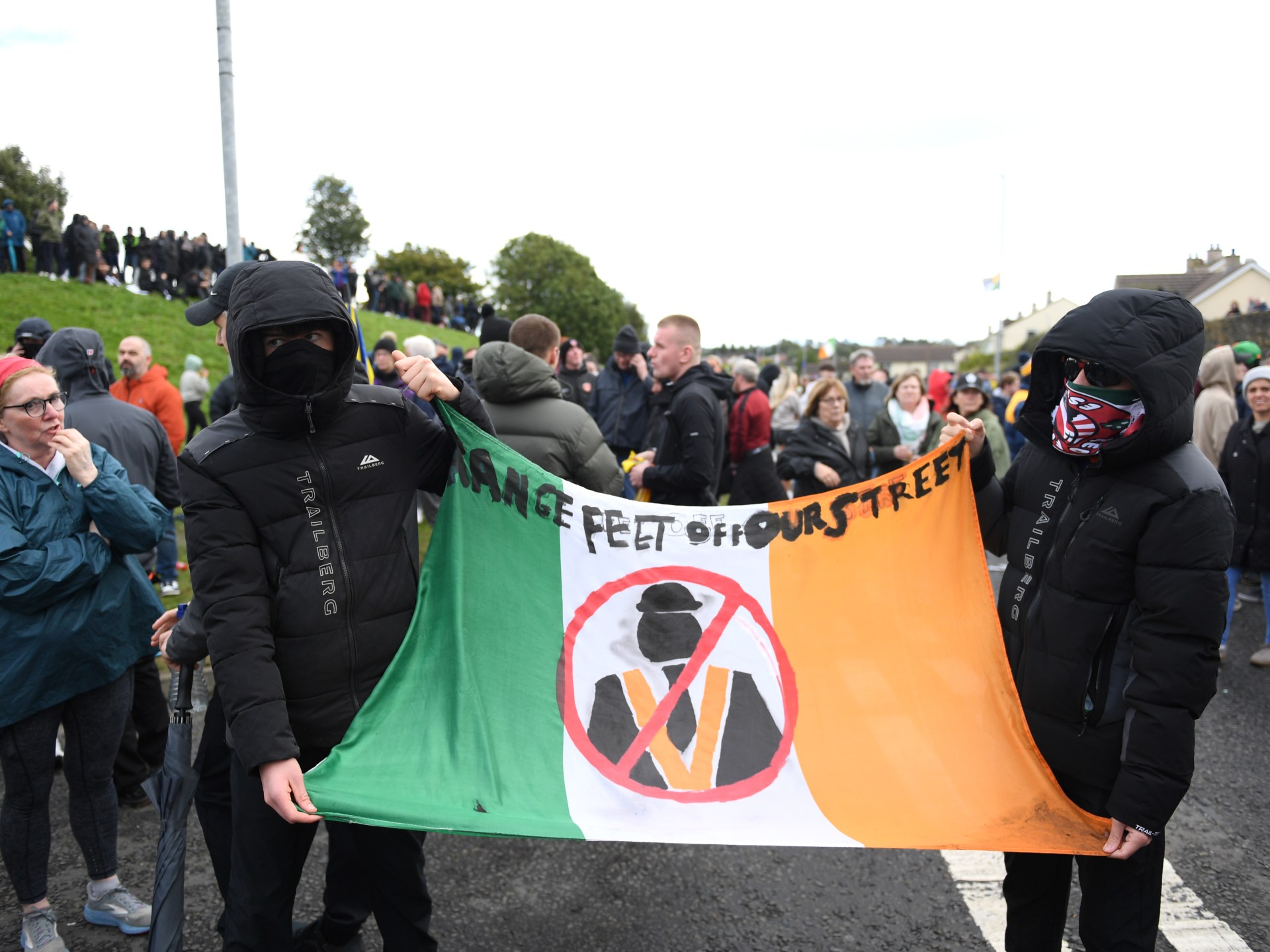
Political stability in Northern Ireland has entered a volatile phase following demands from the Democratic Unionist Party (DUP) for a formal police investigation and the prosecution of several Sinn Fein lawmakers. The controversy stems from participation in a recent public demonstration that unionist leaders argue breached public order statutes and inflamed community tensions. This domestic political standoff underscores the fragile nature of power-sharing institutions established under the Good Friday Agreement, threatening to paralyze local governance just as administrative bodies attempt to address long-standing budgetary and infrastructural challenges.
The standoff reignites historical sectarian fault lines that have persistently complicated governance in Belfast. Unionist hardliners contend that nationalist politicians participating in unauthorized or disruptive protests undermine the rule of law and destabilize the constitutional settlement. Conversely, Sinn Fein representatives defend their presence at the demonstrations as a legitimate exercise of democratic expression and community representation. As the Police Service of Northern Ireland reviews evidence to determine whether criminal thresholds have been met, the political fallout risks hardening ideological divides and stalling essential legislative processes within the devolved assembly.
[Global Trade](/news/wto-upgrades-global-trade-forecast-pakistan-gains-middle-east-disruptions) & Economic Ripples
While localized political disputes in Northern Ireland rarely induce immediate shocks in global energy or commodity markets, prolonged regional instability carries profound implications for cross-border commerce and regulatory compliance. The Windsor Framework established specific trading arrangements to prevent a hard border on the island of Ireland, balancing EU single market rules with United Kingdom internal trade. However, persistent political turbulence in Belfast frequently disrupts implementation timelines, creating uncertainty for multinational corporations operating across Great Britain, Northern Ireland, and the European Union.
Supply chain operators and logistic firms utilizing Northern Irish ports monitor these domestic political friction points closely. Any escalation in civil unrest or institutional paralysis can translate into administrative bottlenecks, increased insurance premiums for freight transit, and heightened regulatory scrutiny. Furthermore, currency markets remain sensitive to domestic political stability within the United Kingdom, where regional disputes in Northern Ireland and Scotland routinely factor into broader investor sentiment regarding sovereign risk and legislative predictability.
Related Intelligence: Christa Pike Case Spotlights Systemic Flaws in United States Capital Punishment
International Reactions & Diplomatic Stances
International stakeholders, particularly in Dublin, London, and Washington, are closely monitoring the unfolding police probe and its potential to derail regional administration. Diplomatic channels have emphasized the paramount importance of upholding the rule of law while preserving the delicate architecture of the power-sharing executive. European Union officials have reiterated that the full implementation of post-Brexit agreements depends upon political cooperation and stability in Belfast, cautioning against any actions that could undermine regulatory predictability.
Market analysts and geopolitical risk consultancies suggest that while foreign investors have largely priced in routine political posturing in Northern Ireland, a formal prosecution of high-ranking nationalist lawmakers by British authorities could provoke severe nationalist backlash. Such an escalation would likely invite heightened diplomatic intervention from the United States and the Republic of Ireland, both of which act as key guarantors of the peace process and international trade frameworks linked to the region.
Strategic Outlook & Future Scenarios
Looking ahead, the trajectory of Northern Irish politics hinges on the Police Service of Northern Ireland's handling of the investigation and the subsequent legal determinations made by public prosecutors. Should charges be brought against Sinn Fein assembly members, the DUP is expected to leverage the indictments to demand stringent disciplinary measures within the legislative assembly, potentially leading to another suspension of the devolved government.
Conversely, a decision not to prosecute could trigger renewed unionist alienation, prompting further withdrawals from cooperative governance mechanisms. In either scenario, the overarching strategic risk involves the erosion of investor confidence, prolonged regulatory uncertainty regarding post-Brexit trade protocols, and an increased vulnerability to broader geopolitical shocks affecting the British Isles and the wider European economic zone.
Join Our Official WhatsApp Channel
Receive live commodity alerts, policy changes, and commercial intelligence directly on WhatsApp.