
Security Operations Neutralize Seven Terrorists Across Key Balochistan Transit Corridors
Security forces killed seven terrorists during targeted operations in Panjgur and Kachhi districts of Balochistan, securing critical arteries connecting provincial wholesale hubs and inter-provincial commercial corridors.
The Core Development
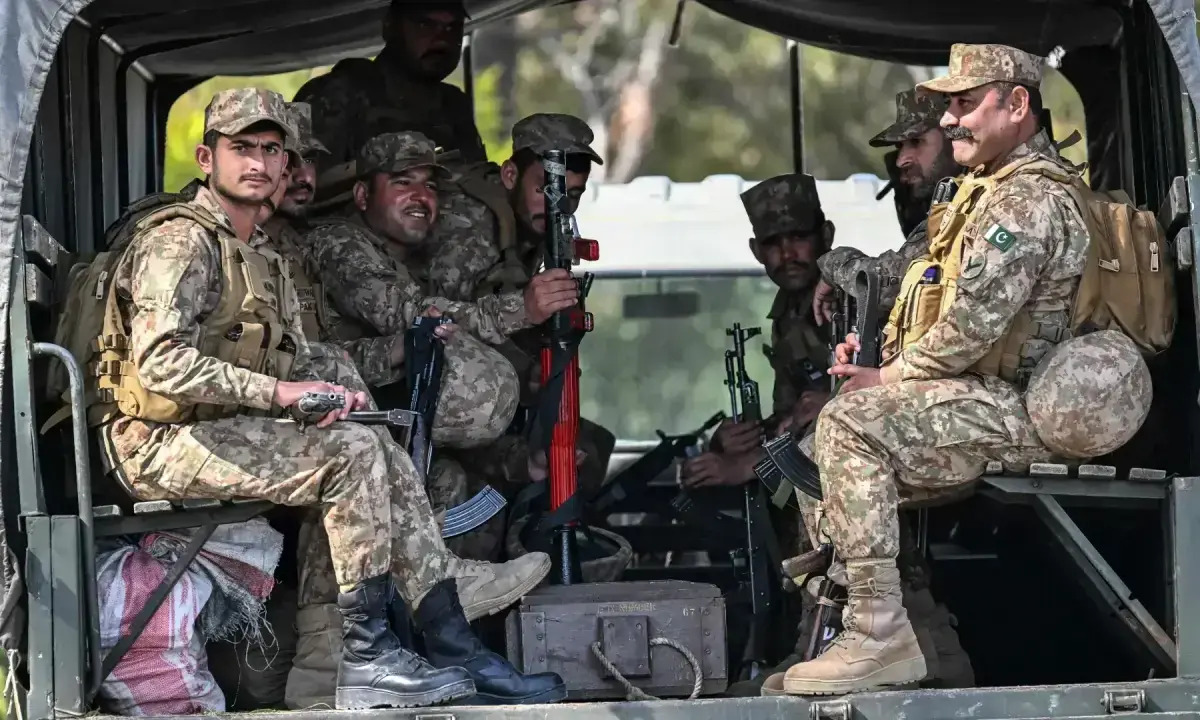
In a coordinated counter-insurgency sweep, Pakistani security forces neutralized seven terrorists during two separate intelligence-based operations across Balochistan, state broadcaster Radio Pakistan confirmed on Friday. The tactical engagements were executed with precision following actionable intelligence regarding militant movements aimed at destabilizing regional infrastructure, law and order, and vital overland transport networks.
The primary encounter unfolded in the rugged Fateh Ali area of Panjgur district, a geostrategic jurisdiction in southwestern Balochistan. Security personnel engaged a heavily fortified militant cell, culminating in the elimination of five combatants following an intense exchange of fire. Subsequent sanitization and recovery protocols yielded significant caches of automatic weaponry, live ammunition, and related logistical ordnance intended for asymmetric attacks across the district. Simultaneously, an intelligence-led operation intercepted an armed cell in the Dhadar area of Kachhi district, situated strategically near the base of the historic Bolan Pass. In that kinetic confrontation, two militants were killed while several associates sustained injuries before retreating into broken terrain, prompting immediate perimeter cordoning and sweeping measures by regional security formations.
Commercial & Economic Implications
Beyond their kinetic dimensions, these operations hold profound consequences for Pakistan's domestic supply chain security and macro-logistical networks. Panjgur represents an essential conduit along the China-Pakistan Economic Corridor (CPEC) Western Alignment, directly connecting southern Balochistan with primary Iranian border terminals, including the Gabd-Rimdan commercial crossing. Recurring militancy along this corridor has periodically forced commercial transport to halt, raised insurance premiums on heavy cargo, and inflated freight rates for essential agricultural produce, petroleum products, and manufactured retail goods circulating between Balochistan and national distribution centers.
Equally vital is the pacification of Kachhi district and the Dhadar corridor. The area functions as the primary transit neck linking Quetta to Sindh and Punjab through the National Highway 65 (N-65) and the mainline railway system. Logistics disruptions across the Bolan Pass invariably ripple into wholesale markets, driving localized food inflation and causing acute supply delays for fast-moving consumer goods (FMCG). Fleet operators frequently levy steep risk premiums on consignments traversing central Balochistan under heightened threat advisories. By neutralizing hostile elements in these specific transit bottlenecks, the armed forces are directly reducing transport friction, mitigating risk-related warehousing surcharges, and stabilizing inventory cycles for wholesale merchants and commercial distributors.
Related Intelligence: Pakistan Abstains on UNSC Iran Sanctions Vote Amid Regional Balancing
Stakeholder Perspectives & Market Reactions
Commercial transport bodies and regional trade associations have received the operational developments with cautious relief, emphasizing that tactical clearances must translate into durable highway safety. Spokespersons from the All Pakistan Goods Transport Owners Association noted that cargo carriers have long grappled with operational hazards, night-travel curfews, and extortion risks along isolated stretches of southern and central Balochistan, which disproportionately impact independent haulers and micro-distributors.
Leadership within the Quetta Chamber of Commerce and Industry (QCCI) affirmed that sustainable provincial commerce, particularly border-adjacent trade with Iran and transit trade heading north, hinges fundamentally on reliable physical security along transport arteries. Corporate distribution networks and third-party logistics firms operating out of Karachi and Lahore have similarly observed that operational stability in districts like Kachhi and Panjgur prevents costly rerouting through secondary, unpaved provincial routes. Analysts note that decisive interdiction operations also bolster sovereign credibility, which is essential to reviving investor participation in provincial mining, industrial zone development, and infrastructure concessions.
Forward Outlook & Key Watchpoints
Moving forward, security authorities are anticipated to maintain heightened surveillance and follow-up clearance operations across the Makran belt and central Balochistan to prevent fragmented insurgent cells from regrouping. Commercial operators must monitor potential administrative protocols along the N-65 and M-8 corridors, where vehicular profiling, convoy requirements, or temporary transit windows could be instituted during subsequent mop-up sweeps.
Market participants should closely track transport index costs and freight rates over the next financial quarter to evaluate whether improved security correlates with reduced haulage rates on Quetta-bound shipments. Additionally, institutional attention will remain focused on whether civil and military authorities can secure critical infrastructure projects, telecommunication links, and oil and gas survey teams operating across Kachhi and Panjgur, ensuring that baseline commercial viability is sustained against asymmetric security headwinds.
Join Our Official WhatsApp Channel
Receive live commodity alerts, policy changes, and commercial intelligence directly on WhatsApp.