
Russian Parliamentary Vote Solidifies Wartime Political Consensus and Economic Realignment
Russia's post-invasion parliamentary balloting institutionalizes wartime nationalism and eliminates anti-war opposition, cementing Moscow's fiscal shift toward defense mobilization and long-term commodity realignment toward Asia.
Geopolitical & Core Developments
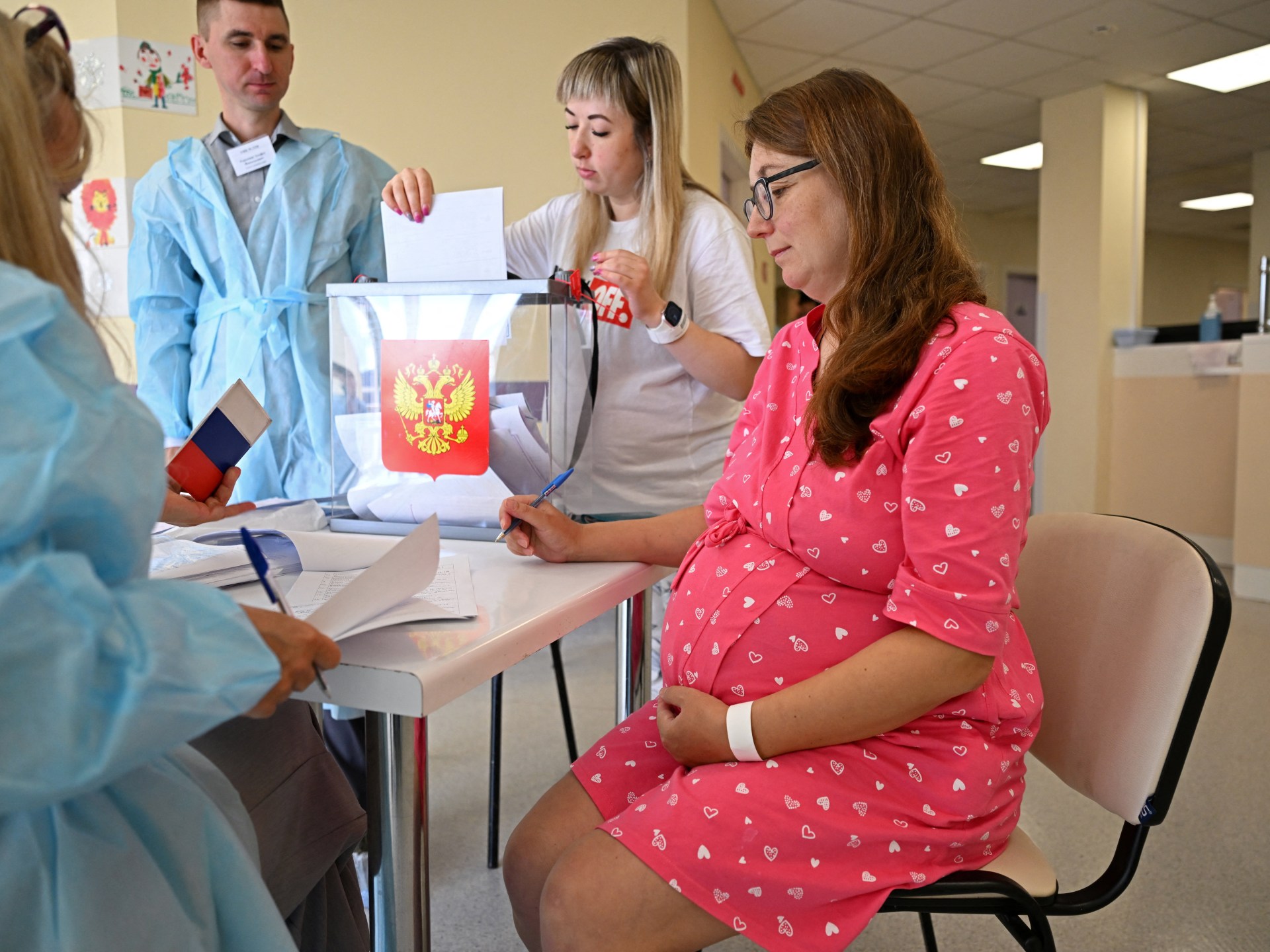
The staging of legislative balloting across the Russian Federation—the first nationwide parliamentary vote since the February 2022 full-scale invasion of Ukraine—has formally consolidated an era of managed political homogeneity. Operating under stringent wartime censorship statutes and expanded state security powers, the electoral process structurally eliminated any viable anti-war platform. Systemic opposition parties, including the Communist Party and the Liberal Democratic Party, have fully aligned behind Kremlin foreign policy doctrines, ensuring the ruling United Russia party faces zero institutional friction.
The geopolitical significance is amplified by the inclusion of occupied Ukrainian territories—Donetsk, Luhansk, Zaporizhzhia, and Kherson—into the federal voting registry. This administrative incorporation acts as an attempted constitutional fait accompli, designed to project sovereign permanence over disputed zones despite non-recognition by international bodies. The exercise reflects Moscow's strategic objective: transforming an uncompetitive ballot into an instrument of civic mobilization, reinforcing patriotic alignment, and purging systemic dissent from regional assemblies.
Global Trade & Economic Ripples
The political entrenchment of the Kremlin's wartime leadership carries profound consequences for international commerce and global commodity benchmarks. A fully compliant legislature ensures uninterrupted statutory authority for federal budget allocations toward military-industrial production, which now consumes roughly six percent of gross domestic product. This structural militarization precludes any near-term fiscal reconciliation with Western economies, locking in Russia's trade pivot toward China, India, and Southeast Asia.
In the hydrocarbons sector, legislative stability guarantees continuous state backing for shadow tanker operations, effectively bypassing Group of Seven price cap mechanisms on Urals crude. Concurrently, agricultural and fertilizer trade patterns remain critical levers of statecraft. Russian control over Black Sea commercial transit, combined with discretionary export quotas on potash and urea, sustains persistent volatility across agricultural exchanges. Maritime insurers and freight operators face elevated operational liabilities and compliance costs as secondary sanctions risks intensify across key Eurasian trade corridors.
Related Intelligence: Asian Games 2026 Sparks Fiscal and Logistics Reckoning in Japan
International Reactions & Diplomatic Stances
The international diplomatic response reflects sharp geopolitical polarization. Western multilateral bodies, including the European Union and the United States Department of State, issued unequivocal condemnations, labeling the balloting—specifically in occupied Ukrainian territory—as an illegitimate violation of the United Nations Charter and international law. Western envoys underscored that the structural exclusion of anti-war candidacies renders the outcome devoid of democratic credibility.
Conversely, key partners across the Global South and the expanding BRICS+ bloc maintained pragmatic non-interference. Beijing and New Delhi treated the process as an internal domestic matter, prioritizing stable bilateral trade flows, access to discounted crude, and the expansion of local-currency settlement mechanisms over Western-led normative governance frameworks.
Strategic Outlook & Future Scenarios
The consolidation of legislative power locks in a protracted confrontation between Moscow and the G7-led economic order. With parliamentary dissent neutralized, the Russian executive retains uninhibited authority to implement additional mobilization decrees, raise corporate taxes, and divert sovereign wealth into defense production without legislative resistance.
For international markets, this trajectory confirms the permanence of bifurcated global supply chains. Secondary sanctions enforcement by the United States Treasury and European authorities will likely tighten around financial and logistics intermediaries in Central Asia, Turkey, and the UAE. As Russia reinforces its autarkic, war-oriented economic model, structural volatility across energy, grains, and industrial metals will remain a defining feature of global trade.
Join Our Official WhatsApp Channel
Receive live commodity alerts, policy changes, and commercial intelligence directly on WhatsApp.