
Putin Issues Stark Warning Over Kaliningrad Security Strategy
Russian President Vladimir Putin warns Western powers that Moscow is prepared to deploy all available capabilities to defend Kaliningrad, escalating geopolitical tensions along the Baltic corridor.
Geopolitical & Core Developments
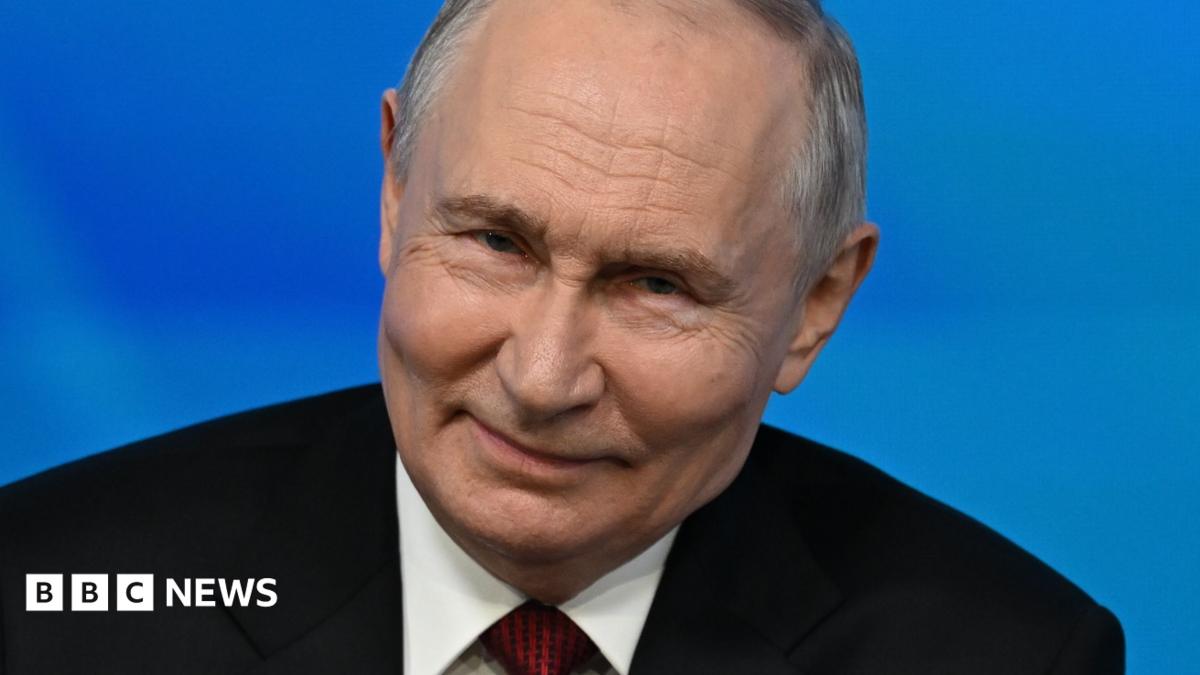
Russian President Vladimir Putin has delivered a high-stakes strategic warning to Western governments, asserting that Moscow stands fully prepared to deploy every available military asset to safeguard the sovereignty of Kaliningrad. Situated between Poland and Lithuania along the Baltic Sea, this heavily militarized Russian exclave has long served as a critical geopolitical flashpoint between Moscow and the North Atlantic Treaty Organization. During a high-level security briefing in St. Petersburg, the Russian leader insisted that Moscow's defensive postures do not constitute an aggressive escalation. Instead, he framed the military readiness measures as a direct and necessary response to increasingly bellicose statements and hostile strategic positioning by Western political and military leadership.
The vulnerability of the corridor linking mainland Russia to Kaliningrad has intensified following regional sanctions and transit restrictions imposed by neighboring European Union member states. Diplomatic channels between Moscow and Brussels remain severely strained, with military planners on both sides closely monitoring force concentrations across the Suwalki Gap. The latest pronouncements elevate the strategic stakes, signaling that any perceived encroachment on the territorial integrity or logistical lifeline of Kaliningrad will trigger an immediate and disproportionate tactical response from the Russian Federation.
Global Trade & Economic Ripples
Beyond the immediate military and diplomatic ramifications, the escalating rhetorical confrontation around Kaliningrad introduces substantial volatility into global commodity markets and international shipping lanes. The Baltic Sea basin represents a vital maritime artery for European and Eurasian commerce, handling vast volumes of energy products, agricultural commodities, and industrial raw materials. Heightened naval posture and potential electronic warfare interference in the region pose immediate risks to commercial vessel tracking, insurance premiums, and maritime logistics.
Global energy markets remain particularly sensitive to any deterioration of security architecture in Northern Europe. While direct physical flows of crude oil and natural gas through the Baltic corridors have already declined significantly due to previous sanctions regimes, secondary impacts on regional supply chains continue to reverberate. Industrial metals and fertilizer inputs originating from the wider Baltic basin face increased logistical friction, threatening to drive up input costs for manufacturing sectors worldwide. International trade analysts warn that persistent geopolitical friction in this maritime choke point could force extended rerouting of cargo vessels, inflating freight rates and exacerbating inflationary pressures across global supply networks.
Related Intelligence: Moroccan Espionage Scandal Deepens Corporate and Diplomatic Friction
International Reactions & Diplomatic Stances
International response to President Putin's remarks has been swift and deeply critical. Western capitals view the statements as a continuation of coercive nuclear and conventional posturing designed to fracture European unity and deter robust support for Ukraine. Spokespersons for the European Union reaffirmed their commitment to regional stability, emphasizing that transit restrictions enforced against Kaliningrad comply strictly with international sanctions frameworks and European law. Meanwhile, NATO officials reiterated that the alliance maintains a robust defensive posture across its eastern flank, capable of deterring any aggression while avoiding unnecessary escalation.
Multilateral bodies, including the United Nations, have issued generalized appeals for restraint, urging all nuclear-armed states to re-engage in strategic stability dialogues and risk-reduction mechanisms. Commercial market analysts and geopolitical risk consultancies note that while the probability of direct military conflict remains contained, the erosion of trust between Moscow and Western capitals permanently elevates the risk premium for international investments concentrated in Eastern and Northern Europe.
Strategic Outlook & Future Scenarios
Looking ahead, the geopolitical trajectory of the Kaliningrad corridor points toward sustained militarization and heightened intelligence-gathering operations by both Russian and NATO forces. Upcoming diplomatic summits and security forums are expected to feature intense closed-door negotiations aimed at establishing informal de-confliction protocols along the Baltic maritime boundary. However, the absence of functional arms control treaties leaves little room for formal de-escalation in the near term.
Sanctions enforcement mechanisms and counter-measures regarding transit corridors will likely remain primary battlegrounds for economic statecraft. As long as the broader geopolitical standoff persists, global commodity markets and supply chain managers must factor chronic volatility in the Baltic Sea region into their long-term operational strategies.
Join Our Official WhatsApp Channel
Receive live commodity alerts, policy changes, and commercial intelligence directly on WhatsApp.