
Punjab Imposes 30-Day Ban on Smart Glasses and Concealed Cameras
The Punjab government has imposed a 30-day province-wide ban on the sale and operational use of camera-enabled smart glasses and miniature surveillance devices under Section 144.
The Core Development
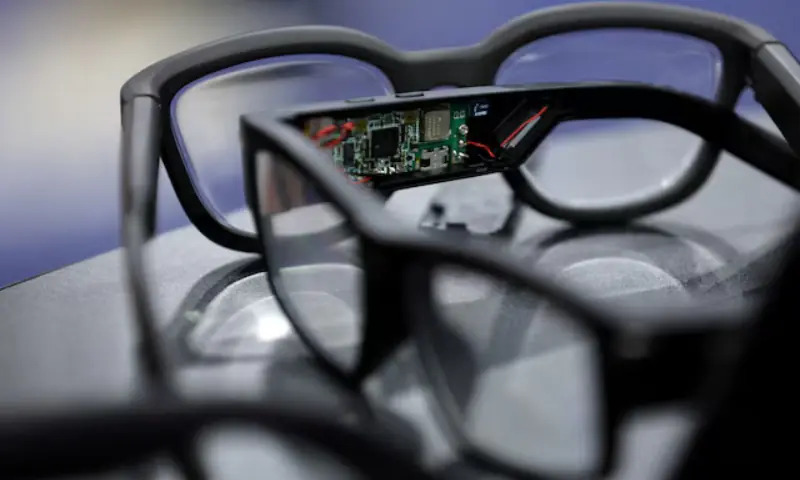
The Government of Punjab has officially prohibited the use, commercial display, and retail sale of camera-enabled smart glasses and miniature surveillance devices disguised as everyday consumer articles. The regulatory intervention was formalized through an executive decree issued by the Punjab Home Department under Section 144 of the Code of Criminal Procedure (CrPC), 1898. The interim restrictions are slated to remain operational for an initial tenure of 30 days across all administrative districts of the province.
According to the official gazette notification, the mandate specifically proscribes individuals from wearing, operating, or transporting smart eyewear featuring concealed audiovisual recording capabilities, alongside micro-cameras embedded into pens, keychains, buttons, USB drives, and decorative items. The provincial administration underscored that the abrupt intervention was necessitated by mounting privacy violations, unauthorized digital surveillance risks, and the illicit deployment of clandestine recording gear in examination facilities and high-security installations. Notably, the policy carves out explicit exemptions for standardized consumer electronics, including laptops, handheld tablets, cellular devices, and enterprise telecommunications terminal equipment that maintain formal compliance certificates from the Pakistan Telecommunication Authority (PTA).
Commercial & Economic Implications
The immediate administrative prohibition delivers a direct operational disruption to secondary consumer electronics distribution channels, niche tech merchants, and cross-border digital storefronts operating within Lahore, Rawalpindi, Faisalabad, and Multan. Commercial hubs such as Lahore's Hafeez Centre and Hall Road have experienced immediate operational freezes on emerging wearables inventory, with retail inventories being rapidly withdrawn from display cases to mitigate risks of punitive raids.
For consumer electronics importers and digital vendors reliant on local e-commerce platforms, the 30-day moratorium creates immediate capital lockups. Market participants estimate that hundreds of millions of rupees in unliquidated inventory across smart wearables and compact sensory peripherals face prolonged warehouse holding periods. Extended disruption to supply chains risks driving micro-retail margins into negative territory, especially for independent vendors operating on short-cycle credit facilities. Furthermore, market analysts anticipate a near-term surge in secondary grey-market transactions, accompanied by inflated street-level premiums for unapproved, grey-channel recording hardware as conventional brick-and-mortar storefronts suspend forward orders.
Related Intelligence: Punjab Enforces 30-Day Ban on Smart Glasses and Concealed Recording Devices
Stakeholder Perspectives & Market Reactions
The enforcement decree has elicited starkly polarized responses across legal, commercial, and regulatory sectors. Merchant trade bodies and wholesale electronics syndicates have voiced acute apprehension regarding ambiguous enforcement mechanisms. Representatives from urban merchant associations argue that the sudden invocation of Section 144 penalizes registered traders rather than addressing the unregulated grey-market imports feeding digital marketplaces. Retail federations have urged the provincial administration to implement targeted border-customs restrictions on unregistered commercial consignments rather than pursuing sweeping retail-level crackdowns.
Conversely, legal analysts and privacy advocates have cautiously welcomed heightened oversight, citing widespread gaps in Pakistan's data protection architecture. Legal experts observe that the proliferation of low-cost, high-definition micro-lenses has systematically compromised civil liberties, intellectual property safeguards, and personal privacy in corporate and academic domains. However, judicial observers have cautioned that short-term executive bans under Section 144 represent an ad-hoc stopgap rather than a permanent, legally durable solution to technological privacy enforcement.
Forward Outlook & Key Watchpoints
The critical focus over the coming month will center on the strictness of municipal inspections, inter-agency coordination between the Home Department and local police directorates, and the digital compliance of online marketplaces. Major domestic e-commerce aggregators are anticipated to deploy automated listing filters to purge covert surveillance gear to preempt regulatory penalties.
Key watchpoints for investors and trade participants include whether the provincial administration will seek an extension of the Section 144 order beyond the 30-day threshold, or transition toward a permanent, statutory regulatory regime. Establishing comprehensive type-approval protocols in coordination with the PTA and the Federal Board of Revenue represents the most probable long-term pathway to establish definitive legal distinctions between mainstream lifestyle wearables and illicit covert surveillance apparatus.
Join Our Official WhatsApp Channel
Receive live commodity alerts, policy changes, and commercial intelligence directly on WhatsApp.