
PTI Extends Fresh Dialogue Offer to Government Amid Escalating Political Tensions
Pakistan Tehreek-e-Insaf has renewed its offer for political dialogue with the federal government while explicitly denying recent reports of secret backchannel contacts.
The Core Development
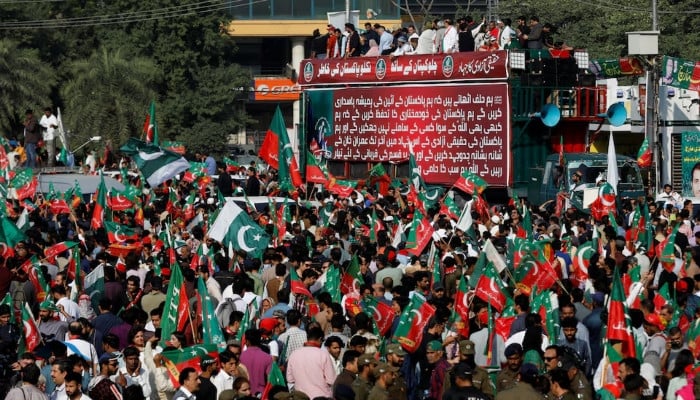
In a significant political maneuver, Pakistan Tehreek-e-Insaf (PTI) has officially extended a fresh offer for political negotiations to the federal government, while simultaneously dismissing widespread media speculation regarding secretive backchannel contacts. The announcement comes at a critical juncture for Pakistan's political landscape, where sustained friction between the ruling coalition and the opposition has continuously tested institutional stability. Speaking through senior party leadership in Islamabad, PTI representatives emphasized that while the party remains open to constitutional dialogue aimed at resolving ongoing governance deadlocks, no unauthorized or covert negotiations are currently underway with key stakeholders. This official clarification seeks to dispel rumors that have circulated in domestic media circles regarding behind-the-scenes compromises. The timeline of this overture coincides with heightened administrative vigilance across Punjab and Islamabad, where law enforcement agencies remain on high alert regarding upcoming public gatherings and political rallies. Political analysts note that this dual approach—combining strict public posturing with conditional offers for parleys—reflects an evolving strategy by the opposition to reclaim political space while navigating mounting legal and regulatory challenges.
Commercial & Economic Implications
For Pakistan's fragile economic ecosystem, prolonged political polarization continues to exact a heavy toll on market sentiment, retail trade, and wholesale distribution networks. Commercial stakeholders across Karachi, Lahore, and Faisalabad report that persistent uncertainty directly hampers consumer spending and delays crucial corporate investment decisions. Inflationary pressures, already exacerbated by structural fiscal adjustments and volatile energy tariffs, are further aggravated when supply chains face sporadic disruptions due to political protests and security lockdowns. Retail traders and wholesale market associations have repeatedly highlighted that business predictability relies heavily on political stability. When policy continuity is threatened by recurring street agitation and legislative gridlock, industrial output slows down, foreign direct investment pauses, and currency markets experience heightened volatility. Consequently, any credible movement toward political dialogue is closely monitored by the business community, which views a reduction in political friction as a prerequisite for sustained economic recovery, improved tax collection, and stabilized commodity prices.
Related Intelligence: Hurricane Polo Threatens Mexico Pacific Coast and Global Supply Chains
Stakeholder Perspectives & Market Reactions
Business councils, chambers of commerce, and legal experts have responded to PTI's latest announcement with a mixture of cautious optimism and persistent anxiety. Major industrial bodies, including the Federation of Pakistan Chambers of Commerce and Industry (FPCCI), have reiterated their longstanding stance that political stability is the single most important factor for economic revival. Representatives from various trade associations argue that continuous confrontation between the state apparatus and major political forces creates an untenable operating environment for small and medium enterprises (SMEs) as well as large-scale manufacturers. Legal experts point out that any prospective dialogue framework must strictly adhere to constitutional bounds to yield durable results, warning that extra-constitutional shortcuts have historically failed to deliver lasting stability. Meanwhile, public response remains polarized, reflecting deep ideological divisions across urban centers, where citizens grapple with the compounding effects of inflation, high utility tariffs, and diminished purchasing power.
Forward Outlook & Key Watchpoints
As the political actors position themselves for the next phase of engagement, market watchers and economic analysts are closely tracking several critical indicators. The primary watchpoint will be whether the federal government formally responds to PTI's conditional dialogue offer or maintains its current hardline stance. Analysts suggest that the willingness of both sides to compromise on key legislative and electoral grievances will determine whether these overtures translate into meaningful parliamentary cooperation or dissolve into another round of confrontation. Additionally, business leaders will monitor upcoming legislative sessions, judicial rulings regarding political detainees, and security protocols in major commercial centers. Ultimately, the trajectory of Pakistan's financial markets in the upcoming quarters will heavily depend on whether political leadership prioritizes macroeconomic stability and structural reforms over short-term partisan posturing.
Join Our Official WhatsApp Channel
Receive live commodity alerts, policy changes, and commercial intelligence directly on WhatsApp.