
Prime Minister Directs Nationwide AI Integration to Overhaul Education Sector
Prime Minister Shehbaz Sharif has reaffirmed the federal government's commitment to modernising Pakistan's educational framework by deploying artificial intelligence, aiming to bridge skill deficits and accelerate workforce productivity.
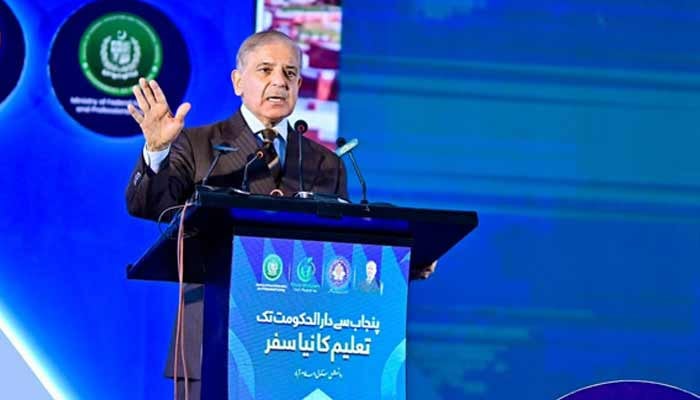
The Core Development
Prime Minister Shehbaz Sharif has directed federal and provincial education authorities to integrate artificial intelligence (AI) and advanced digital tools into the national curriculum, framing technological literacy as an urgent pillar of state development. In a high-level policy review conducted in Islamabad, the premier underscored that the country's economic resurgence depends on transitioning the conventional rote-learning model into a modern, tech-enabled pedagogy. The directive tasks the Ministry of Federal Education and Professional Training, in coordination with the Higher Education Commission (HEC) and provincial departments, with formulating a time-bound deployment plan covering teacher training, institutional digitisation, and AI-driven curriculum development.
The framework outlines an phased operational roadmap that includes piloting smart classrooms across select federal directorate schools before broader devolution to provincial setups. Central to the initiative is public-private collaboration with leading technological enterprises and global software vendors to develop localised learning platforms capable of functioning under intermittent connectivity conditions. Official sources confirm that a dedicated task force will monitor procurement transparency, syllabus revision, and the provision of requisite computational infrastructure across secondary and tertiary academic institutions nationwide.
Commercial & Economic Implications
For Pakistan's commercial landscape, the structural pivot toward artificial intelligence in education presents tangible ripple effects across supply networks, consumer electronics retail, and IT hardware wholesale sectors. Expanding digital education requires substantial physical infrastructure, including computing devices, networking hardware, interactive screens, and secure server facilities. Wholesale distributors and importers in major commercial hubs such as Karachi's Hafeez Centre and Lahore's Hall Road anticipate increased institutional demand, which could provide sustained volume growth for commercial suppliers.
From a macroeconomic perspective, improving basic and technical education directly addresses Pakistan's chronic productivity lag. The domestic trade sector, encompassing wholesale distribution, logistics networks, and retail merchandising, faces acute shortages of digitally skilled personnel proficient in modern inventory management, data analytics, and supply-chain forecasting. Enhancing early-stage AI literacy ensures that future entrants into the national workforce possess baseline analytical capacities, ultimately reducing corporate onboarding expenditures, lowering administrative frictions, and strengthening domestic market efficiencies amid ongoing structural inflationary pressures.
Related Intelligence: Houthi Missile Strike Kills 18 in Yemen's Shabwa Province
Stakeholder Perspectives & Market Reactions
Market participants and policy observers have responded to the announcement with cautious optimism, emphasising that policy execution remains the pivotal variable. The Pakistan Software Houses Association (P@SHA) welcomed the premier's stance, noting that bridging the academia-industry divide is critical if Pakistan aims to scale its IT exports beyond existing thresholds. Domestic tech entrepreneurs stressed that AI exposure must not remain confined to urban elite schools, urging the government to allocate sufficient resources to rural and lower-income municipal institutions.
Conversely, academic administrators and budgetary analysts raised concerns regarding fiscal headroom and physical infrastructure bottlenecks. With provincial governments managing broad public education portfolios under constrained fiscal arrangements, stakeholders question the funding mechanics for massive device distribution and high-speed broadband installation. Retail associations noted that without targeted tariff relief on imported technological equipment and networking components, public institutions may struggle to implement wide-scale hardware upgrades within targeted timeframes.
Forward Outlook & Key Watchpoints
Implementation will hinge on the federal education ministry's upcoming policy framework, expected to be presented to the federal cabinet within the current fiscal quarter. Market analysts will closely monitor the next federal and provincial budget allocations to assess whether tangible capital expenditure is committed to digital learning programs or if the ambition will remain largely aspirational.
Key watchpoints over the coming quarters include the formalisation of public-private partnerships with domestic telecom providers to subsidise educational data bandwidth, the rollout of initial teacher re-skilling programs, and customs tariff adjustments on instructional hardware. Should the government execute this technological roadmap effectively, Pakistan could gradually modernise its human capital base, delivering long-term competitive benefits across commercial, industrial, and digital sectors.
Join Our Official WhatsApp Channel
Receive live commodity alerts, policy changes, and commercial intelligence directly on WhatsApp.