
Peshawar High Court Issues Notices on Petitions Challenging KP Emergency Rule
The Peshawar High Court has issued notices to federal and provincial authorities on petitions challenging emergency measures and governor's rule in Khyber Pakhtunkhwa, setting the next hearing for November 10.
The Core Development
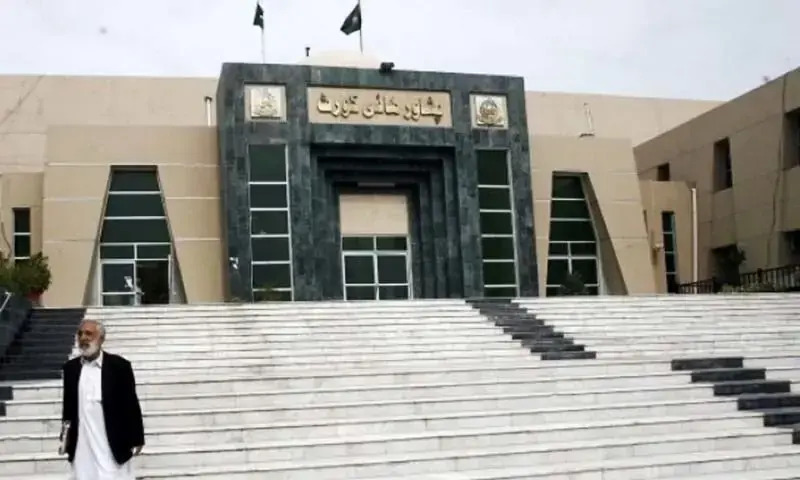
The Peshawar High Court (PHC) convened on Tuesday to hear multiple constitutional petitions challenging the enforcement of emergency measures and the potential or declared imposition of governor's rule across Khyber Pakhtunkhwa. A two-member division bench comprising Justice Ijaz Anwar and Justice Muhammad Faheem Wali presided over preliminary proceedings, subsequently issuing formal notices to the federal government, the provincial administration, the Attorney General for Pakistan, and the Advocate General of Khyber Pakhtunkhwa.
The legal challenge encompasses a consolidated set of petitions brought forward by senior political figures and professional associations. Among the primary litigants are Pakistan Tehreek-e-Insaf (PTI) Chairman Barrister Gohar Ali Khan, MNA Shandana Gulzar, the Khyber Pakhtunkhwa Bar Council, and the leadership of the Tehreek-i-Tahafuz-Ayin-i-Pakistan (TTAP). Legal counsel representing the petitioners, including Barrister Sameer Khosa and Salman Akram Raja, argued that extraordinary constitutional overreaches bypass standard parliamentary procedures and undermine provincial autonomy under the 18th Amendment. Following initial legal arguments, the bench stated that a detailed written order would be released, setting the next substantive hearing date for November 10.
Commercial & Economic Implications
The acute constitutional dispute introduces significant operational uncertainty across commercial corridors in Khyber Pakhtunkhwa, directly affecting both wholesale distribution and domestic retail activity. Prolonged friction between federal authorities and the provincial administration disrupts institutional stability, frequently slowing regional trade flows through key transit hubs linking Punjab, Khyber Pakhtunkhwa, and trade conduits into Afghanistan.
For wholesale traders and distribution networks dealing in fast-moving consumer goods, grains, and construction materials, administrative deadlocks elevate freight premiums and insurance considerations. Instability dampens inventory buildup among regional stockists who fear abrupt localized closures, public demonstrations, or supply chain bottlenecks. Furthermore, ongoing policy divergence between federal revenue targets and provincial taxation structures threatens to exacerbate inflation, driving consumer price volatility across secondary and tertiary consumer markets in Peshawar, Mardan, and Swat.
Stakeholder Perspectives & Market Reactions
The legal fraternity and commercial associations have voiced profound apprehension regarding the utilization of emergency provisions. The Khyber Pakhtunkhwa Bar Council framed the petitions as a fundamental defense of constitutional supremacy, asserting that executive intervention damages governance mechanisms and legal certainty essential for commercial stability.
Trade bodies across Khyber Pakhtunkhwa have similarly appealed for rapid legal clarity. Commercial leadership points out that business confidence remains tethered to administrative predictability. Ongoing political confrontation paralyzes public sector development spending, which historically serves as a crucial liquidity driver for local contractors, logistics operators, and retail merchants. Capital markets and foreign direct investment channels likewise monitor the proceedings closely, as governance disputes within frontier provinces heighten overall sovereign risk assessments.
Forward Outlook & Key Watchpoints
The upcoming hearing on November 10 stands as a critical juncture for both constitutional governance and economic stability in Khyber Pakhtunkhwa. Legal analysts anticipate the court will evaluate whether procedural requirements under Article 232 and Article 234 of the Constitution were properly satisfied before federal intervention was deployed.
Market observers must monitor the formal submissions by the Attorney General for Pakistan and the KP Advocate General, as these filings will outline the state's legal framework and scope of executive authority. Should the court grant interim relief or suspend emergency measures, provincial executive powers will face immediate operational reassessment. Conversely, an extended period of litigation risks freezing regional public procurement, dampening seasonal trade sentiment, and sustaining high logistics overheads for wholesale and retail merchants across the province.
Join Our Official WhatsApp Channel
Receive live commodity alerts, policy changes, and commercial intelligence directly on WhatsApp.