
Pakistan Urges SCO Members to Adopt Local Currencies for Trade Settlements
At the SCO Council of Heads of Government summit in Dushanbe, Pakistan urged member states to transition toward national currency settlements to cushion regional economies against external financial vulnerabilities.
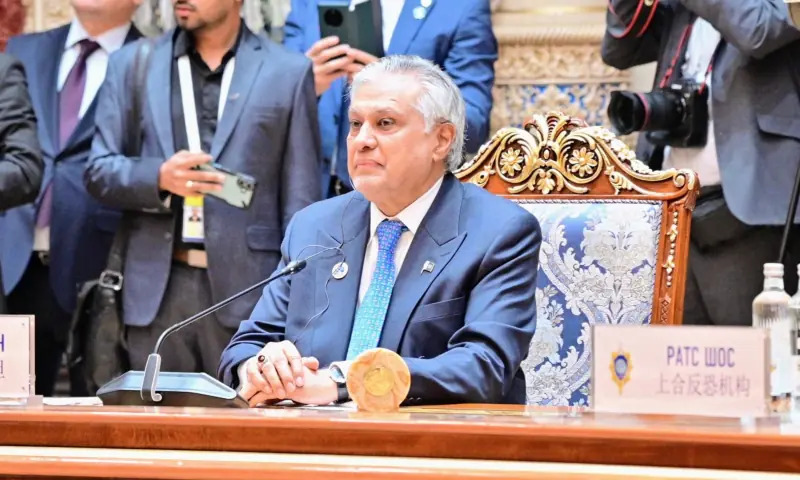
The Core Development
Addressing the Shanghai Cooperation Organisation (SCO) Council of Heads of Government (CHG) in Dushanbe, Tajikistan, Pakistan's Deputy Prime Minister and Foreign Minister Ishaq Dar called on member states to operationalize alternative financial architectures. Central to his address was a structured proposal urging member economies to adopt national currencies for mutual trade settlements and establish robust intra-regional mechanisms capable of mitigating external economic shocks.
The CHG constitutes the SCO's second-highest decision-making organ, primarily steering regional policies regarding economic cooperation, cross-border connectivity, trade facilitation, and collective budgetary priorities. Highlighting ongoing geopolitical friction, global inflationary pressures, and monetary tightening in developed economies, Dar emphasized that over-reliance on third-party reserve currencies exposes developing nations to severe foreign exchange volatility. Pakistan's diplomatic intervention aligns with broader multilateral efforts among Eurasian powers—notably China and Russia—to build independent clearing systems, expand bilateral currency swap lines, and de-risk international commerce from single-currency dependencies.
Commercial & Economic Implications
For Pakistan's commercial landscape, the operationalization of local currency clearing systems carries significant structural implications. Importers and wholesale distributors in sectors such as industrial inputs, raw materials, heavy machinery, and energy frequently face acute foreign currency shortages, leading to delays in opening letters of credit (LCs). When bilateral trade is conducted via the US dollar, exchange-rate fluctuations directly escalate landed import costs, ultimately filtering down into higher wholesale and retail prices.
A transition toward bilateral settlement in rupees, renminbi, or other regional currencies could curtail transaction fees, shorten clearance intervals, and reduce reliance on third-country intermediary clearing houses. For domestic commercial markets, lower structural settlement friction promises more stable retail pricing on essential imported goods, improved liquidity for importers, and reduced exposure to abrupt foreign exchange depreciations. Furthermore, direct bilateral mechanisms allow domestic manufacturers to stabilize supply chains by securing regular intermediate inputs without drawing down central bank foreign reserves.
Stakeholder Perspectives & Market Reactions
Domestic industry representatives and commercial trade bodies have welcomed the strategic push, citing persistent hurdles within traditional trade finance channels. Business leaders across major commercial centers note that domestic enterprises regularly absorb substantial foreign exchange risk premiums during volatile market cycles. Securing institutional arrangements that allow invoicing and settlement in domestic or partner currencies would provide predictability for forward contracts and long-term procurement.
Financial analysts and banking executives note that while the strategic intent is sound, implementation requires sophisticated financial infrastructure. Clearing banks, cross-border payment messaging platforms, and currency convertibility arrangements must be established to ensure balances accumulated in partner currencies can be reinvested or settled efficiently. Legal and trade specialists emphasize that central banks within the SCO bloc must first sign binding regulatory protocols to establish deep liquidity windows and manage exchange-rate parities without distorting official interbank rates.
Forward Outlook & Key Watchpoints
The near-term trajectory of this regional financial strategy depends on technical negotiations within the SCO Interbank Consortium and bilateral central bank dialogues. Market participants will monitor the potential formalization of specialized payment frameworks, expansion of existing bilateral currency swap agreements, and pilot settlement schemes for bulk commodity imports.
Over the coming quarters, key milestones include technical committee deliberations on an integrated SCO payment infrastructure, the establishment of dedicated correspondent banking relations between member states, and the formal publication of clearing guidelines. For Pakistani enterprises and economic policymakers, the pace at which these inter-governmental mechanisms transition from diplomatic discourse into active commercial banking channels will dictate the real-world relief provided to the domestic currency and broader external balance sheet.
Join Our Official WhatsApp Channel
Receive live commodity alerts, policy changes, and commercial intelligence directly on WhatsApp.