
Peshawar High Court Sets Hearing on KP Emergency Rule Petition
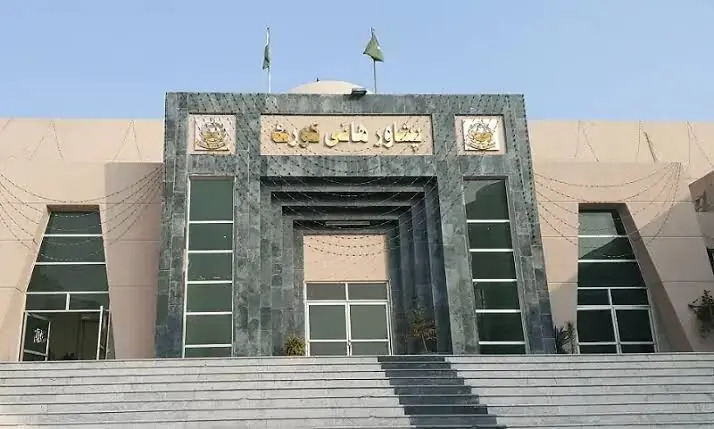
The Peshawar High Court has scheduled an October 20 hearing for PTI's constitutional petition challenging the federal government's enforcement of Governor's rule and emergency in Khyber Pakhtunkhwa.
The Core Development
The Peshawar High Court has scheduled October 20 for the preliminary hearing of a constitutional petition filed by Pakistan Tehreek-e-Insaf Chairman Barrister Gohar Ali Khan, challenging the federal government's imposition of emergency and Governor's rule in Khyber Pakhtunkhwa. The petition seeks to have the executive decree declared unconstitutional, null, and void, arguing that the federal government bypassed requisite legislative checks and established constitutional thresholds.
The federal administration invoked emergency provisions on October 11, placing the province under direct federal oversight through the provincial Governor. Official proclamations cited the provincial administration's alleged disengagement from counter-terrorism operations and a breakdown in institutional coordination as grounds for executive intervention under Articles 232 and 234 of the Constitution. This administrative maneuver culminated after several weeks of mounting friction between Islamabad and Peshawar, marked by failed negotiations, protests, and disputes over administrative autonomy.
PTI's legal team contends that the invocation of emergency powers lacks legitimate statutory justification, asserting that provincial security challenges do not meet the constitutional definition of an internal disturbance beyond the control of provincial authorities. The forthcoming preliminary hearing before a division bench will determine the maintainability of the petition and whether interim relief, such as suspending the Governor's rule, can be granted.
Commercial & Economic Implications
The imposition of emergency rule introduces acute administrative volatility across Khyber Pakhtunkhwa, directly affecting regional wholesale trade, cross-border transit logistics, and public sector development spending. Federal takeovers historically disrupt local disbursement channels, freezing provincial line-department approvals and delaying public procurement tenders valued in billions of rupees.
Wholesale distribution corridors linking Punjab and Sindh to Khyber Pakhtunkhwa and onward to the Torkham border crossing face heightened friction. Transporters and logistics operators have signaled caution, citing administrative realignments and check-post restructuring. Delays along transit routes inevitably escalate freight costs, directly compounding food inflation and consumer price pressures in urban centers such as Peshawar, Mardan, and Swat.
Furthermore, banking channels and credit lines for local small-to-medium enterprises remain constricted. Commercial lenders tend to reassess risk exposures in jurisdictions undergoing abrupt constitutional transitions, curtailing short-term working capital facilities. This contraction poses significant hurdles for fast-moving consumer goods distributors and commodity wholesalers reliant on predictable cash flow and rapid stock turnover.
Related Intelligence: Imaan Mazari, Hadi Chattha Stage Walkout in Anti-Terrorism Court Jail Trial
Stakeholder Perspectives & Market Reactions
Legal scholars remain sharply divided on the constitutional propriety of the federal decree. Proponents of the move argue that pervasive security imperatives justify federal intervention under national sovereignty doctrines, especially where counter-terrorism operations face regional non-compliance. Conversely, constitutional jurists contend that dislodging an elected provincial assembly without strict adherence to parliamentary ratification within statutory deadlines undermines Pakistan's federal framework.
Commercial chambers across the province, including the Sarhad Chamber of Commerce and Industry, have voiced deep concern over the ensuing policy paralysis. Business leaders emphasize that commercial activity cannot thrive amidst institutional gridlock, calling on both federal and provincial stakeholders to prevent political disputes from destabilizing market operations. Retail trade bodies have similarly warned that protracted administrative uncertainty will deter private capital investment and compress consumer spending.
Government spokespersons maintain that the enforcement of Governor's rule was necessary to stabilize internal security and safeguard public infrastructure, assuring the business community that commercial operations will continue without disruption.
Forward Outlook & Key Watchpoints
The legal proceedings scheduled for October 20 serve as the immediate indicator for provincial governance. Key watchpoints include whether the bench grants an interim stay against the federal notification and whether the matter will be referred to a larger judicial bench for constitutional interpretation.
Simultaneously, the federal government faces strict statutory windows to lay the emergency proclamation before a joint sitting of parliament for formal ratification. If parliament fails to approve the decree within the constitutional timeframe, the legal basis for Governor's rule dissolves automatically. Market participants and trade associations will closely track the stability of transit corridors, treasury disbursements, and the resumption of regular administrative governance across Khyber Pakhtunkhwa.
Join Our Official WhatsApp Channel
Receive live commodity alerts, policy changes, and commercial intelligence directly on WhatsApp.