
Peshawar Reopens Schools Amid High Security and Section 144 Curbs
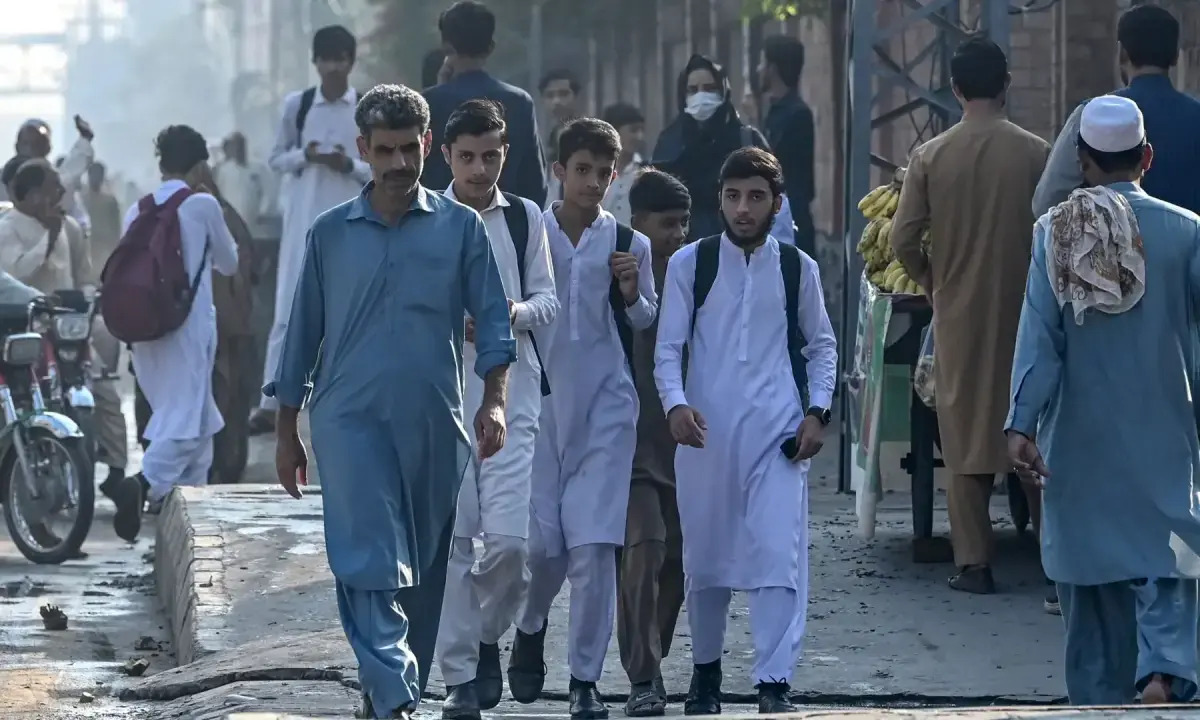
Educational institutions in Peshawar will reopen on Tuesday following Monday closures triggered by the imposition of governor rule, as authorities reinforce Section 144 restrictions across the provincial capital.
The Core Development
The district administration of Peshawar has formally announced that all public and private educational institutions will reopen on Tuesday, reversing temporary closures triggered by recent regional political turmoil. The confirmation came via an official notification released by the Peshawar Deputy Commissioner (DC) on Monday, which urged parents, students, and institutional bodies to disregard unverified social media circulars and speculative reports.
Schools, colleges, and universities across Khyber Pakhtunkhwa’s provincial capital remained shuttered on Monday amid widespread road closures, traffic diversions, and broad civil disruption following the formal enforcement of governor’s rule in the province. In response to mounting security challenges, heavy contingents of law enforcement personnel, including regular police and specialized units, took positions across major arterial roads, with security scrutiny noticeably intensifying along the perimeter of the Peshawar Cantonment limits.
Alongside the resumption of academic activity, the district magistrate clamped a sweeping seven-day ban on public assemblies under Section 144 of the Code of Criminal Procedure (CrPC). The decree prohibits public gatherings, rallies, the display of firearms, and the transport of potential riot instruments, explicitly outlawing road spikes, ball bearings, laden batons, petrol containers, and home-made incendiaries designed to disrupt civil order.
Commercial & Economic Implications
The reopening of academic institutions serves as a critical bellwether for normal commercial flows across urban Peshawar, yet the underlying administrative curbs under Section 144 continue to temper business momentum. The unexpected closure on Monday caused substantial friction for urban transport operators, retail supply chains, and morning commercial distribution. School transit networks generate considerable daily secondary consumption, benefiting fuel retailers, localized transport contractors, and peripheral food service vendors.
However, the retention of security perimeters around the Cantonment and entry points from the Grand Trunk (GT) Road creates persistent friction for freight logistics. Wholesale suppliers serving the Karkhano markets, Qissa Khwani Bazaar, and surrounding semi-urban corridors have faced delayed delivery turnaround times. With road checkpoints checking vehicles and restricting group movements, intra-provincial trade corridors linking Punjab and Peshawar remain exposed to logistical delays. For traders in perishables and consumer packaged goods, repeated sporadic shutdowns inflate operational demurrage and complicate inventory planning, adding incremental cost pressures in an already volatile macro environment.
Related Intelligence: Centre Imposes Governor's Rule in Khyber Pakhtunkhwa Amid Security Escalation
Stakeholder Perspectives & Market Reactions
Local business communities, urban traders, and transport associations have responded to the reopening notice with cautious relief, though broad concerns persist over administrative volatility. Representatives of the Sarhad Chamber of Commerce and Industry (SCCI) have repeatedly emphasized that maintaining predictable access through Peshawar's major transport corridors is vital to preserving industrial activity and cross-border transit towards Afghanistan.
Civil society and parent-teacher organizations welcomed the district administration’s clarification, noting that arbitrary rumors had caused significant operational uncertainty for private school operators on Monday. However, transport unions operating passenger vans and regional buses highlighted that heavy policing along Cantonment boundaries continues to constrict daily route efficiency. Legal experts note that while the enforcement of Section 144 is standard procedure during political transitions, sweeping bans on movement and heightened police discretion must be carefully calibrated to avoid unlawful disruption to ordinary merchant transactions.
Forward Outlook & Key Watchpoints
The administrative situation over the next week will largely hinge on public compliance with the seven-day Section 144 directive and the state's enforcement footprint. Over the coming 48 to 72 hours, corporate logistics planners and commercial trade associations will monitor whether road cordons around the Cantonment ease or become permanent fixtures of the administrative apparatus under governor’s rule.
Key watchpoints include potential legal challenges filed against the invocation of emergency administrative decrees, the stability of intra-city transport systems, and the preservation of supply-chain reliability into Peshawar’s major wholesale centers. If political tensions subside without violent confrontations or fresh blockades, trade throughput and educational operations should normalize. Conversely, any extension of administrative curbs beyond the initial seven-day duration could trigger protracted operational frictions for the regional economy.
Join Our Official WhatsApp Channel
Receive live commodity alerts, policy changes, and commercial intelligence directly on WhatsApp.