
Pakistan Urges EU to Maintain GSP Plus Status Amid Economic Reforms
Prime Minister Shehbaz Sharif has underscored the vital importance of the European Union's GSP Plus scheme, urging stronger bilateral economic ties and continued trade preferences to support Pakistan's export-driven recovery.
The Core Development
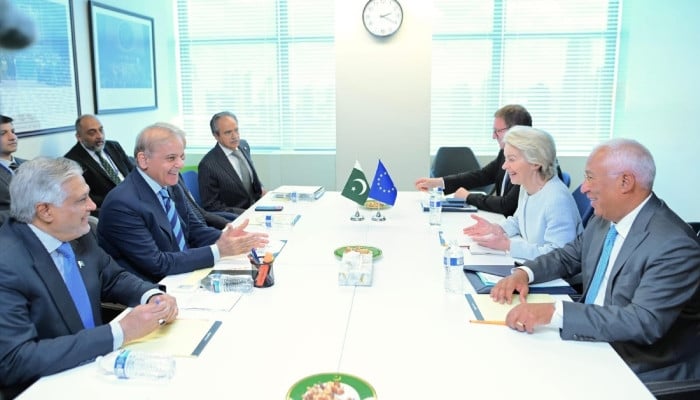
In high-level diplomatic exchanges in Islamabad, Prime Minister Shehbaz Sharif has strongly emphasized the indispensable value of the European Union's Generalized Scheme of Preferences Plus (GSP Plus) for Pakistan's national economy. The talks, centered on bolstering bilateral relations, trade integration, and diplomatic cooperation, highlighted the European Union's ongoing role as Pakistan's premier export destination. The current GSP Plus arrangement, which grants eligible developing countries duty-free or preferential access to the lucrative European market, has served as a foundational pillar for Pakistan's external trade sector since its inception.
During the discussions with European Union delegates and diplomatic representatives, Prime Minister Sharif outlined the government's aggressive legislative and administrative push to align domestic compliance with the 27 core international conventions tied to the GSP Plus framework. These measures span human rights, labor standards, environmental protection, and effective governance. The administration has established dedicated oversight committees to ensure that industrial sectors, particularly textiles and leather manufacturing, strictly adhere to international compliance benchmarks.
Commercial & Economic Implications
For Pakistan's domestic market, wholesale distributors, and retail supply chains, the renewal and smooth continuation of the GSP Plus status carry monumental financial weight. The European Union absorbs a substantial share of Pakistan's total textile and apparel exports, generating billions of dollars in foreign exchange annually. Any disruption or loss of preferential tariff access would instantly erode the profit margins of local manufacturers, translating into severe contraction across upstream and downstream supply chains—from raw cotton ginning mills in Punjab and Sindh to export-oriented garment factories in Faisalabad and Karachi.
Furthermore, the influx of foreign exchange derived from European trade is a crucial stabilizer for Pakistan's foreign exchange reserves, directly dampening inflationary pressures by strengthening the local currency against major global benchmarks. Without these preferential tariffs, Pakistani exporters would face heavy import duties averaging between 9% and 12% upon entry into European ports, pricing domestic goods out of competitive retail shelves across Germany, France, Italy, and beyond. This scenario would severely hamper industrial capacity utilization, triggering widespread layoffs and constraining domestic wholesale trade.
Related Intelligence: Yemeni Government Launches Dual Military and Diplomatic Push Against Houthi Forces
Stakeholder Perspectives & Market Reactions
Industry bodies, including the All Pakistan Textile Mills Association (APTMA) and various chambers of commerce, have welcomed the Prime Minister's proactive diplomatic stance, while continuously lobbying for enhanced institutional readiness. Business leaders stress that maintaining compliance is not merely a bureaucratic hurdle but a vital operational necessity for long-term survival in global markets. Trade associations have collaborated closely with federal ministries to conduct compliance audits, ensuring that labor standards and environmental safety protocols within manufacturing hubs meet European expectations.
Legal and economic analysts point out that the European Union's oversight of the GSP Plus regime has grown increasingly rigorous, with stringent monitoring mechanisms evaluating Pakistan's progress on human rights and legislative reforms. While business sentiment remains cautiously optimistic regarding the extension of trade preferences, analysts emphasize that domestic economic stability relies heavily on continuous policy consistency and structural reforms that transcend immediate political cycles.
Forward Outlook & Key Watchpoints
As negotiations and compliance reviews progress, key stakeholders are closely monitoring upcoming evaluation reports from the European Commission. The timeline for the ongoing trade arrangement necessitates sustained implementation of governance and labor reforms to satisfy upcoming legislative milestones in Brussels. Policymakers in Islamabad are actively drafting supplementary guidelines to enhance institutional transparency, aiming to secure long-term trade security and pave the way for broader economic diversification beyond traditional textile exports.
Join Our Official WhatsApp Channel
Receive live commodity alerts, policy changes, and commercial intelligence directly on WhatsApp.