
Pakistan School Collapse Highlights Chronic Infrastructure Deficits and Governance Pressures
A fatal roof collapse at a school in Peshawar has intensified scrutiny on Pakistan's decaying public infrastructure, highlighting systemic governance hurdles and acute fiscal constraints under international stabilization programs.
Geopolitical & Core Developments
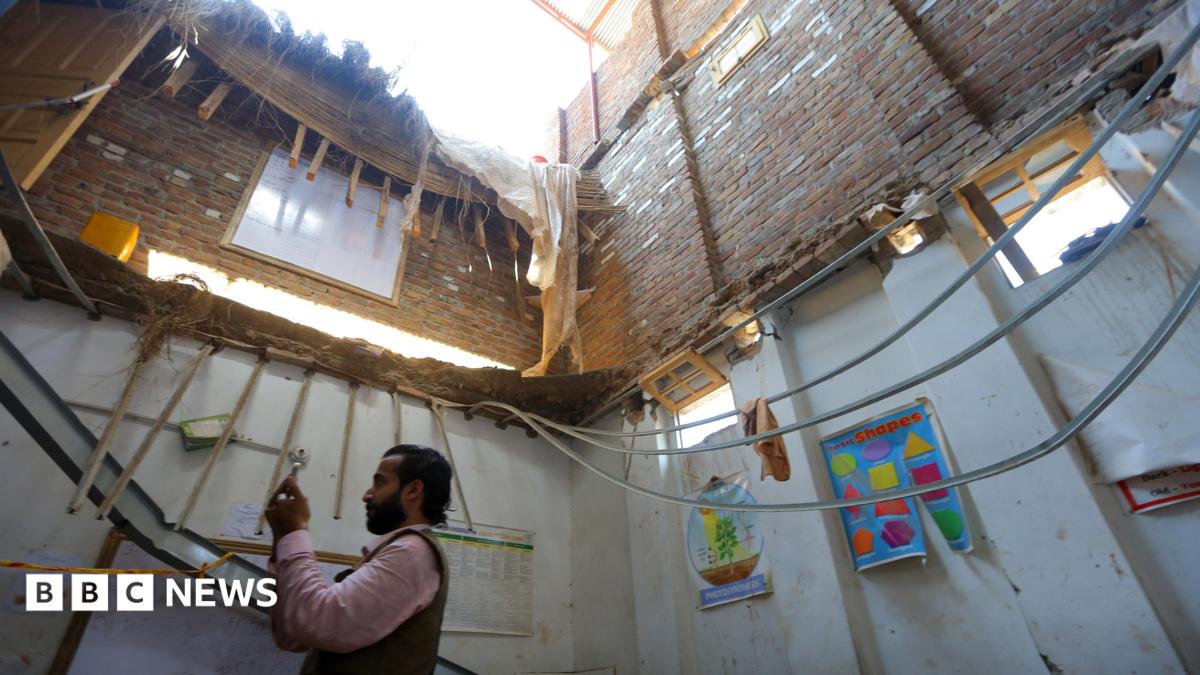
A catastrophic structural failure occurred at an educational facility in Peshawar, the provincial capital of Khyber Pakhtunkhwa, plunging northwest Pakistan into renewed administrative and public distress. Eyewitness accounts and initial field assessments confirmed that distinct structural cracking sounds were heard moments before the reinforced concrete slab gave way, trapping students and instructors beneath tons of rubble. Specialized municipal search-and-rescue teams, supported by provincial civil defense personnel, were deployed immediately to clear debris and treat critical injuries.
The incident transpires against an already complex geopolitical and internal security backdrop in Khyber Pakhtunkhwa, a province straddling volatile border regions adjacent to Afghanistan. Decades of counter-insurgency operations, internal displacement, and persistent fiscal diversion toward security imperatives have severely compromised provincial social sector spending. Municipal authorities have historically struggled to enforce building codes and maintain aging colonial- and early post-independence-era public edifices. The disaster in Peshawar is increasingly viewed not merely as an isolated engineering failure, but as a direct consequence of prolonged governance deficits, bureaucratic inertia, and a hollowed-out provincial public works apparatus.
Global Trade & Economic Ripples
While localized in physical scope, the collapse serves as an alarming proxy for Pakistan’s broader infrastructure paralysis, carrying direct implications for regional commercial viability and international development finance. Pakistan remains entrenched in a high-stakes macroeconomic stabilization framework dictated by the International Monetary Fund (IMF) under its Extended Fund Facility. To meet strict primary surplus and revenue benchmarks, federal and provincial authorities have repeatedly instituted sweeping cuts to the Public Sector Development Programme (PSDP).
This prolonged retrenchment in capital expenditure has crippled basic infrastructure maintenance across northern transit corridors and secondary cities. Furthermore, prolonged exposure to severe climatic anomalies—including flash flooding, extreme precipitation shifts, and monsoon-induced ground saturation—has accelerated the degradation of foundational infrastructure across the Indus basin. For international commercial partners and logistics operators navigating regional trade conduits into Central Asia, Pakistan's chronic structural vulnerabilities pose tangible supply chain bottlenecks, heightened operational insurance premiums, and systemic freight transit delays.
Related Intelligence: Sussex Return to UK Engagements Highlights Soft Power Dynamics and Public Sentiment
International Reactions & Diplomatic Stances
Multilateral organizations and foreign diplomatic missions have formally acknowledged the tragedy, offering condolences alongside calls for systemic municipal reform. United Nations humanitarian coordination representatives and educational bodies, including UNICEF, have highlighted the urgent need to address systemic structural safety standards in schools across South Asia, where millions of children occupy structurally hazardous classrooms.
Development partners, including the World Bank and the Asian Development Bank (ADB), face difficult strategic recalculations. While these institutions provide conditional structural loans aimed at energy reform and fiscal management, civil society organizations and market analysts contend that austerity measures disproportionately curtail vital human development and physical infrastructure investments. Sovereign credit rating agencies maintain a cautious stance, viewing persistent domestic socio-economic stress and governance failures as ongoing downside risks to long-term economic stability.
Strategic Outlook & Future Scenarios
The trajectory of public infrastructure resilience in Khyber Pakhtunkhwa and broader Pakistan remains constrained by fiscal tightness. In the immediate aftermath, provincial authorities are expected to mandate high-level investigative tribunals and announce emergency facility inspections; however, historical precedent suggests limited follow-through without sustained budgetary allocations. Political opposition factions are already utilizing the collapse to challenge federal and provincial governance efficiency ahead of critical fiscal negotiations.
Looking forward, Pakistan must balance external debt obligations with non-negotiable domestic capital rehabilitation. Failure to modernize safety oversight and restore foundational municipal budgets will exacerbate public unrest, degrade social cohesion, and deepen investor skepticism regarding Pakistan’s institutional capacity to manage large-scale regional logistics and foreign direct investment initiatives.
Join Our Official WhatsApp Channel
Receive live commodity alerts, policy changes, and commercial intelligence directly on WhatsApp.