
Pakistan, Saudi Arabia, and Turkiye Advance Tripartite Defence Pact
Pakistan, Saudi Arabia, and Turkiye review institutional progress on the Makkah Joint Defence Agreement, reinforcing regional security and strategic economic stability.
The Core Development
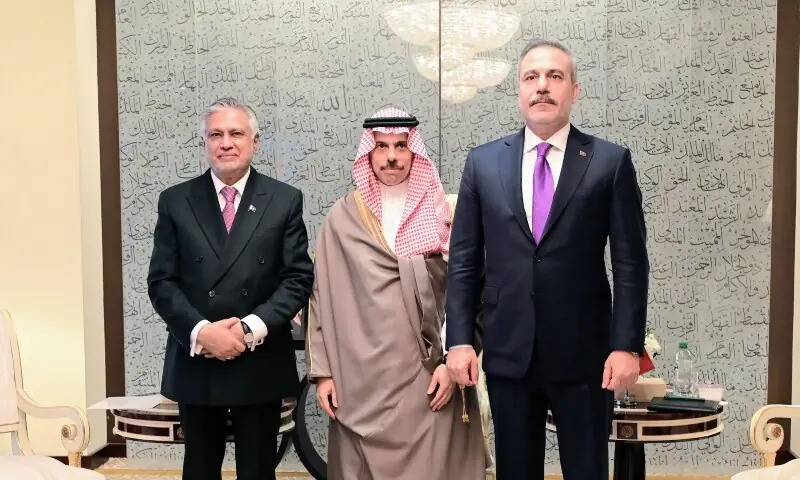
Deputy Prime Minister and Foreign Minister Ishaq Dar met with his Saudi Arabian and Turkish counterparts on Friday on the sidelines of the United Nations General Assembly in New York to review critical progress on institutionalising the tripartite Makkah Joint Defence Agreement. The landmark agreement, initially signed by Pakistan, Saudi Arabia, and Turkiye on August 7, establishes a collective security framework that empowers member states to treat an attack against any single signatory as an aggression against all three nations. This high-level diplomatic engagement builds directly upon the foundational momentum established during the inaugural meeting held on August 31 in Istanbul, where senior defense and foreign policy officials convened to finalize the institutional architecture of the alliance. Notably, Pakistan was unanimously selected during the Istanbul sessions to head the permanent secretariat of the pact in Riyadh, underscoring Islamabad's central role in coordinating regional security operations, joint military readiness, and strategic defence logistics among the three allied powers.
Commercial & Economic Implications
While ostensibly framed as a military and security pact, the institutionalization of the Makkah Joint Defence Agreement carries profound commercial and economic implications for Pakistan, particularly concerning bilateral trade stability, energy security, and foreign direct investment. For Kalyar Traders and the broader business community in Pakistan, enhanced geopolitical alignment with economic heavyweights like Saudi Arabia and Turkiye helps stabilize foreign exchange reserves, secures preferential energy supply corridors, and mitigates external macroeconomic shocks. Long-term defense cooperation often translates into joint industrial ventures, technology transfers, and infrastructure investments, which can significantly bolster domestic manufacturing and wholesale distribution networks. By ensuring regional stability, the pact minimizes maritime and overland supply chain disruptions, thereby dampening imported inflation pressures and fostering a predictable economic environment essential for retail trade and sustained market growth across Pakistan.
Related Intelligence: Pakistan-Afghanistan Border Clashes Threaten Regional Trade Corridors
Stakeholder Perspectives & Market Reactions
Business councils, industrial bodies, and financial analysts in Pakistan have responded to the diplomatic developments with cautious optimism, viewing enhanced strategic ties as a catalyst for deeper economic integration. Representatives from major trade associations emphasize that a secure geopolitical standing reduces sovereign risk premiums, thereby encouraging foreign institutional investors to participate in Pakistan's capital markets and privatization initiatives. Legal and policy experts note that housing the alliance secretariat in Riyadh places Pakistani administrative leadership at the nexus of Middle Eastern and Central Asian security economics. Official statements from the Foreign Office reiterate that the alliance is designed to foster collective prosperity and defensive deterrence without posing a threat to regional stability, a sentiment echoed by financial markets through steady currency performance and sustained investor confidence.
Forward Outlook & Key Watchpoints
As the tripartite alliance transitions from conceptual framework to operational reality, key stakeholders will closely monitor the formal establishment and staffing of the Riyadh secretariat in the coming months. Critical milestones to watch include the finalization of standard operating procedures for joint military exercises, the establishment of a unified defense industrial cooperation committee, and subsequent ministerial summits scheduled for later this year. Economists and business leaders will evaluate how effectively these security frameworks translate into concrete bilateral trade agreements, tariff concessions, and joint ventures in energy and manufacturing sectors. The ultimate success of the Makkah Joint Defence Agreement will be measured by its ability to secure regional trade routes and reinforce the economic resilience of Pakistan, Saudi Arabia, and Turkiye amidst shifting global financial landscapes.
Join Our Official WhatsApp Channel
Receive live commodity alerts, policy changes, and commercial intelligence directly on WhatsApp.