
Pakistan and Saudi Arabia Sign Landmark Visa Abolition Accord
Pakistan and Saudi Arabia have signed a historic agreement to abolish visa requirements for diplomatic, official, and special passport holders, aiming to fast-track bilateral cooperation and high-level institutional engagements.
The Core Development
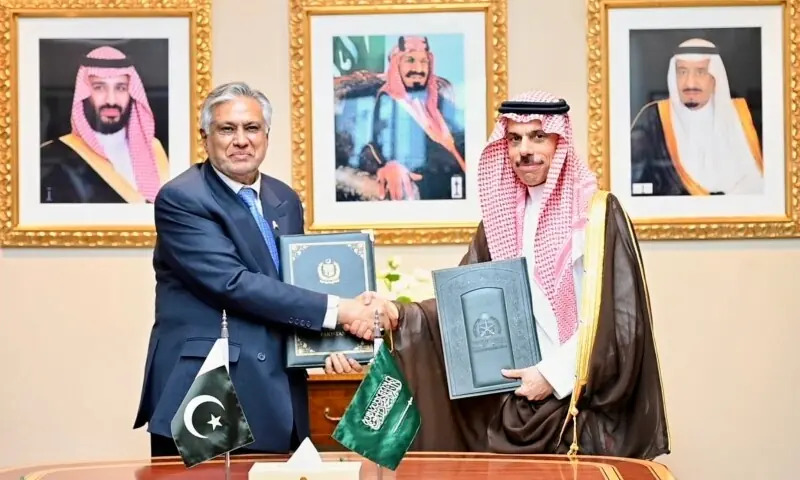
In a significant diplomatic breakthrough aimed at deepening bilateral ties, Pakistan and Saudi Arabia officially signed an agreement on Tuesday to abolish visa requirements for holders of diplomatic, official, and special passports. The formalization of the accord took place on the sidelines of the United Nations General Assembly (UNGA) sessions in New York, drawing international attention to the strengthening axis between Islamabad and Riyadh.
Deputy Prime Minister and Minister for Foreign Affairs Ishaq Dar represented Pakistan during the high-level signing ceremony, while Saudi Arabia was represented by Foreign Minister Prince Faisal bin Farhan. Following the ink-to-paper moment, Deputy Prime Minister Dar took to social media platform X to formally announce the development. He expressed optimism that the landmark exemption would pave the way for accelerated high-level engagements, unhindered bureaucratic and institutional exchanges, and a tangible expansion of the enduring strategic partnership uniting the two brotherly nations.
Commercial & Economic Implications
While ostensibly a diplomatic and administrative instrument, the waiver of visa restrictions for official and special passport holders carries profound indirect implications for commercial and economic diplomacy between Pakistan and Saudi Arabia. Over recent years, bilateral trade and investment frameworks have intensified, particularly with Riyadh exploring multi-billion-dollar joint ventures in Pakistan's mining, agriculture, energy, and information technology sectors under the Special Investment Facilitation Council (SIFC) framework.
By removing administrative red tape and entry bottlenecks for government officials, technocrats, and state-backed business delegations, this agreement drastically reduces the friction inherent in cross-border economic negotiations. Faster approvals, seamless exploratory missions, and uninterrupted trade policy consultations can now proceed without the traditional delays associated with consular visa processing. For Pakistan's export-driven sectors and wholesale distribution networks anticipating foreign direct investment, streamlined official mobility translates to accelerated project finalization, more predictable supply chain alignments, and greater confidence among institutional financiers regarding bilateral commercial commitments.
Related Intelligence: Twin Cities Paralysis: Security Lockdown Chokes Islamabad and Rawalpindi
Stakeholder Perspectives & Market Reactions
Business councils, corporate leaders, and trade associations across Pakistan have welcomed the diplomatic development, viewing it as a clear signal of Riyadh's enduring commitment to long-term economic partnership. Industry bodies note that while the current exemption is strictly tailored for official and special passports, it lays the vital groundwork for future relaxations extended to business-to-business travelers and commercial delegations.
Legal and policy analysts observing the geo-economic landscape in Islamabad emphasize that institutional agility is paramount when dealing with Saudi Arabia's ambitious Vision 2030 initiatives. Public response has similarly been supportive, reflecting the deep-rooted cultural and political affinity between the citizens of both nations. Official statements from Pakistan's Ministry of Foreign Affairs reiterate that this move is part of a broader, comprehensive strategy to modernize diplomatic architecture and align bilateral mechanisms with modern economic realities.
Forward Outlook & Key Watchpoints
As implementation mechanisms take effect in the coming weeks, the immediate focus shifts toward the operationalization of the visa waiver across respective airport authorities and foreign ministries. Observers will closely monitor upcoming high-level ministerial visits and trade delegations scheduled for the final quarter of the fiscal year to gauge the immediate velocity imparted by the agreement.
Key watchpoints for financial markets and trade analysts include the finalization of pending bilateral investment treaties, the progress of Saudi investments in Pakistan's energy corridors, and whether subsequent diplomatic rounds will expand travel flexibilities to broader commercial and technical categories. Success in this diplomatic arena is expected to serve as a blueprint for expanding similar bilateral frameworks with other key Gulf Cooperation Council (GCC) partners.
Join Our Official WhatsApp Channel
Receive live commodity alerts, policy changes, and commercial intelligence directly on WhatsApp.