
Pakistan and Saudi Arabia Sign Landmark Diplomatic Visa Exemption Accord
Pakistan and Saudi Arabia have signed a historic agreement to abolish visa requirements for diplomatic and official passport holders, paving the way for enhanced bilateral cooperation and high-level institutional exchanges.
The Core Development
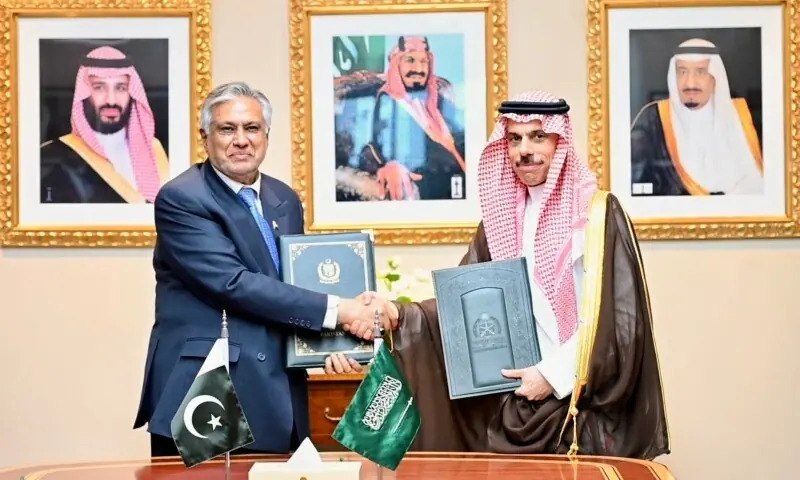
In a significant diplomatic milestone aimed at cementing long-standing bilateral ties, Pakistan and Saudi Arabia formally signed an agreement on Tuesday to abolish visa requirements for holders of diplomatic, official, and special passports. The high-profile signing ceremony took place on the sidelines of the United Nations General Assembly (UNGA) sessions in New York, drawing international attention to the deepening strategic alignment between Islamabad and Riyadh.
The accord was inked by Pakistan's Deputy Prime Minister and Minister of Foreign Affairs, Senator Mohammad Ishaq Dar, alongside Saudi Foreign Minister Prince Faisal Bin Farhan. Following the formal proceedings, Deputy Prime Minister Dar took to social media platform X to express optimism regarding the pact. He underscored that the agreement is designed to facilitate seamless high-level engagements, streamline institutional exchanges, and advance an enduring strategic partnership spanning political, economic, and security sectors.
This development marks a crucial evolution in consular arrangements between the two brotherly nations, traditionally bound by deep religious, cultural, and geopolitical alliances. By eliminating bureaucratic hurdles for government officials and dignitaries, both administrations have established a streamlined framework intended to expedite decision-making processes and foster closer diplomatic coordination on regional and international issues.
Commercial & Economic Implications
While the immediate scope of the agreement is restricted to holders of official and diplomatic passports, analysts at Kalyar Traders view this institutional streamlining as a vital catalyst for broader economic and commercial integration. Enhanced mobility for senior bureaucrats, trade negotiators, and policy architects is expected to accelerate ongoing negotiations concerning major Saudi investments in Pakistan's energy, mining, agriculture, and infrastructure sectors.
In recent months, bilateral trade frameworks have increasingly focused on institutionalizing economic corridors and investment vehicles, such as the Special Investment Facilitation Council (SIFC) in Pakistan. The removal of visa barriers for official delegations ensures that trade delegations, technical committees, and joint working groups can mobilize rapidly without protracted consular delays. For domestic wholesale distribution networks, retail trade stakeholders, and supply chain operators in Pakistan, expedited policymaking translates to greater predictability in petroleum imports, financial stabilization measures, and long-term capital inflows.
Furthermore, smoother bureaucratic interactions directly support macroeconomic stability by reducing the friction associated with bilateral trade agreements, sovereign guarantees, and joint venture execution. As inflation management and foreign exchange reserves remain top priorities for Pakistan's economic managers, securing robust financial and structural backing from Riyadh is indispensable.
Related Intelligence: Pakistan and Saudi Arabia Sign Landmark Diplomatic Visa Waiver
Stakeholder Perspectives & Market Reactions
Business councils, corporate leaders, and trade associations across Pakistan have welcomed the diplomatic breakthrough, interpreting it as a strong signal of Riyadh's unwavering confidence in Islamabad's governance and economic trajectory. Representatives from leading chamber commerce bodies noted that while business-to-business (B2B) visa regimes still require separate commercial streamlining, the high-level commitment demonstrated by this agreement creates a favorable psychological and political environment for private sector investment.
Legal and policy experts have highlighted that the waiver reflects a mutual desire to modernize diplomatic protocols in line with contemporary economic diplomacy. By prioritizing bureaucratic efficiency, both governments are signaling a shift toward pragmatic, outcome-oriented partnerships that transcend traditional diplomatic formalities.
Forward Outlook & Key Watchpoints
Momentum from the UNGA signing is expected to translate into immediate implementation protocols between the interior and foreign ministries of both nations. Key watchpoints for market observers and trade analysts include the subsequent finalization of broader commercial visa facilitations for business leaders, chambers of commerce representatives, and skilled labor force participants.
As implementation timelines unfold, stakeholders will closely monitor how efficiently these diplomatic frameworks accelerate active investment projects, particularly within Pakistan's energy and industrial manufacturing sectors, ensuring that high-level policy agreements deliver tangible dividends to the broader national economy.
Join Our Official WhatsApp Channel
Receive live commodity alerts, policy changes, and commercial intelligence directly on WhatsApp.